In an era defined by rapid technological shifts, economic instability, and a pervasive sense of existential restlessness, the cultural zeitgeist has found an unlikely mirror in the A24 film Everything Everywhere All at Once. The movie, a dizzying, maximalist exploration of the multiverse, has become more than just a critical darling; it has emerged as a profound philosophical touchstone for those grappling with the weight of modern existence. By juxtaposing the absurdity of infinite parallel realities with the crushing mundanity of tax audits and fractured family dynamics, the film invites viewers to confront a central question: If everything is possible, does anything matter?
For many, the answer lies in a synthesis of cinematic reflection and deliberate life architecture. By pairing the film’s nihilistic-yet-optimistic themes with the pragmatic principles of Designing Your Life—a methodology born out of Stanford University—individuals are discovering that the "multiverse" is not merely a science-fiction trope, but a practical framework for navigating the uncertainties of their own personal timelines.
The Cinematic Catalyst: A Deep Dive into the Multiverse
The plot of Everything Everywhere All at Once centers on Evelyn Wang, a beleaguered laundromat owner struggling to keep her business afloat while navigating a crumbling marriage and a strained relationship with her daughter, Joy. During a seemingly routine, soul-crushing appointment with an IRS auditor, Evelyn is thrust into a chaotic struggle involving a multiversal antagonist, Jobu Tupaki.
The film operates on a "bizarre blend" of genres, moving seamlessly from slapstick comedy and martial arts action to high-concept philosophy and raw, emotional drama. To the uninitiated, the film’s rapid-fire editing and surreal imagery can be overwhelming. However, those who persevere through the initial "boredom" and "madness" are rewarded with a narrative that intricately ties the disparate threads of existence together.
The core of the film’s resonance is its confrontation with nihilism. Evelyn’s journey from a woman burdened by the "what-ifs" of her life to a hero who embraces the present moment echoes the internal struggles of many viewers in the post-2022 landscape. The film suggests that while life may be inherently meaningless on a cosmic scale, the act of choosing kindness and creating one’s own meaning is the ultimate rebellion against despair.
The Methodology of Life Design: From Theory to Practice
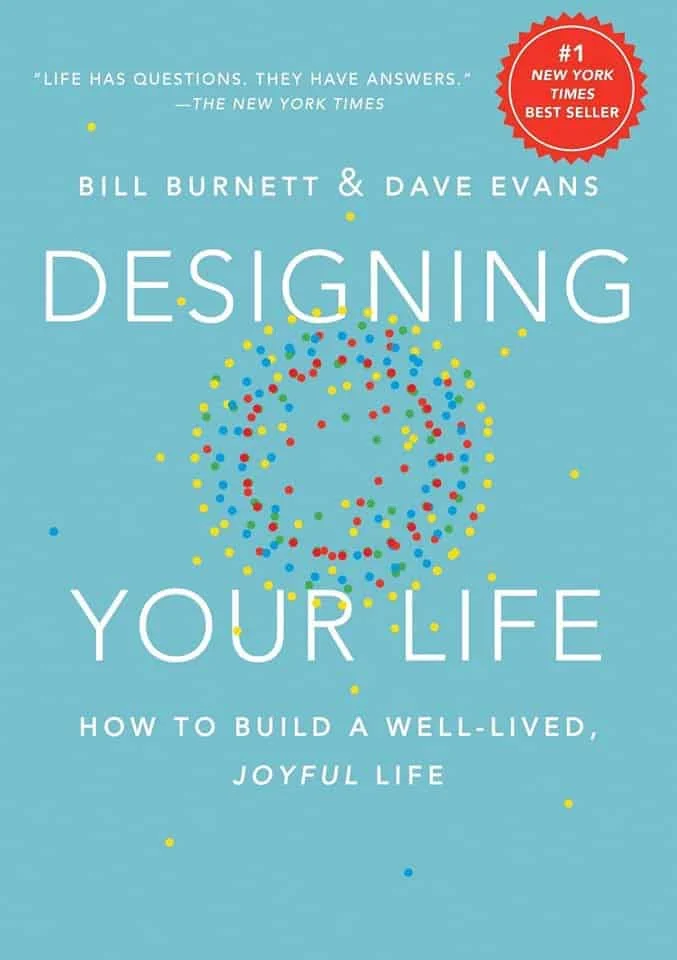
If Everything Everywhere All at Once provides the philosophical "why," the book Designing Your Life by Bill Burnett and Dave Evans provides the structural "how." Burnett, the executive director of the Stanford Design Program, and Evans, co-director of the Stanford Life Design Lab, argue that the same design-thinking principles used to create Silicon Valley innovations can be applied to the architecture of a human life.
At its heart, the book posits that the "multiverse" is a reality we experience daily. We are constantly making choices that foreclose certain paths while opening others. The authors advocate for "coherence"—a state in which one’s beliefs, identity, and actions are in alignment. Achieving this requires moving beyond the static, singular career path models of the 20th century and embracing a more iterative, experimental approach to one’s own future.
The Five Disciplines of a Well-Designed Life
Burnett and Evans outline five core disciplines that serve as the foundation for this process:
- Be Curious: Approaching life with a sense of wonder rather than judgment.
- Try Stuff: Prototyping life changes through small actions rather than waiting for grand revelations.
- Reframe Problems: Shifting perspectives to unlock new solutions.
- Know It’s a Process: Understanding that failure is not an end but a data point.
- Ask for Help: Leveraging community and mentorship to refine one’s direction.
Odyssey Plans: Mapping the Alternate Realities
Perhaps the most potent tool in the Designing Your Life toolkit is the "Odyssey Plan." Drawing inspiration from the multiversal concept of alternate lives, the authors require readers to draft three distinct, five-year visions of their future. This exercise forces individuals to confront the reality that there is no "one right way" to live.
Future #1: The Current Trajectory
The first plan is built around the life you are already living. It is a "level up" version of your current reality. For a professional, this means refining existing goals, optimizing output, and doubling down on current passions. It serves as a baseline—a vision of what success looks like if you continue on your present course.
Future #2: The Contingency Plan
The second plan explores what you would do if your primary career or life path were to disappear tomorrow. This is not a fallback plan, but a genuine exploration of alternative interests. By stripping away the current structure, you are forced to identify what skills and values are truly transferable. It turns a potential crisis into an opportunity for evolution.
Future #3: The "Pipe Dream"
The third plan removes the constraints of money and societal judgment. What would you do if you were entirely free? This is where long-held creative aspirations—like writing, art, or social service—come to the fore. By giving this "wild" version of yourself space on paper, you often uncover hidden motivations that can be integrated into your more practical daily life.
The Intersection of Purpose and Profession
The implications of this approach are significant. For years, self-help literature has focused on "finding your passion" or "creating a mission statement." While noble, these goals often lack the tactical depth required to bridge the gap between abstract desire and daily action.
The Odyssey Plan functions as the missing link. It allows for the integration of a "personal mission statement" into a concrete timeline. For example, a professional might find that while their primary career (Future #1) provides financial stability, their interest in helping others (Future #2) and their love for creative expression (Future #3) are essential components of their long-term well-being. By designing a life that balances these elements, the individual moves closer to the goal of "coherence."
Critical Reception and Practical Limitations
While the Designing Your Life framework has been lauded for its utility, it is not without its critics. Some readers have noted that the "design-speak" terminology can feel clinical or forced. Furthermore, the book’s origin as a college course at Stanford—an institution with unique resources and social capital—has led some to question the universality of the advice. Can a design-thinking approach solve the problems of someone living paycheck-to-paycheck or someone lacking the agency to change their work environment?
Authors Burnett and Evans address these concerns by emphasizing that "design" is not about a specific outcome, but about the process of navigating constraints. They argue that even within the most rigid structures, there is room for small-scale experimentation—what they call "prototyping."
Additionally, a common technical criticism of the book is its lack of an index. For a text that advocates for organized, efficient, and intentional systems, the absence of a reference tool is an ironic oversight. Readers looking to revisit specific exercises or concepts often find themselves struggling to navigate the dense, yet invaluable, content.
Conclusion: Living in the Multiverse
The convergence of Everything Everywhere All at Once and Designing Your Life offers a compelling path forward in an increasingly chaotic world. By acknowledging the infinite, often overwhelming nature of our potential, we can move from a state of paralyzed nihilism to one of intentional action.
The universe may not offer us a pre-written destiny, and our current timeline may be riddled with frustration and unanswered questions. However, as the film suggests, the power to define our own reality—to choose kindness, to seek meaning, and to intentionally design our path—remains within our grasp. Whether through the lens of a blockbuster film or the pages of a design manual, the message is clear: You are not trapped by your current reality. You are the architect of your own multiverse, and it is time to start building.