Introduction: A Fragile Economic Horizon
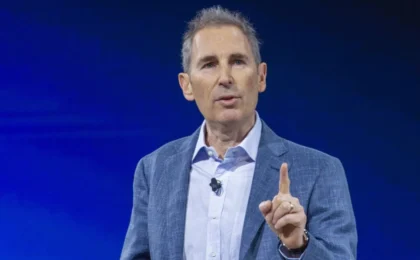
The global climate discourse has reached a critical inflection point. Simon Stiell, the Executive Secretary of the United Nations Framework Convention on Climate Change (UNFCCC), delivered a stark assessment to the European Parliament this week, characterizing the current environmental crisis not merely as an ecological issue, but as a "continent-wide economic security emergency."
As unprecedented heatwaves continue to shatter historical temperature records, Stiell warned that the tendency to relegate climate change to the realm of partisan political debate is a dangerous luxury that the global economy can no longer afford. With extreme weather now directly sabotaging industrial productivity, energy reliability, and food security, the UN is sounding an alarm: political division is effectively serving as a catalyst for economic instability.
Main Facts: The Anatomy of the Crisis
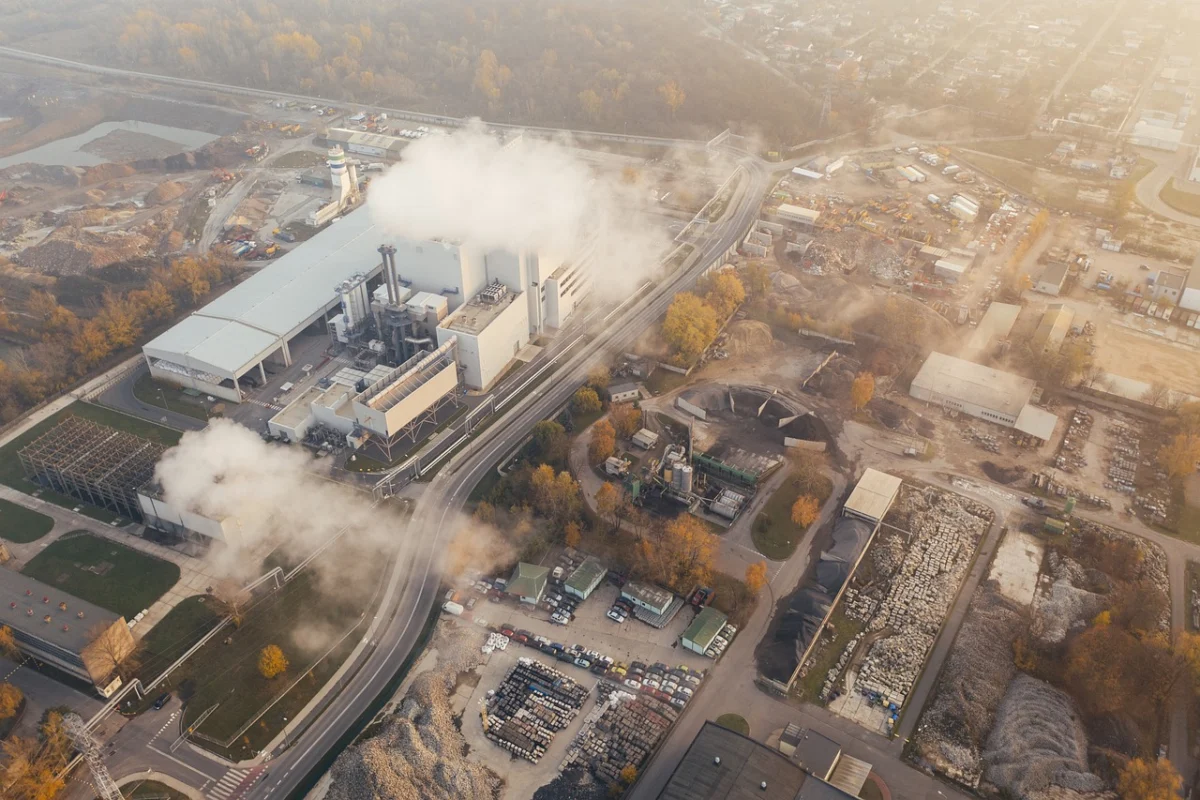
The core of the UN’s argument rests on the observable shift of climate change from a long-term projection to an immediate, disruptive force. Recent data from the Copernicus Climate Change Service confirms that the past summer was the hottest on record globally, with Europe bearing the brunt of systemic failures caused by thermal extremes.
Key Points of Concern:
- Infrastructure Collapse: Intense heat has physically degraded infrastructure, including the buckling of rail lines, the overheating of power stations, and the disruption of critical trade corridors.
- The Price of Inaction: The economic toll is no longer theoretical. In Europe alone, the recent summer season resulted in an estimated €180 billion in lost productivity.
- The Inflationary Spiral: Climate-driven disruptions to the agricultural and energy sectors are creating a "climate-flation" feedback loop, where scarcity drives up food and utility prices, disproportionately affecting the most vulnerable populations.
- Policy Stagnation: Despite the clear and present danger, international cooperation remains hamstrung by domestic political cycles, leaving the world on a trajectory for 2.6 degrees Celsius of warming—far exceeding the 1.5-degree limit set by the Paris Agreement.
Chronology of the Escalation
To understand the urgency of Stiell’s warning, one must look at the rapid acceleration of climate-related disruptions over the past several years.
- 2023–2025: The Foundation of Alarm: Scientific reports consistently noted rising global temperatures, with the UN repeatedly calling for the integration of climate mitigation into national security frameworks.
- March 2026: The UN issued formal calls for international norms regarding the environmental impact of the rapid expansion of critical mineral mining and the technological infrastructure required for modern energy transitions.
- May 2026: The UN General Assembly passed a landmark resolution affirming the legal obligations of states to combat climate change, attempting to move the needle from voluntary commitment to binding state duty.
- June 2026: UN officials explicitly linked the growth of the Artificial Intelligence (AI) sector to environmental degradation, warning that the massive electricity requirements of data centers could outstrip current grid capacities.
- August–September 2026: A series of devastating floods in Nepal and record-shattering heatwaves across Europe forced a reevaluation of climate impacts as an "immediate emergency" rather than a future risk.
- September 10, 2026: A formal UN warning was issued regarding the threat posed by AI data centers to global electricity stability, marking a new frontier in the climate-tech debate.
Supporting Data: Quantifying the Impact
The argument presented by the UNFCCC is grounded in hard economic data. The €180 billion lost in Europe during the summer of 2026 is a figure that resonates across all sectors of the economy.
Economic and Environmental Metrics:
- Productivity Loss: Labor productivity in sectors such as agriculture, construction, and manufacturing dropped significantly as outdoor temperatures exceeded safe working thresholds.
- Energy Instability: The simultaneous demand for cooling and the failure of heat-stressed power grids created localized blackouts that halted assembly lines and logistical hubs.
- The Human Cost: Beyond the balance sheets, the human toll—thousands of deaths attributed to extreme heat—represents a permanent loss of human capital and a strain on public health infrastructure that is not currently priced into most national budgets.
- Migration Drivers: Climate-induced displacement, both internal and cross-border, is creating new socio-political tensions. According to data from the European Union Agency for Asylum, the number of displaced persons linked to climate degradation is rising in lockstep with temperature anomalies.
Official Responses and the Road to COP31
Simon Stiell’s address to the European Parliament was a strategic pivot intended to galvanize the European Union to lead by example at the upcoming COP31 conference in Antalya.
The UNFCCC Stance:
Stiell argued that the time for "reopening" agreements has passed. He urged the EU to focus exclusively on the implementation of existing measures. The UN’s strategy is to shift the conversation away from the abstract negotiations of the past decade and toward a "delivery-first" model.
Institutional Challenges:
The UN acknowledges that its efforts are hampered by the disconnect between global environmental targets and local electoral politics. In many nations, the costs of the energy transition are being weaponized by political factions, leading to a "partisan trap." Stiell countered this by noting that "inflation is a common enemy, and security is a common cause." By framing climate action as a matter of national security rather than environmental ideology, the UN hopes to transcend partisan barriers.
Implications: The New Frontiers of Risk
1. The AI Dilemma
The rise of AI has introduced a new, complex variable into the climate equation. The UN’s recent findings on data centers are particularly alarming: these facilities are not only power-hungry, but their rapid deployment is often happening faster than the decarbonization of the energy grid. This creates a paradox where the tools we use to solve climate change (data analytics, climate modeling) are themselves contributing to the energy crisis.
2. Global Inequality
The crisis has underscored a profound global injustice. Developing nations, which have contributed the least to the carbon emissions that define the current era, are suffering the most severe consequences. Nepal’s recent request for international financial compensation following catastrophic floods highlights the growing demand for a global "Loss and Damage" fund that functions as an insurance policy for the most vulnerable.
3. The Security Paradigm
Perhaps the most significant implication is the shift in how governments must view climate change. It is no longer an "environmental" department issue; it is now a matter for Ministries of Defense, Finance, and Foreign Affairs. When climate change threatens trade routes, power grids, and population stability, it becomes a core pillar of national security.
Conclusion: A Call for Unity
The warning from Simon Stiell is clear: the environment is no longer a peripheral concern. It is the bedrock upon which the global economy is built. As we move toward COP31, the international community faces a choice. It can continue to treat climate change as a political football, potentially leading to a 2.6-degree warming scenario and total economic instability, or it can treat the current emergency with the sobriety it demands.
"Both demand action on climate," Stiell concluded in his address. The challenge for the coming year is to prove that the international system is capable of moving beyond its current fractures to secure a stable economic future. The costs of inaction—already reaching into the hundreds of billions—are a testament to the fact that for the global economy, the climate is not just a factor; it is the bottom line.