Introduction: A Humanitarian Catastrophe Fueled by Global Demand
In a damning new report, Amnesty International has formally accused the March 23 Movement (M23) of perpetrating systemic human rights abuses, war crimes, and illicit mineral trafficking within the Democratic Republic of Congo (DRC). The findings detail a harrowing reality for miners in the North and South Kivu provinces, where M23 rebels have transformed mineral-rich extraction sites into hubs of torture, forced labor, and extrajudicial violence.
As the international community grapples with the ethical implications of the global transition to green technology—a shift that relies heavily on "critical minerals" like coltan—the DRC has become the epicenter of a "blood mineral" crisis. Agnès Callamard, Secretary General of Amnesty International, has issued a stark warning to the African Union and global powers: without immediate, unified action to disrupt the supply chain of pillaged resources, the cycle of violence will continue to be incentivized by the insatiable Western appetite for tech-grade materials.
The Anatomy of Exploitation: Life Inside the Mines
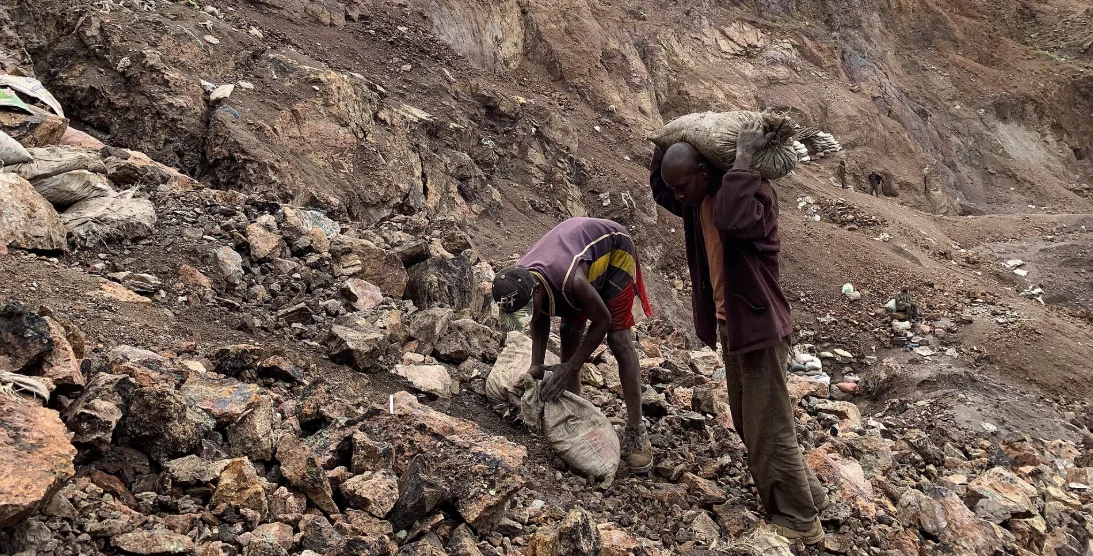
The Amnesty report provides a granular look at the operational methods employed by M23 to control the mineral trade. The group has focused its activities on specific, highly lucrative sites: the coltan mines near Rubaya in North Kivu and the gold-rich areas of Lomera in South Kivu.
Forced Labor and Physical Torture
Miners at these sites are subjected to inhumane conditions that violate the most fundamental tenets of international humanitarian law. According to documentation, workers are routinely forced into week-long shifts under the threat of violence. The report highlights the existence of ndake—underground pits where miners are confined and subjected to systematic beatings, sometimes as frequently as three times a day.
Furthermore, the rebels have repurposed shipping containers into makeshift torture cells. These acts of violence are not incidental; they are a calculated mechanism of control designed to maximize mineral output while suppressing any form of resistance or unionization among the workforce.
The Trafficking Nexus
Once extracted, these minerals are funneled out of the DRC through clandestine routes, primarily crossing the border into Rwanda. From there, the gold and coltan are laundered into the global supply chain, eventually finding their way into the manufacturing pipelines of corporations within the United States and the European Union. This creates a direct, albeit often obfuscated, link between the consumer devices held by millions of people in the Global North and the profound suffering of miners in the Congolese interior.
Legal Analysis: Violations of the Geneva Conventions
The atrocities committed by M23 fall squarely under the definition of war crimes within the context of a Non-International Armed Conflict (NIAC).
Breach of Common Article 3
Common Article 3 of the 1949 Geneva Conventions mandates that individuals taking no active part in hostilities, including those placed hors de combat by sickness, wounds, or detention, shall in all circumstances be treated humanely. The extrajudicial execution of 18 miners, as documented by human rights investigators, constitutes a grave breach of these protections. The use of torture—specifically the ndake pits and container cells—is explicitly prohibited under international law and constitutes a violation of the most basic standards of human dignity.
Chronology: The Rebirth and Radicalization of M23
To understand the current crisis, one must look at the historical trajectory of the March 23 Movement, a group that has evolved from a localized political interest group into a potent, destabilizing military force.
- 2006: The Congrès National de Défense du Peuple (CNDP) is formed, ostensibly to protect the interests of the Tutsi population in the eastern DRC.
- 2009: The CNDP signs a peace agreement with the DRC government, leading to a period of relative, albeit fragile, stability.
- 2012: M23 emerges as a splinter group, claiming that the DRC government failed to adequately implement the terms of the 2009 agreement.
- 2013: Following a significant military offensive, M23 is largely defeated by government forces supported by UN peacekeepers.
- 2022: M23 reemerges with newfound intensity, citing slow security reforms, lack of infrastructure development, and ongoing marginalization as justifications for renewed armed rebellion.
- 2025–2026: The conflict escalates, characterized by a shift toward the systematic control of mineral wealth and the widespread forced recruitment of civilians.
Supporting Data: Kidnappings and Child Recruitment
The violence perpetrated by M23 is not limited to mining sites. In March 2025, the group garnered international condemnation for a daring raid on the CBCA Ndosho hospital in Goma. Rebels kidnapped over 130 patients and staff, spiriting them away to undisclosed locations. This act stands as a flagrant violation of Rule 98 of Customary International Humanitarian Law, which prohibits enforced disappearances.
The Crisis of Child Soldiers
Human Rights Watch (HRW) has corroborated reports of large-scale roundups conducted by M23. Civilians are being snatched from schools, churches, and their homes. Most alarmingly, this includes children as young as 12. These victims are taken to military training camps, severed from all communication with their families. This practice violates Rule 105 of Customary IHL, which mandates the protection of family life and the prohibition of forced recruitment of minors into armed forces.
Official Responses and Diplomatic Implications
The international reaction has been one of mounting pressure, yet critics argue that the response remains far too tepid given the scale of the crisis.
Amnesty International’s Call to Action
Agnès Callamard has urged the African Union to take "bolder steps." The organization emphasizes that the pillage is driven by international appetite. Therefore, the responsibility for ending the conflict lies not only with the regional actors but with the global corporations and governments that provide the financial incentive for the mineral trade.
The ICJ Case Against Rwanda
The geopolitical dimensions of the conflict are further complicated by the alleged involvement of the Rwandan government. The situation has become so dire that the DRC formally filed a case against Rwanda at the International Court of Justice (ICJ) in June 2026. The lawsuit alleges that decades of violence and instability in eastern Congo are directly linked to Rwandan support for insurgent groups, including M23. As the court prepares to review evidence of cross-border interference, the spotlight is firmly on the regional actors who have facilitated the M23’s survival and growth.
Implications: The Path Forward
The situation in eastern DRC represents a convergence of three distinct, yet deeply intertwined, crises: a regional security vacuum, the exploitation of vulnerable populations for the global mineral trade, and a breakdown of international humanitarian law enforcement.
Breaking the Link Between Minerals and Violence
To address this, international observers suggest a multi-pronged approach:
- Enhanced Supply Chain Transparency: Corporations must be held to stricter due-diligence standards, ensuring that their coltan and gold are not sourced from M23-controlled conflict zones.
- Sanctions and Accountability: Targeted sanctions against M23 leadership and any state actors providing logistical support are essential to curbing the group’s ability to wage war.
- Humanitarian Access: The international community must prioritize the safe return of the missing and provide immediate medical and psychological support to the survivors of the torture pits and training camps.
As the conflict in the Kivu provinces drags on, the human cost continues to climb. The victims—miners, kidnapped children, and displaced families—are the silent casualties of a global economic system that prioritizes the rapid, low-cost extraction of resources over the preservation of human life. Without a seismic shift in how the world engages with the DRC’s mineral wealth, the cycle of violence is likely to persist, further destabilizing the region and deepening the humanitarian tragedy.
The findings presented by Amnesty International serve as a definitive call to conscience. Whether the international community chooses to heed that call will determine the fate of thousands currently living under the shadow of the M23.