Nearly five decades after its 1977 debut, Steven Spielberg’s Close Encounters of the Third Kind remains a towering monolith in the landscape of science fiction cinema. It is a film that defies the typical categorization of the genre—existing simultaneously as an intimate portrait of domestic disintegration and a sweeping, cosmic epic of transcendent wonder. As modern audiences reflect on Spielberg’s recent works, such as Disclosure Day, the DNA of his 1977 masterpiece is more visible than ever. Yet, to look back at Close Encounters is to acknowledge an evolutionary fork in the road of blockbuster filmmaking—a moment where the "ecstatic thriller" was arguably eclipsed by the high-adventure space fable of George Lucas’ Star Wars.
Main Facts: A Portrait of Obsession and Transcendence
At its core, Close Encounters is not a film about aliens; it is a film about the cost of wonder. The narrative follows Roy Neary (Richard Dreyfuss), a blue-collar electrical lineman whose life is irrevocably shattered following a close encounter with an unidentified flying object. What begins as a spark of curiosity quickly mutates into a destructive, all-consuming obsession that tears his family apart.
Running parallel to Neary’s descent is the story of Jillian Guiler (Melinda Dillon), a mother whose child is abducted by the same extraterrestrial forces, and Claude Lacombe (François Truffaut), a French scientist attempting to coordinate a global, scientific response to the phenomenon. Unlike the neatly structured narratives that would later become the hallmark of the Spielberg brand, Close Encounters ignores traditional plot progression. It is a triptych of mystery, paranoia, and, ultimately, a rapturous, blinding finale that functions less as a resolution and more as an obliteration of the human experience.
The Chronology of a Masterpiece
The development of Close Encounters was as frantic and improvised as the film’s own energy. Emerging from Spielberg’s lifelong fascination with the unknown—a passion that saw him crafting low-budget sci-fi home movies as a teenager—the project was a deeply personal undertaking.
- 1973-1975: Spielberg begins writing the script, pulling from a lifetime of UFO lore and personal existential anxiety.
- 1976: The production undergoes massive technical hurdles. Spielberg, working with a then-unprecedented level of creative freedom, treats the set as a laboratory, frequently improvising special effects sequences.
- November 1977: The film premieres in the United States. It arrives just six months after Star Wars. While both films become cultural touchstones, the industry begins a seismic shift toward the "space opera" model.
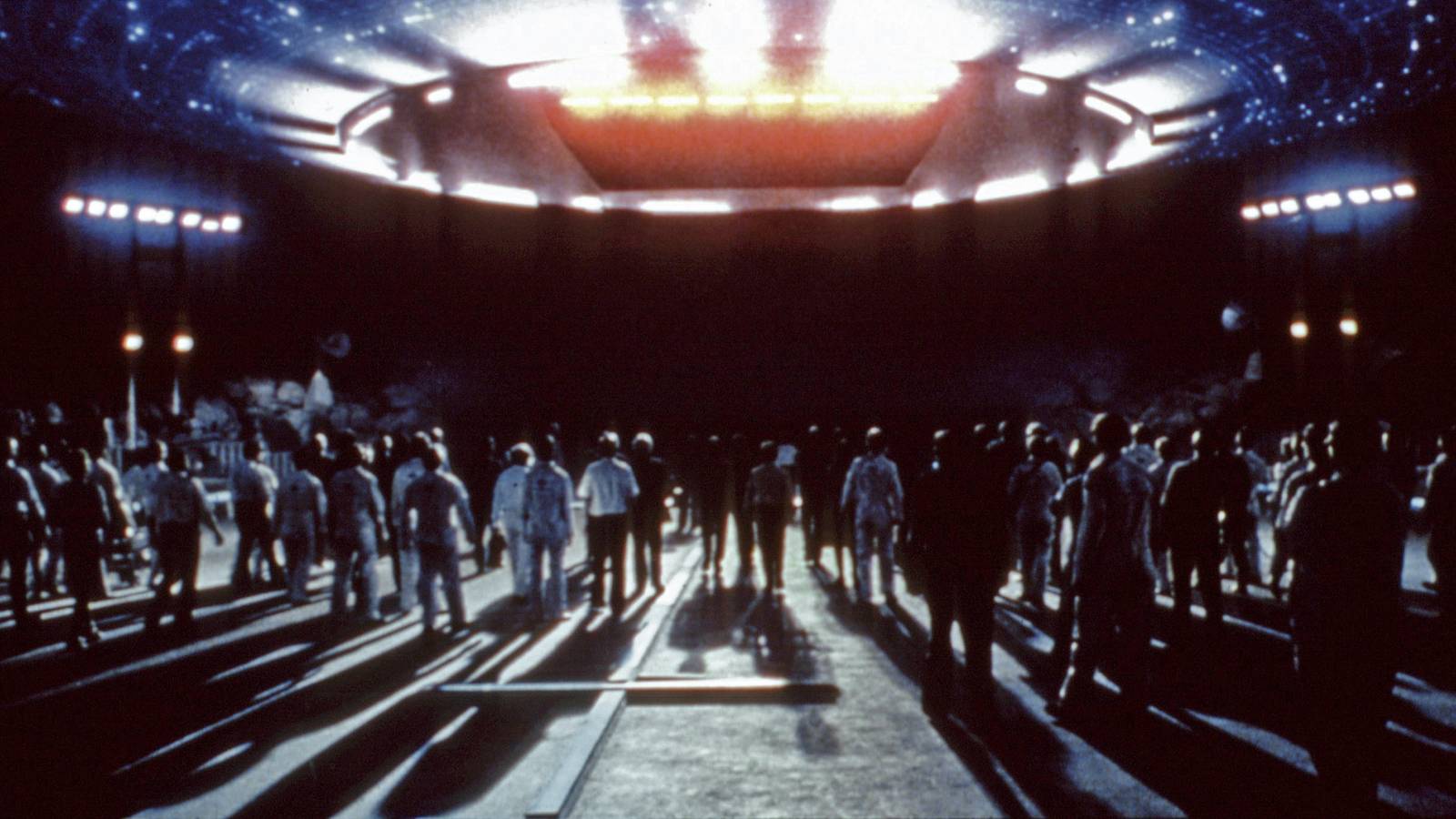
- 1980/1998: Spielberg revisits the film for the Special Edition and the Collector’s Edition, tweaking edits to better align with his evolving vision, famously expressing regret over showing the interior of the mothership in early cuts.
Supporting Data: The Economics of a Bet
The history of Close Encounters is inextricably linked to the friendship between Steven Spielberg and George Lucas. As the story goes, Lucas, having seen a rough cut of Close Encounters, was convinced it would be a far greater financial success than his own "silly" space movie. The two famously swapped 2.5% of the profits of their respective films.
While Close Encounters was a resounding financial success—grossing over $300 million worldwide on a $20 million budget—Star Wars became a global phenomenon that fundamentally altered the financial architecture of Hollywood. This, in turn, dictated Spielberg’s trajectory. His subsequent films, including Raiders of the Lost Ark and Jurassic Park, incorporated the visual splendor of Close Encounters but adopted the more traditional, heroic narrative structures that defined the post-Star Wars blockbuster era.
The "Fabelmans" Connection and Artistic Intent
Many critics argue that Close Encounters is, alongside The Fabelmans, the most autobiographical work in Spielberg’s filmography. It is one of the few projects where he retains sole screenwriting credit, allowing the narrative to mirror his own internal psyche. The character of Roy Neary—the man who would abandon his life, his job, and his children to follow a signal from the sky—is a direct, unvarnished look at the director’s own obsessive relationship with filmmaking.
The film’s tone is a testament to this vulnerability. It is nakedly optimistic, yet fundamentally terrifying. The UFOs are not metallic, militaristic threats; they are colorful, pulsing, and playful. Yet, their arrival is heralded by scenes of domestic chaos, shaking houses, and the psychological dissolution of the protagonist. Spielberg does not judge Neary for his abandonment of his family, nor does he shield the audience from the wreckage that his obsession causes. It is a rare, honest look at the dark side of "the dream."

Official Responses and Critical Legacy
Upon its release, Close Encounters was hailed as a technical marvel. The visual effects, spearheaded by Douglas Trumbull, set a new standard for optical compositing and light manipulation. François Truffaut’s casting as the scientist Lacombe provided the film with an intellectual gravity that elevated it beyond standard B-movie monster fare.
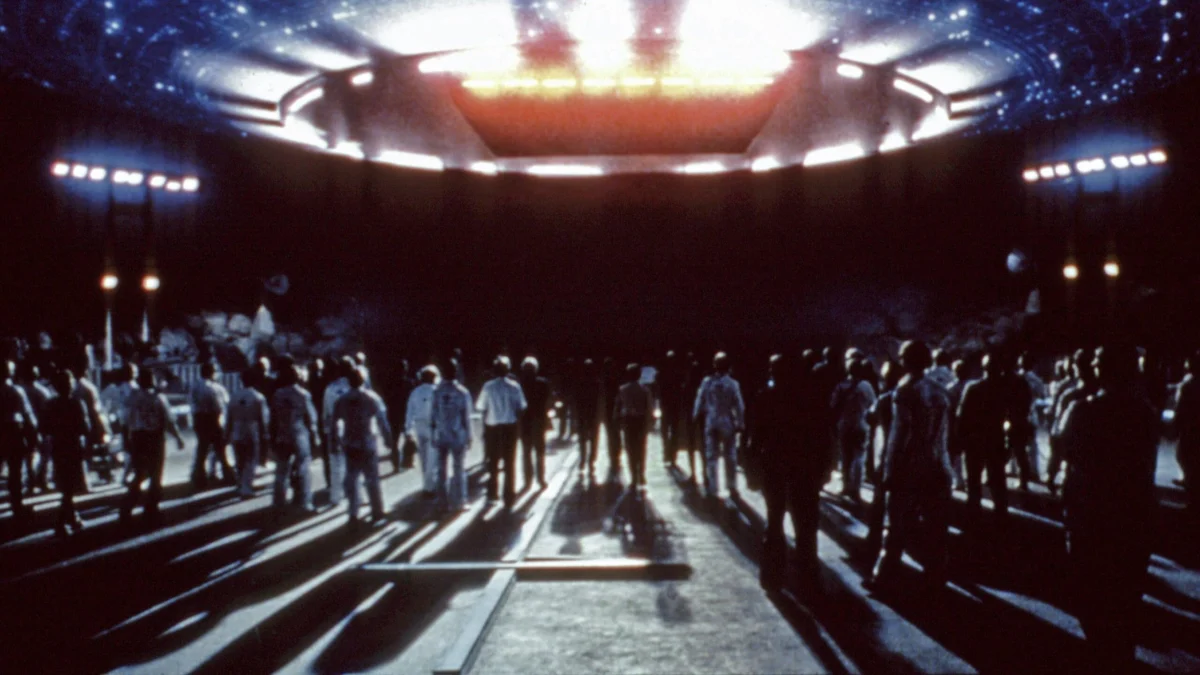
However, the film’s "ecstatic" ending—the arrival of the mothership—remains one of the most debated sequences in cinema history. Some saw it as a spiritual awakening; others, as a nihilistic erasure of the characters’ personal arcs. Over the decades, the film has undergone intense scholarly dissection. Critics have noted how the sound design, featuring layers of cacophonous dialogue and John Williams’ iconic, atonal score, serves to disorient the viewer, mirroring the breakdown of the characters’ realities.
Implications: The Fear of Getting What We Want
The most enduring implication of Close Encounters is its thesis on the nature of desire. We are conditioned to believe that the "third kind"—the encounter itself—is the goal, the prize. Yet, Spielberg presents the contact as something so overwhelming that it defies comprehension.
The film’s final act is a sensory overload. The musical conversation between the humans and the aliens, conducted through the five-tone signal, starts as a beautiful harmony but devolves into a frenzied, chaotic delirium. It is "too much information." The film suggests that the human brain, and the human heart, may not be equipped to handle the reality of the divine or the extraterrestrial.
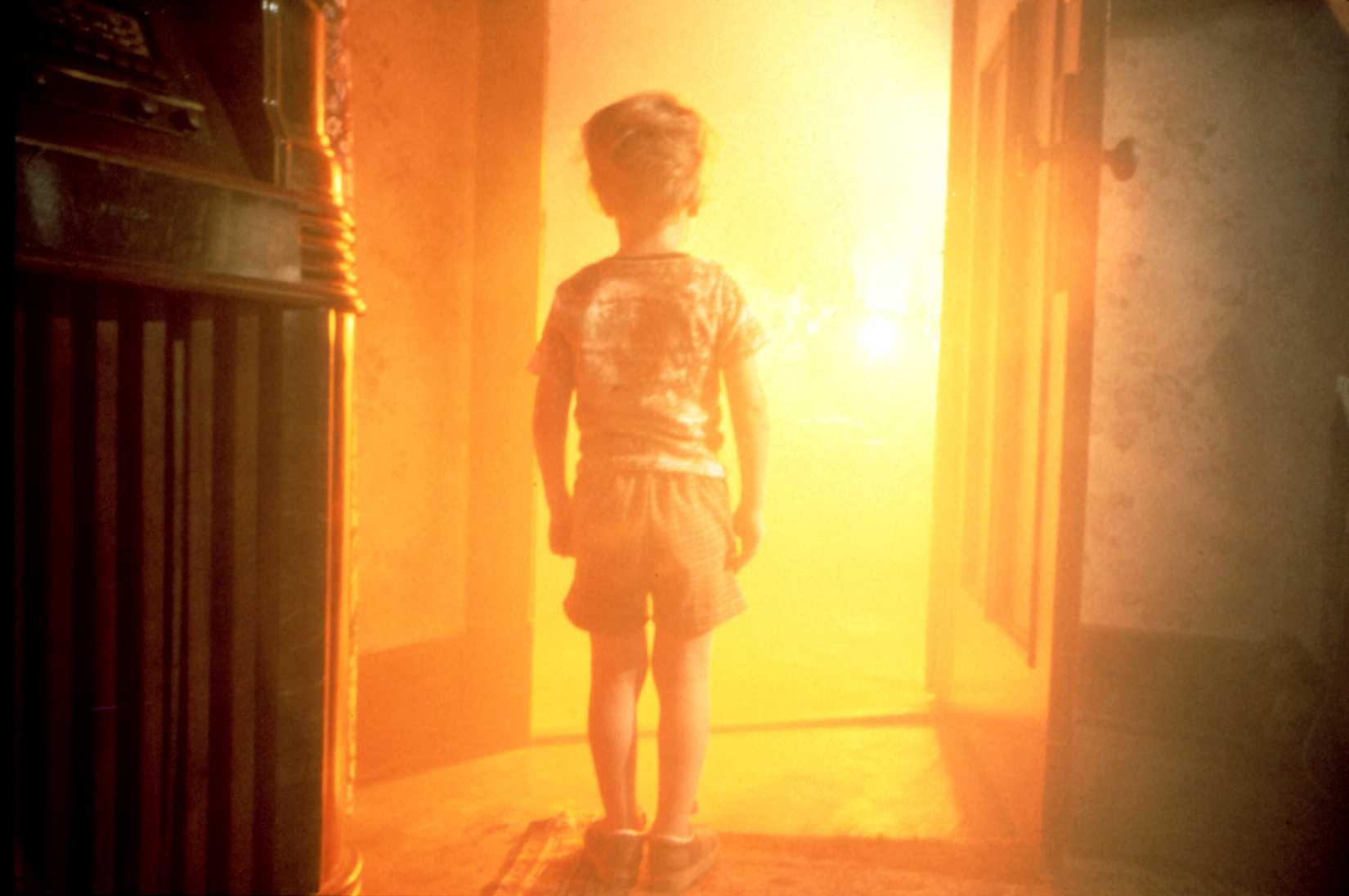
In a modern context, where we are constantly bombarded by information and the pursuit of technological "singularity," Close Encounters feels prophetic. It remains a nightmarish, ecstatic reminder that the most dangerous thing in the universe is not the unknown—it is the moment we finally receive exactly what we asked for.
As the years pass, the film’s "evolutionary dead end" status actually contributes to its mystique. It is a relic of a time when a blockbuster could be deeply weird, structurally unbalanced, and intensely personal. While modern cinema often seeks to explain, categorize, and franchise every element of a story, Close Encounters of the Third Kind remains content to simply leave us staring at the sky, trembling with a mixture of terror and absolute wonder.