For decades, the reputation of British luxury automobiles has been shadowed by a persistent, often humorous, and occasionally frustrating narrative regarding electrical reliability. While the legendary "Prince of Darkness"—the infamous moniker once applied to Lucas Electronics components—has long since retired from the automotive landscape, the specter of electrical gremlins continues to haunt modern luxury marques. Jaguar Land Rover (JLR) finds itself confronting this legacy once again as it issues a widespread recall for more than 23,000 vehicles, citing a critical failure in their electrical architecture.
The Core of the Issue: DC-to-DC Converter Failure
Unlike the historical wiring issues that plagued British motoring in the mid-20th century, the current recall concerns a highly sophisticated component central to the operation of modern, tech-heavy vehicles: the DC-to-DC converter.
In modern automotive engineering, the DC-to-DC converter acts as a bridge between the high-voltage systems (often associated with mild-hybrid architectures) and the traditional 12-volt electrical system that powers essential vehicle functions. According to the recall documentation filed with the National Highway Traffic Safety Administration (NHTSA), the affected converters may experience a catastrophic failure.
When this component malfunctions, the vehicle’s ability to maintain the charge of its 12-volt battery is compromised. This is not merely a convenience issue; it is a fundamental threat to the vehicle’s operational integrity. If the 12-volt system fails to receive power, the vehicle enters a "cascading failure" mode. The consequences are severe: a sudden loss of engine power, the inability to maintain vehicle speed, and, perhaps most dangerously, the complete loss of exterior lighting. In a worst-case scenario, this could occur while the vehicle is in motion, posing a significant risk to both the occupants and surrounding motorists.
Chronology of the Recall
The identification of this fault marks the culmination of an internal investigation by JLR’s engineering and safety compliance teams. While the official recall notification is slated for distribution to owners by November 13, the process leading up to this point involved a rigorous assessment of vehicle data and field reports.
The timeline of the recall, as documented by federal safety regulators, is as follows:
- Initial Discovery: Following reports of electrical anomalies in the field, JLR initiated an internal review of the DC-to-DC converter hardware and software integration.
- Engineering Validation: Engineers confirmed that a specific software calibration within the converter could lead to internal component stress, eventually resulting in the loss of 12-volt output.
- Reporting to NHTSA: Having identified the scope of the potential danger, JLR filed the formal notice (NHTSA Recall ID: 26V599000) with the federal government to ensure a transparent resolution process.
- Notification Phase: The manufacturer is currently preparing to alert the 23,677 affected owners via mail, providing instructions on how to secure their free repair.
Supporting Data: Affected Models and Scope
The recall encompasses a broad cross-section of the JLR lineup, reflecting the standardized use of electrical architectures across the brand’s various platforms. The total population of 23,677 vehicles highlights the scale of the operation, with certain models bearing a much higher statistical impact than others.
The Range Rover Sport occupies the most significant portion of this recall, with nearly 11,000 units identified as potentially needing the software update. Conversely, the niche nature of some models is highlighted by the lower end of the spectrum, such as the Discovery Sport, which accounts for only three vehicles in the current recall population.
Distribution of Affected Vehicles:
- Range Rover Sport: The primary affected model, representing the bulk of the 23,677 total.
- Range Rover: A significant volume of flagship SUVs are included.
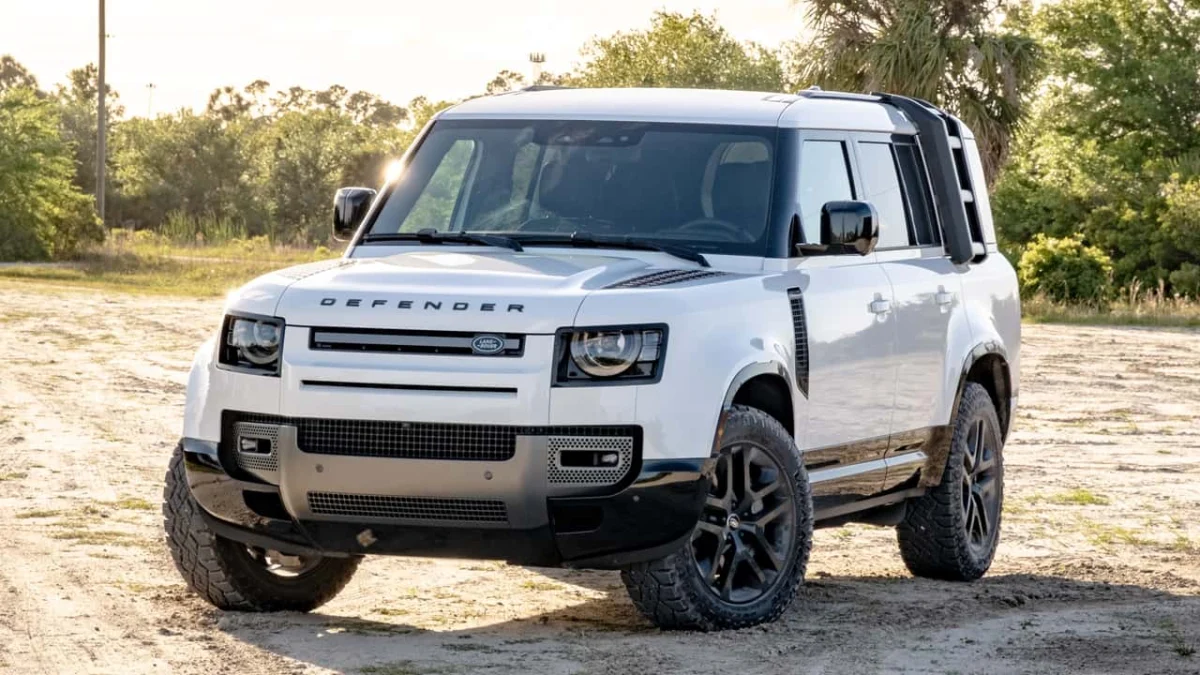
- Land Rover Defender: As the brand’s rugged, off-road-oriented flagship, the Defender’s inclusion reflects the widespread nature of the component.
- Discovery Sport: A minimal impact, with only three vehicles affected, suggesting a very narrow production window or specific hardware configuration.
JLR has made it clear that while the numbers vary wildly by model, the safety implication is consistent across all affected units. Owners are encouraged to verify their vehicle’s status by visiting the official NHTSA recall portal or by contacting their local dealership directly.
The Resolution: A Software-Driven Solution
Perhaps the most reassuring aspect of this recall is the nature of the fix. In an era where many recalls require mechanical teardowns, weeks in the shop, or the replacement of complex, expensive hardware, JLR has confirmed that this issue can be resolved entirely through a software update.
For the end user, this is a best-case scenario. The procedure involves a technician updating the firmware of the DC-to-DC converter to better manage power distribution and prevent the conditions that lead to the internal failure. This process is generally quick, non-invasive, and, most importantly, performed at no cost to the owner under the terms of the manufacturer’s recall.
JLR has established a dedicated support channel, advising owners to call 800-637-6837 for further clarification or to schedule an appointment. While the wait for an official notice in the mail can be frustrating, the manufacturer’s proactive approach to a software-based solution significantly lowers the barrier to compliance.
Implications for the Brand and the Industry
This recall serves as a microcosm of the challenges facing the modern automotive industry. As vehicles transition from mechanical-first to software-first platforms, the complexity of electrical systems has grown exponentially. The "cascading failure" described in the recall is a direct result of how interconnected these systems have become. A single line of code or a minor calibration error can have real-world consequences on the vehicle’s powertrain and safety systems.
For Jaguar Land Rover, maintaining consumer confidence is paramount. The brand has spent years attempting to shed the "unreliable" reputation that has dogged it since the mid-20th century. While an electrical recall may provide low-hanging fruit for critics, the automotive industry’s shift toward software-defined vehicles means that "over-the-air" or dealer-installed software fixes are becoming the new normal for all manufacturers, not just those with a legacy of electrical quirks.
Furthermore, this recall highlights the importance of the relationship between manufacturers and regulatory bodies like the NHTSA. By catching these issues early and providing a clear, accessible path to resolution, manufacturers demonstrate their commitment to safety over cost-cutting.
A "Motor1" Perspective: The Evolution of Reliability
From the vantage point of the automotive enthusiast, the "Prince of Darkness" jokes are a time-honored tradition, akin to mocking a sports team for a losing season. However, it is essential to distinguish between the catastrophic wiring fires of the past and the nuanced software issues of the present.
A software update is, in many ways, the "gold standard" of a recall. It represents a manufacturer taking responsibility for an oversight without the need to tear into the vehicle’s chassis or engine bay. It implies that the hardware itself is robust, and the fault lies in the logic that governs it. For the owner of a Range Rover Sport or a Defender, the inconvenience of an hour at the dealership is a minor price to pay for the assurance that their vehicle’s electrical "brain" is operating exactly as intended.
As we look toward the future of electrification, the reliance on power conversion and sophisticated battery management systems will only increase. JLR’s experience with this recall is likely to serve as a formative lesson in the necessity of robust firmware testing and the importance of seamless communication between the vehicle’s various electronic control units.
In conclusion, while the recall of over 20,000 vehicles is never an ideal headline for a manufacturer, the nature of this particular issue provides a clear path forward. Owners should not be discouraged by the prospect of a visit to the dealer. Instead, they should view it as an opportunity to ensure their vehicle remains as safe and reliable as the day it left the assembly line. The "ghosts" of the past may still be present in the jokes, but the solutions of the present are decidedly more effective and infinitely more efficient.