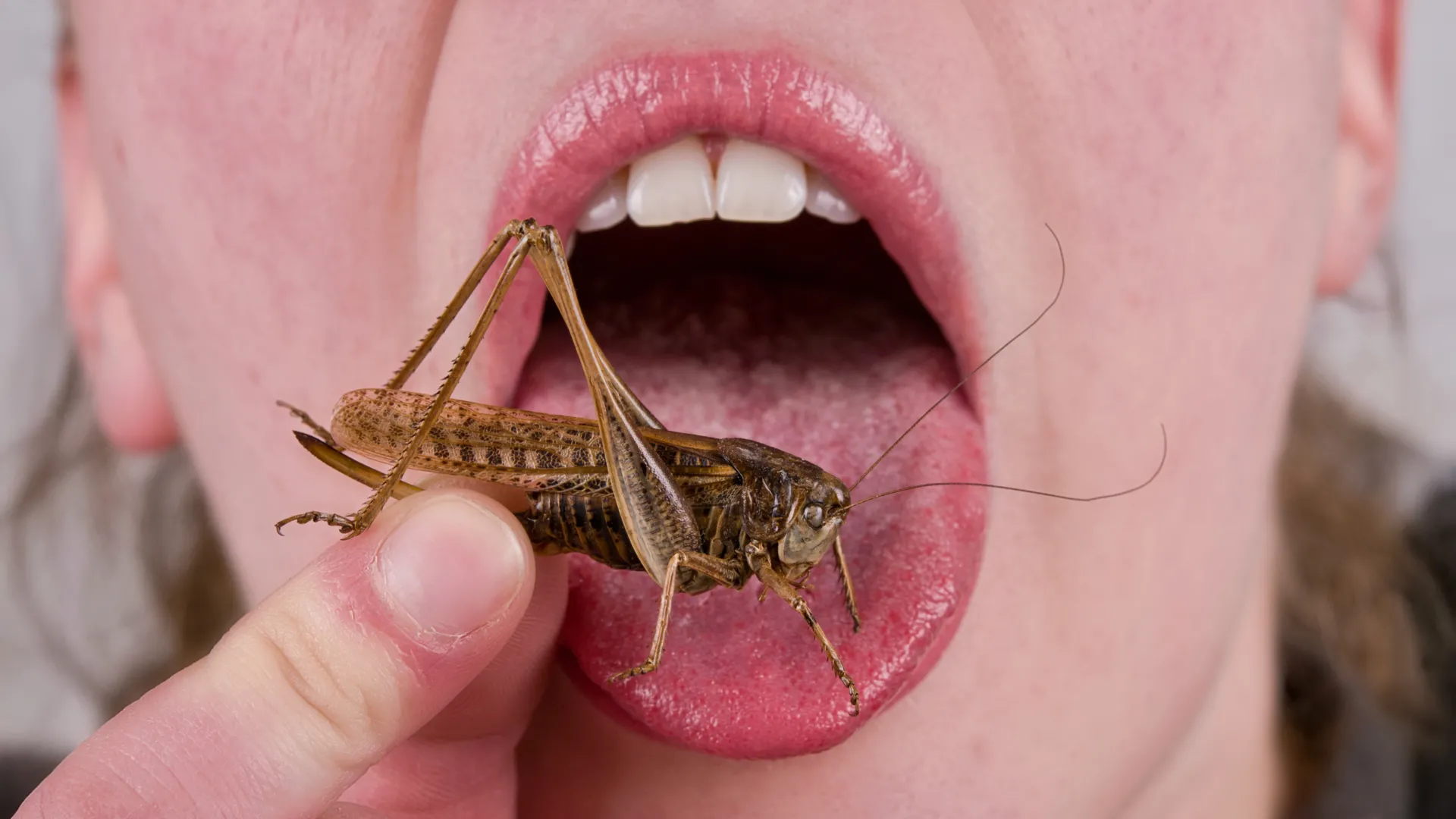
As the global population hurtles toward the ten-billion mark and the dual crises of climate change and food insecurity loom large, the search for sustainable, nutrient-dense alternatives to traditional livestock has become a top priority for global policymakers. The Food and Agriculture Organization of the United Nations (FAO) has long championed a seemingly unlikely candidate to mitigate these pressures: the insect. With 1,611 species classified as edible, insects offer a high-protein, low-impact solution to feeding a hungry world.
Yet, despite the fact that hundreds of millions of people across Asia, Africa, and Latin America have integrated entomophagy—the practice of eating insects—into their daily diets for millennia, Western societies remain profoundly resistant to the concept. This "ick factor" is often dismissed as a mere cultural quirk or a legacy of colonial dietary taboos. However, groundbreaking new research suggests that our aversion to insects may be written deep into our DNA, shaped by thousands of years of ecological necessity and evolutionary adaptation.
Unlocking the Past: Genomic Evidence from Ancient Teeth
A landmark study published in Science Advances has bridged the gap between archaeology and modern genetics. Researchers from the Institute of Evolutionary Biology (IBE)—a collaborative center between the Spanish National Research Council (CSIC) and Pompeu Fabra University (UPF)—have utilized genomic evidence to reconstruct the history of human insect consumption. By analyzing 745 samples of dental calculus (calcified plaque) from anatomically modern humans spanning 33,000 years, the team has effectively mapped the dietary habits of our ancestors.
Dental calculus acts as a biological time capsule, trapping and preserving DNA from food particles consumed by an individual. By extracting and sequencing this genetic material, the IBE team was able to determine whether insects were a staple of ancient diets or merely an incidental snack. The findings reveal a stark divide: while tropical populations and our Neanderthal cousins frequently turned to insects for sustenance, modern humans in northern Eurasia largely bypassed this protein source.
Chronology of a Disappearing Diet
The study suggests that the decline of entomophagy in Europe and northern Asia was not a sudden cultural shift, but a gradual biological and ecological drift.
The Neanderthal Precedent
The researchers discovered that Neanderthal dental calculus contained significantly higher levels of insect DNA than that of their modern human counterparts living in the same geographic regions. This abundance of insect DNA—particularly from the order Diptera (flies and mosquitoes)—mirrors patterns observed in modern-day chimpanzees, who forage for insects during periods of drought or resource scarcity. The presence of mosquito DNA suggests that Neanderthals may have practiced opportunistic scavenging, potentially consuming animal carcasses that had been left to rest in marshy, insect-rich environments.
The Agricultural Shift
As human civilization transitioned toward agriculture approximately 9,000 years ago, the reliance on insects in northern Eurasia further plummeted. The IBE team identified mutations in the chitinase genes of these populations. Chitinase is the enzyme responsible for breaking down chitin, the tough structural polymer that forms the exoskeleton of insects. The prevalence of these mutations in North Eurasian populations—which persist to this day—indicates a reduced biological capacity to digest insects, a clear signal of an evolutionary path that had long ago diverged from insect-dependent survival.
Supporting Data: The Geography of Digestion
The correlation between geography, genetics, and diet is the cornerstone of the IBE study. The researchers focused on two primary enzymes, chitinase acid (CHIA) and chitobiase (CTBS), which are synthesized in the stomach to process insect biomass.
The Tropical Advantage
Populations in tropical regions have historically maintained a higher expression of these digestive enzymes. Manuel Piñero, a predoctoral researcher at the IBE and lead author of the study, explains the logic: "Large quantities of insects need to be ingested to compensate for the high caloric expenditure involved in their collection. In the tropics, there is a greater availability of social insects, such as termites and locusts. Their biomass and diversity allow for sustainable exploitation throughout the year."
The Northern Decline
In contrast, as ancestral populations migrated into higher latitudes, the reliability of insect protein diminished. The lack of seasonal availability and the high energy cost of harvesting smaller, less dense insect populations meant that insects were no longer a viable staple. Over millennia, the selective pressure to maintain high-efficiency chitin digestion waned, leading to the genetic "downregulation" of CHIA and CTBS in non-tropical populations.
Official Responses and Scientific Synthesis
The scientific community has lauded the IBE study for its multidisciplinary approach. By integrating genomic data with ecological and anthropological records, the researchers have moved the conversation beyond the vague realm of "culture."
"The scarce presence of insects in the diet of northern Eurasians suggests that the absence of entomophagy is not solely due to recent cultural factors, but also to a long ecological and evolutionary history," says Pablo Librado, the study’s principal investigator.
This finding challenges the popular assumption that Western disgust toward insects is a strictly social construct. Instead, it suggests a feedback loop: because insects were scarce in the north, our ancestors stopped eating them; because they stopped eating them, our bodies adapted to a diet lower in chitin; and because we are less efficient at digesting them, our biological predisposition—and perhaps even our sensory preference—shifted.
Implications for the Future of Food
If our aversion to insects is rooted in deep-time evolutionary biology, does this mean the "insect revolution" is doomed to fail in Western markets? Not necessarily. The researchers argue that modern food technology changes the fundamental equation.
Industrial Processing as a Catalyst
The primary biological hurdle—the digestion of raw chitin—can be bypassed through industrial processing. Modern insect-based foods, such as cricket flour or protein isolates, are treated to break down the chitinous exoskeleton before it reaches the consumer. This makes the nutrients—high-quality protein, healthy fats, and micronutrients—bioavailable without requiring the consumer to have the evolutionary hardware to process the raw shell.
The Domestication Frontier
Beyond the plate, the IBE research group is turning its attention to the domestication of insects. By comparing the genomes of insects currently approved for human consumption against wild specimens preserved in entomological collections, the team is identifying the genetic markers that make certain species better candidates for farming.
"We investigate the evolution of domestication in animals, which also gives us information to improve the exploitation of insects for consumption, both as animal feed and for human consumption," Librado notes. By selectively breeding insects for higher nutritional density, faster growth rates, and better suitability for human digestion, science is effectively reversing the "anti-insect" evolutionary trend.
A New Nutritional Paradigm
The implications of this research are profound. It provides a nuanced understanding of why we eat what we eat, acknowledging that while our biology was shaped by the environment of the past, our technology grants us the agency to redefine our environment for the future.
As we look toward a world where traditional livestock farming faces mounting criticism for its environmental footprint, the potential for insect protein remains vast. By acknowledging our evolutionary history—the fact that our ancestors in the north simply stopped needing insects—we can stop treating the Western "ick factor" as an irrational prejudice. Instead, we can treat it as a biological legacy, one that is easily bypassed by modern innovation.
The goal is not to force a return to the diet of the Neanderthals, but to embrace the lessons of the deep past to solve the challenges of the near future. Through genomic science and sustainable agricultural practices, insects may finally find their way back onto the global menu, not as a desperate survival measure, but as a sophisticated, efficient, and essential component of the human diet.