For Maureen Banavige, the fall of 2021 remains a fractured memory. Her son, Ronan, was a freshman at Worcester Polytechnic Institute (WPI), a school he chose for his intellectual curiosity and passion for computer science. He was a young man of “kind and gentle spirit,” an enthusiast of Rubik’s Cubes and Chinese tea, who seemed to be navigating his first semester with success. He had joined clubs, made friends, and, by the account of his own psychiatrist just days before his death, appeared to be “thriving.”
Then, in an instant, he was gone. Ronan ended his life in his dorm room.
Nearly five years later, the "why" remains an agonizing void. Was it the lingering isolation of strict COVID-19 protocols? The crushing, high-speed pressure of the university’s academic calendar? Or something internal that no amount of intervention could reach?
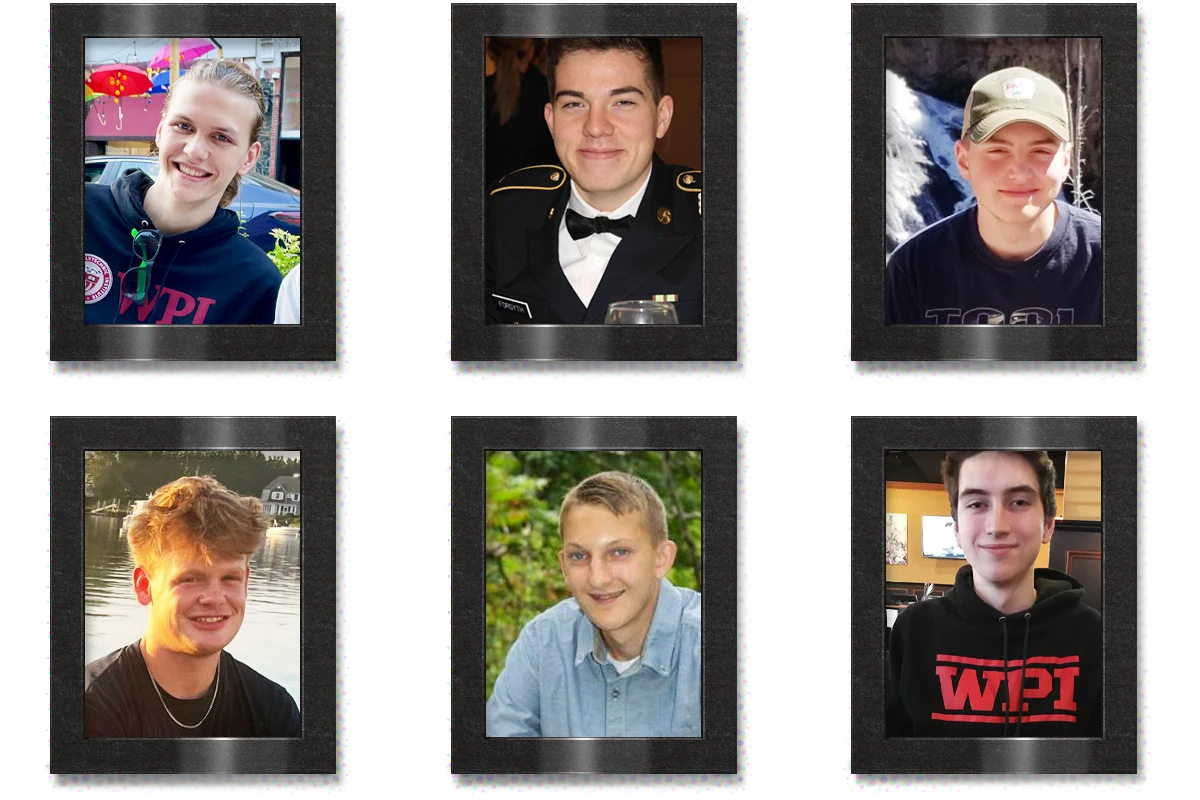
Ronan Banavige is not an isolated tragedy. He is one of at least eight WPI students who have died by suicide between 2021 and 2025. This grim statistic—a stark departure from the two suicides recorded in the 15 years prior—has transformed a grieving community into a unified front. Now, a group of bereaved parents is demanding that WPI stop treating these losses as isolated incidents and instead lead a national, scientific revolution in how American higher education approaches the mental health of its students.
A Chronology of Loss: The "Eight Lost Sons"
The heartbreak began in the autumn of 2021. Just six weeks before Ronan Banavige’s death, 20-year-old Liam “Jyn” Godin, a lover of nature and the outdoors, died by suicide. The shock to the WPI campus was immediate, but the momentum of the crisis did not slow.
As the winter of 2021 bled into 2022, the devastation compounded. In early January, Nate Morin, a senior mechanical engineering major, ended his life at his family’s home in New Hampshire. To those who knew him, Nate was the antithesis of a student in distress; he was a young man with a job lined up, a penchant for humor, and a zest for life. His mother, Donna Morin, recalls that he hit an unexpected, singular crisis—a relationship ending—and found himself in a "tunnel" from which he could not see a way out.
Only weeks later, 20-year-old Tyler Larson, described as a "kind, quiet soul," also passed away. The frequency of these deaths left the institution reeling, prompting then-president Laurie Leshin to call for an "all-hands-on-deck" approach to prioritize student well-being.

Despite these efforts, the shadow of loss returned. In August 2025, 19-year-old Alex Hughes, a young man remembered for having a heart as big as his smile, died by suicide. Four months later, Jack Forsyth, an aerospace engineering major and dedicated member of the ROTC, took his own life.
The recurrence of these deaths—specifically the two that occurred in the most recent academic year—has shattered the hope that the crisis had been fully addressed. For parents like Donna Morin, the fact that these deaths continue to occur without the added pressure of a global pandemic suggests that the root cause is systemic, deeply embedded in the culture of modern collegiate life.
The Call for a $100 Million Task Force
The core of the parents’ advocacy is an open letter sent to WPI leadership last month. It is a document born of exhaustion, grief, and an unyielding desire to turn their personal nightmares into a catalyst for national change.
The letter explicitly calls on WPI to invest $100 million to spearhead a regional mental health task force. The proposal envisions a coalition of elite academic institutions—including MIT, Cornell, Carnegie Mellon, Harvard, and Princeton—working in concert. The objective is not merely to provide more counselors, but to utilize the scientific rigor for which WPI is world-renowned to dissect the "epidemic of collegiate mental illness."
"Universities spend so much money on their sports teams, new buildings, or administration," Maureen Banavige told Inside Higher Ed. "Why wouldn’t a school of science like WPI—and other schools—band together and use science to make meaningful progress?"
The parents argue that WPI is uniquely positioned to lead this effort. They suggest that the university should charter the task force to investigate the specific stressors contributing to the crisis, such as the high-pressure, fast-paced nature of modern STEM education, and to create a blueprint for better identifying and supporting at-risk students. They are asking the university to move beyond reactive counseling and toward a proactive, evidence-based model of mental health prevention.
WPI’s Response and Institutional Hurdles
In response to the parents’ letter, WPI officials have expressed both sympathy and a willingness to engage. Colleen Wamback, the university’s public relations director, stated that WPI is currently arranging a meeting with the families. "We welcome the advocacy of the families who have presented their thoughts, and we share their desperate desire to prevent suicide," Wamback said, acknowledging that the losses have been "life-changing" for the entire community.

WPI has already undertaken significant measures in the wake of the 2021-2022 cluster. In response to a 35-member Mental Health and Well-Being Task Force report, the university hired additional full-time counselors, implemented after-hours and telehealth services, and introduced new training for faculty on identifying warning signs. They have also moved to reform academic policies intended to reduce burnout, such as teaching resilience and self-care skills to incoming freshmen.
However, the efficacy of these measures is being challenged by the continued loss of life. Critics and experts argue that the difficulty in preventing suicide lies in the inherent tension between student autonomy and institutional intervention.
Paul D. Polychronis, a psychologist and director emeritus of the counseling center at the University of Central Missouri, notes the "responsibility without authority" dilemma that colleges face. "The suicidal person doesn’t view suicide as the problem; they view it as the solution," Polychronis explains. He suggests that to achieve a zero-suicide rate, an institution would need a level of social control over its students that would be, in his words, "nightmarish."
The Broader Landscape of Collegiate Mental Health
While the tragedy at WPI is localized, the data reflects a national crisis. According to the American Foundation for Suicide Prevention (AFSP), suicide remains the second-leading cause of death among individuals aged 15 to 34. The data also highlights a significant gender disparity: suicide-related deaths in 2024 were four times higher among men than women, a trend that aligns with the demographics of WPI’s student body.
Erin Miles, a program manager for the AFSP’s Maine and New Hampshire chapters, emphasizes that while funding is crucial, it must be paired with a holistic community response. "In college, students are navigating their independence for the first time," Miles says. "Effective prevention requires training faculty to recognize and respond to warning signs, building peer support networks, and making counseling services so accessible that seeking help becomes a standard, rather than a stigmatized, act."
Yet, there is a paradoxical truth in the data: studies consistently show that, statistically, college students are less likely to die by suicide than their peers who are not enrolled in higher education. This suggests that the campus environment—with its built-in social structures and resources—should act as a protective factor. When that protection fails, it points to a breakdown in the bridge between the institution’s resources and the student’s internal reality.
Looking Forward: "Something Is Wrong"
The parents are clear: they do not expect a total eradication of suicide, which they recognize as a complex human struggle. But they are no longer willing to accept that the current frequency of these deaths is an inevitable byproduct of university life.

"Can you eradicate all car accidents? No," Maureen Banavige says. "But can you reduce the number? Absolutely."
For the families of Ronan, Nate, Liam, Tyler, Alex, and Jack, the fight is not about assigning blame, but about assigning value. They are asking WPI and the broader academic world to treat these deaths not as administrative liabilities to be mitigated, but as scientific problems to be solved.
As they push for the creation of a national task force, their message remains constant: the academic environment must evolve to prioritize the human beings it claims to educate. They hope that by shining a light on the "lost sons" of WPI, they might prevent other families from having to live with the same fractured memories and the same agonizing, unanswered questions.
"We want to honor them by figuring out why this is happening," Donna Morin says. "Something is wrong with our boys. They’re hurting in this society. WPI should be at the forefront of finding out what we can do as a nation to help these kids."
If you or someone you know is in crisis or considering suicide, help is available. You can call the 988 Suicide & Crisis Lifeline by dialing 9-8-8, or contact the Crisis Text Line by texting HOME to 741741.