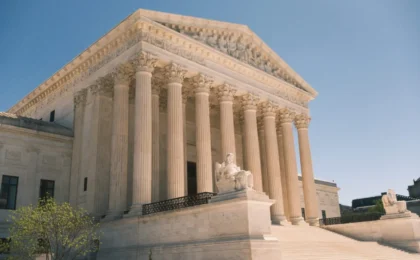
WASHINGTON, D.C. — The Supreme Court of the United States has set the stage for a constitutional showdown that could fundamentally alter the landscape of American firearm regulation. On Tuesday, the Court granted certiorari to two consolidated cases—Viramontes v. Cook County and Grant v. Higgins—marking its most significant intervention in the debate over "assault weapon" bans in decades.
The justices are poised to determine whether semiautomatic rifles, most notably the AR-15 platform, are protected under the Second Amendment or whether they fall into a category of military-grade weaponry that the government may lawfully restrict. The outcome of these proceedings, scheduled for oral argument this fall, will likely provide the definitive legal test for hundreds of local, state, and federal firearm ordinances currently in effect across the country.
The Core Constitutional Conflict
At the heart of the dispute is a fundamental disagreement over how the Supreme Court’s landmark rulings in District of Columbia v. Heller (2008) and New York State Rifle & Pistol Association v. Bruen (2022) should be applied to modern semi-automatic technology.
The Petitioners’ Position
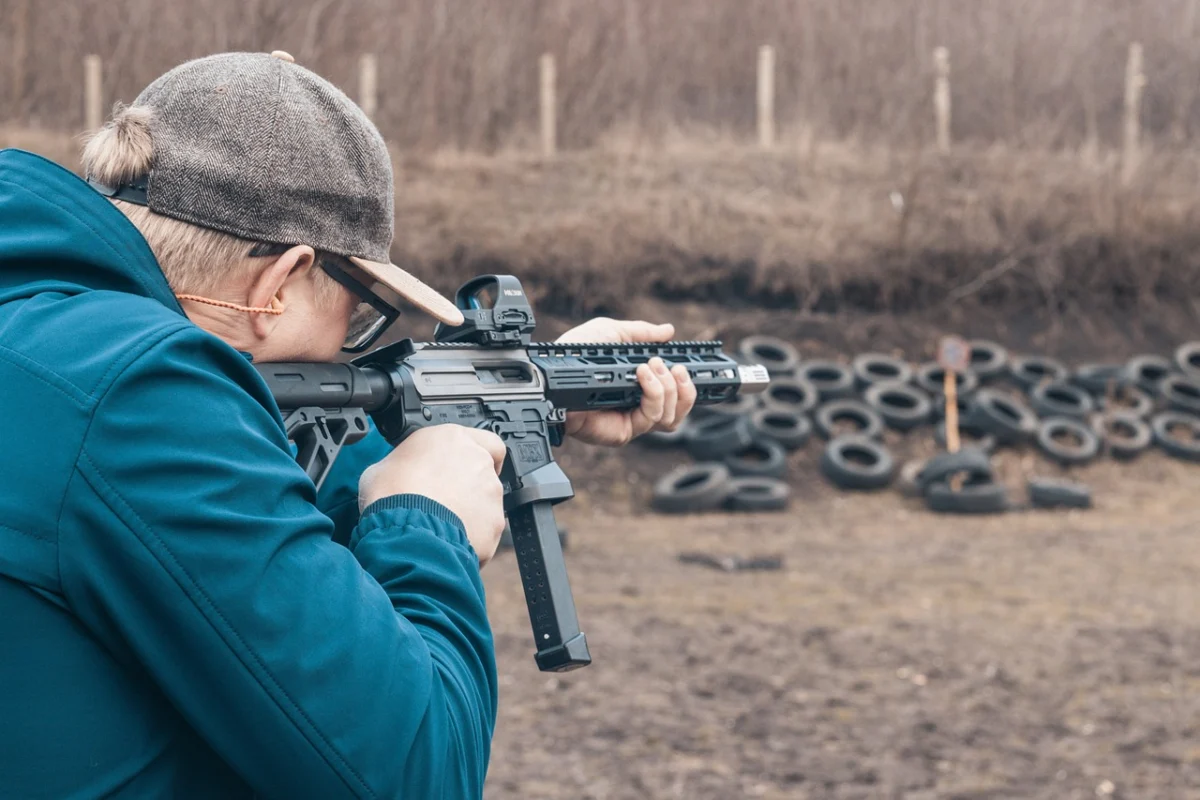
Plaintiffs in both Viramontes and Grant argue that the government’s definition of "assault weapons" is unconstitutionally broad. They contend that because these firearms are owned by millions of law-abiding Americans for self-defense, sport, and competition, they meet the "common use" standard established in Heller. According to the petitioners, the popularity of the AR-15—often described as "America’s rifle"—precludes the government from labeling it as a weapon outside the scope of the Second Amendment.
The Respondents’ Position
Conversely, Cook County, Illinois, and the State of Connecticut argue that the Second Amendment is not a "regulatory straightjacket." They assert that while the Amendment protects the right to keep and bear arms for self-defense, it does not guarantee a right to possess weapons that are functionally equivalent to those used in military combat. Relying on the "historical tradition" test from Bruen, the respondents argue that legislatures have long held the authority to regulate weapons that are "unusually dangerous" or "verifiably military" in nature, regardless of how many civilians have purchased them.
Chronology of the Legal Battle
The path to the Supreme Court has been paved by years of conflicting rulings in lower federal courts, highlighting a deepening judicial divide.
- 2012: Following the tragic Sandy Hook Elementary School shooting, Connecticut enacts a sweeping ban on assault weapons, which becomes a focal point for future constitutional litigation.
- 2022: The Supreme Court issues its decision in Bruen, discarding the "means-end scrutiny" previously used by lower courts and replacing it with a test centered on the "historical tradition of firearm regulation."
- 2023: In Bevis v. City of Naperville, the Seventh Circuit Court of Appeals rules that AR-style rifles are not protected because they are not "materially different" from military M16s. This logic becomes the cornerstone of the defense in the Viramontes case.
- 2025 (August): The Second Circuit upholds Connecticut’s ban in Grant v. Higgins, finding the state’s restrictions consistent with a long history of regulating dangerous weapons.
- 2026 (June): A state judge in Virginia blocks a newly enacted assault weapon ban just days before its implementation, signaling continued volatility at the state level.
- 2026 (July): The Supreme Court grants certiorari to Viramontes and Grant, consolidating them for a fall argument.
Supporting Data and Legislative Reach
The impact of this case extends far beyond Illinois and Connecticut. The Supreme Court’s ruling will serve as the final word for jurisdictions that have enacted similar restrictions.
Currently, at least six states—California, Maryland, Massachusetts, New Jersey, New York, and Washington—have enacted comprehensive bans on semiautomatic rifles that share key characteristics with those challenged in the Supreme Court. These characteristics typically include:
- Detachable magazine capacity.
- Pistol grips.
- Muzzle brakes or flash suppressors.
- Folding or telescopic stocks.
Data from the National Shooting Sports Foundation (NSSF) suggests that there are upwards of 20 million AR-style rifles in circulation in the United States. Advocates for gun rights argue that this statistic alone proves the firearms are in "common use," whereas gun control advocates argue that the sheer number of firearms in circulation should not override public safety concerns or the lethal efficiency of the platform.
Official Responses and Perspectives
From the Gun Control Advocacy Sphere
Organizations such as Everytown for Gun Safety and Giffords have long argued that the Second Amendment is not an absolute barrier to public safety. In statements following the Court’s announcement, advocates emphasized that the military lineage of the AR-15—derived from the M16/M4 platforms—necessitates specific regulation. "The Second Amendment was never intended to allow the proliferation of weapons designed for the battlefield on our city streets," a representative for the Brady Center noted, urging the Court to respect the historical ability of states to mitigate mass-casualty risks.
From the Second Amendment Advocacy Sphere
Gun rights groups, including the Firearms Policy Coalition (FPC) and the National Rifle Association (NRA), have lauded the Court’s decision to hear the cases. They contend that the Seventh and Second Circuits have engaged in "judicial defiance" by creating narrow loopholes in Bruen to uphold bans they personally favor. "The right to keep and bear arms is a fundamental individual right," said an FPC legal analyst. "By hearing these cases, the Court has the opportunity to confirm that the government cannot ban the most popular rifles in America simply because they dislike their appearance or utility."
Implications: A Shifting Judicial Landscape
The Supreme Court’s decision to consolidate these cases suggests a desire for a definitive, nationwide standard. If the Court rules in favor of the petitioners, it would likely invalidate assault weapon bans in every state, potentially triggering a massive wave of litigation against state-level regulations. Such a decision would effectively reset the interpretation of the Second Amendment, narrowing the ability of states to regulate weaponry based on mechanical function.
Conversely, if the Court upholds the bans, it would grant state legislatures broad discretion to define "dangerous and unusual" weapons, potentially emboldening other states to pass stricter regulations.
The "Historical Tradition" Burden
The primary challenge for the Court will be the "historical tradition" test. The justices must determine whether there is a historical analog in the 18th or 19th centuries that justifies the banning of modern semiautomatic technology. Both sides have submitted extensive historical briefs, with petitioners pointing to the civilian ownership of repeating arms in the early republic, and respondents citing 19th-century laws that regulated concealable weapons or high-capacity firearms of the era.
Federalism and Local Control
The ruling will also address the tension between local, state, and federal authority. The Viramontes case, specifically, challenges a county-level ordinance. A ruling that limits the reach of such ordinances would restrict the ability of local governments to respond to unique crime patterns within their jurisdictions, effectively centralizing the standards for firearm legality under federal judicial oversight.
As the fall session approaches, the legal community is bracing for a decision that will likely define the parameters of the Second Amendment for a generation. Whether the Court chooses to expand the scope of protected "arms" or provides the government with a clearer path to regulate modern weaponry, the impact will be felt in every legislative chamber and gun shop in the United States.
The Court’s decision is expected to be handed down by the end of the 2026-2027 term, providing the final chapter in a legal saga that has pitted the right to self-defense against the government’s duty to maintain public order.