We are conditioned from childhood to perceive existence as a series of levels to be cleared, milestones to be achieved, and rankings to be climbed. From the iconic board game The Game of Life—first popularized by Milton Bradley in 1860—to the modern lexicon of "winning at life," our culture is saturated with the idea that human experience is a competitive sport.
However, a growing body of sociological and psychological research suggests that this metaphor is not merely inaccurate; it is fundamentally corrosive. When we frame our existence as a competitive pursuit, we trade authentic fulfillment for a hollow, zero-sum struggle that ultimately leaves us empty-handed.
The Genesis of the "Life as a Game" Paradigm
A Historical Perspective
The concept of life as a game has deep roots in Western capitalist development. In the mid-19th century, Milton Bradley introduced The Checkered Game of Life. It was a morality play designed to teach young Americans the virtues of hard work and the dangers of vice. However, as the decades progressed, the game shifted from a pedagogical tool for morality to a simulation of material acquisition.
By the 1960s, 80s, and 90s, the commercials for The Game of Life emphasized the acquisition of "assets": college degrees, marriage, children, and, most importantly, wealth. The game board became a mirror for the burgeoning American Dream, where success was measured exclusively by the accumulation of tangible markers.
The Internalization of Competition
Today, this game-based mindset has moved from the living room rug into the workplace, the classroom, and our social lives. Many individuals have internalized this framework, viewing their professional trajectory or their children’s educational achievements not as unique human paths, but as comparative metrics. When life is viewed as a game, it is no longer something to be experienced or enjoyed; it is a competition to be won.
The Fundamental Conflict: Why Life Is Not a Game
To understand why this mindset is so damaging, we must first define what a game actually is. A game is an activity governed by arbitrary rules, played within a closed system, typically involving a winner and a loser. Crucially, games are pursuits of "instrumental value"—the act of putting a ball through a hoop has no intrinsic meaning outside the context of the game.
Life, by contrast, is not a closed system. It is an open-ended, subjective journey.
The Trap of Objective Metrics
The "Game of Life" framework relies heavily on objective metrics: the price of a house, the prestige of a job title, the brand of a car. These are easy to measure, which is precisely why we prioritize them. It is simple to compare bank accounts; it is impossible to quantify the depth of a person’s integrity or the quality of their inner peace.
When we prioritize the "measurable," we inadvertently marginalize the "meaningful." We sacrifice time with family, mental health, and artistic pursuit—things that cannot be quantified—in favor of competitive status symbols. This is a classic example of "Goodhart’s Law": when a measure becomes a target, it ceases to be a good measure.
Chronology of a Competitive Mindset
- Formative Years: Children are introduced to the competitive framework through standardized testing and sports. While play is healthy, the focus often shifts from the joy of the activity to the pressure of the "win."
- Early Adulthood: The transition into the workforce often forces individuals into a "climb." The narrative of the "career ladder" reinforces the idea that life is a zero-sum game where one person’s promotion is another’s stagnation.
- Mid-Life Evaluation: This is often where the "Game of Life" narrative crumbles. Many reach their "winning" milestones—the house, the title, the salary—only to realize these prizes lack intrinsic satisfaction, leading to the well-documented "mid-life crisis."
- The Shift: For those who break the cycle, the later stages of life are often defined by a pivot away from competition toward stewardship, connection, and legacy—values that are entirely absent from the standard "Game of Life" ruleset.
Supporting Data: The Cost of Comparison
Psychological studies consistently show that the "relative deprivation" caused by social comparison is a primary driver of unhappiness. When we view our peers as competitors, we trigger a constant state of cortisol-heavy stress.
- Social Media Impact: Research indicates that high usage of platforms that facilitate social comparison—where individuals curate their "winning" moments—correlates strongly with increased rates of anxiety and depression.
- The Hedonic Treadmill: Economists have long noted that increasing wealth, beyond a certain threshold, provides diminishing returns on happiness. Yet, because the "game" requires constant escalation, participants remain trapped on a treadmill, chasing more wealth to maintain a relative lead over others.
- The Erosion of Empathy: When others are viewed as competitors, our brain’s capacity for altruism is suppressed. If your neighbor’s success is perceived as your relative failure, it becomes neurologically difficult to genuinely celebrate their achievements.
Official Responses and Philosophical Counterpoints
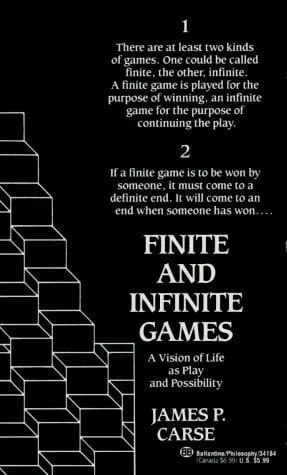
Sociologists and philosophers, most notably James Carse in his seminal work Finite and Infinite Games, have argued against the competitive model. Carse distinguishes between "finite games" (which are played for the purpose of winning) and "infinite games" (which are played for the purpose of continuing the play).
The Infinite Game of Life
In an infinite game, the goal is not to win, but to expand the possibilities for yourself and others. A relationship is an infinite game. A career focused on contribution rather than status is an infinite game. When we shift from a finite, competitive mindset to an infinite, collaborative one, we reclaim our autonomy.
Key Institutional Perspectives:
- Ethical Philosophy: Proponents of virtue ethics argue that the "good life" is found in Eudaimonia—flourishing through the cultivation of character. This is an internal, self-defined pursuit that renders external scorecards irrelevant.
- Organizational Psychology: Modern forward-thinking businesses are moving away from stack-ranking employees (a competitive model) toward collaborative frameworks, recognizing that innovation is stifled when employees view each other as rivals.
The Implications: A Call for Autonomy
The most dangerous aspect of playing the "Game of Life" is that the rules were written by someone else. When you chase the conventional markers of success, you are surrendering your autonomy. You are living by the values of an invisible, impersonal system that does not care about your unique talents, your specific desires, or your personal definition of joy.
The Pyrrhic Victory
If you win a game where the rules were dictated by external expectations, you have achieved a "Pyrrhic victory." You may have the house, the prestige, and the social status, but you have lost the ability to live according to your own internal compass. You have spent your one, finite life fulfilling the goals of a game you never signed up for.
Redefining Success
To live well is to reject the board game entirely. It requires:
- Defining Your Values: What truly matters to you? Not to your peers, not to your parents, and not to your social media feed.
- Prioritizing Relationships: Choose vulnerability over competition. Root for others, knowing that their success does not diminish yours.
- Accepting Imperfection: Acknowledge that the "game" is rigged and that failure is inevitable. When you stop playing the game, failure loses its power to shame you.
Conclusion
Games are wonderful. They are essential to the human experience—they teach us resilience, teamwork, and the joy of a well-executed strategy. We should continue to play sports, play board games, and compete in the trivial arenas of life.
But we must draw a hard line at the boundary of our core identity. Your career, your marriage, your friendships, and your moral compass are not sports. They are not metrics to be tracked or leagues to be won. They are the substance of your life. Treat them with the gravity and the freedom they deserve, and stop trying to win a game that was never designed for you to enjoy.