Introduction: A Strategic Shift in Olympic Neutrality
In a move that has sent shockwaves through the global sporting community, the International Olympic Committee (IOC) has taken a decisive step toward the full reintegration of Russian and Belarusian athletes into the Olympic fold. On Tuesday, the IOC announced it had provisionally lifted the suspension of the Russian Olympic Committee (ROC) and recommended that international sports federations abandon the three-year vetting process that had relegated Russian and Belarusian competitors to "neutral" status.
This policy shift, overseen by newly elected IOC President Kirsty Coventry, signals a pivot toward returning Russia to the Games with its national symbols intact. While the IOC maintains that this decision is rooted in the principle of universal access for athletes, the timing—occurring amidst an intensification of the war in Ukraine—has ignited a fierce debate regarding the intersection of geopolitics, morality, and the spirit of the Olympic movement.
Chronology: From Suspension to Potential Return
The journey toward this current inflection point has been marked by vacillation and intense diplomatic pressure.
- February 2022: Following the full-scale invasion of Ukraine, the IOC issued a strong recommendation to international federations to ban Russian and Belarusian athletes from all international competitions to protect the integrity of sporting events.
- 2023: The IOC suspended the Russian Olympic Committee after it attempted to incorporate regional sports councils from occupied areas of eastern Ukraine, a move the IOC viewed as a direct violation of the Olympic Charter.
- July 2024: The Paris Olympics served as a constrained experiment in neutrality. Only 32 athletes from Russia and Belarus were cleared to compete as Individual Neutral Athletes (AINs). They participated without flags, anthems, or national colors, resulting in a modest tally of five medals.
- March 2026: In a pivotal executive board meeting, the IOC officially moved to lift the suspension of the ROC, citing a formal pledge from the Russian body that it would cease all activities in occupied Ukrainian territories.
- Future Outlook: The IOC is now looking toward the 2028 Los Angeles Games as the target for full-scale reintegration, while monitoring the upcoming 2026 Youth Summer Games in Dakar as the next test case for this new policy.
Official Responses: The Moral Divide
The divide between the IOC’s administration and those witnessing the daily toll of the war in Ukraine could not be more profound.
The IOC’s Stance: "Athletes Should Not Pay the Price"
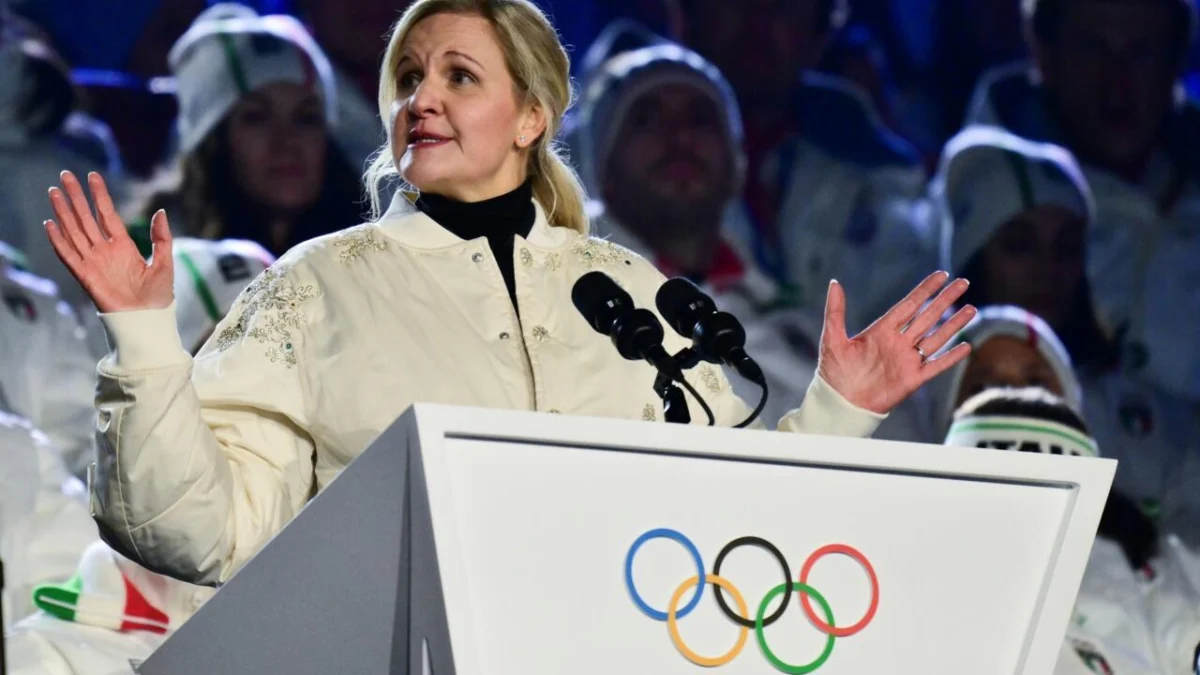
President Kirsty Coventry, a two-time Olympic gold medalist from Zimbabwe, defended the decision by emphasizing the separation of individual athletes from the political actions of their sovereign states. During an online press conference, Coventry noted her own experience as a competitive swimmer during times of national sanction, suggesting that punishing individual athletes for government policy is fundamentally unfair. "We don’t want to hold athletes accountable for the actions of their governments," she asserted, framing the decision as a commitment to the "Olympic family’s" universality.
The Ukrainian Perspective: A "Day of Mourning"
The response from Kyiv was one of profound betrayal. Ukrainian Sports Minister Matvii Bidnyi expressed disbelief at the timing of the announcement, which coincided with a day of national mourning following a series of devastating Russian missile and drone strikes that claimed at least 22 lives.
"The situation became even worse," Bidnyi stated in an interview with the Associated Press. He dismissed the Russian Olympic Committee’s pledge to vacate occupied territories as "fake and empty words," arguing that the IOC’s decision provides a propaganda victory for a regime currently engaged in an active, destructive war.
Supporting Data and the Logistics of Reintegration
To understand the scale of the potential shift, one must look at the numbers. During the 2021 Tokyo Olympics, Russia sent a contingent of over 300 athletes who brought home 71 medals, including 20 golds. The 2024 Paris experiment, which limited participation to just 32 individuals, represented a marginalization of Russian sport that the Kremlin is clearly eager to reverse.
The Vetting Paradox
Under the previous regime, athletes were required to prove they had no links to the Russian military or security services and had not publicly voiced support for the invasion of Ukraine. While the IOC claims it will continue to monitor social media and behavior—citing the "role model" requirements of the Olympic Charter—the burden of proof is shifting. The IOC official James Macleod noted that the committee would continue to accept referrals from Ukraine regarding "problematic" social media posts by Russian athletes, though critics argue that the policing of thousands of athletes is logistically impossible.
Doping and Compliance
The IOC has introduced a new set of requirements to combat skepticism regarding this return. Russian athletes must undergo multiple, rigorous doping controls and be part of an internationally recognized testing program to participate in qualifying events for Los Angeles 2028. This comes as an attempt to restore trust in a nation whose Olympic history has been marred by state-sponsored doping scandals, most notably the Sochi 2014 fallout.
Implications: A Fragmented Sporting Landscape
The IOC’s decision is technically "guidance" rather than a mandate. This leaves the global sports landscape in a state of fractured authority, where different governing bodies are adopting diametrically opposed stances.
The Resistance of Individual Federations
Not all sports are following the IOC’s lead. World Athletics, the governing body for track and field, has explicitly maintained its ban on Russian and Belarusian athletes. This creates a scenario where a Russian athlete might be eligible for the Olympics in one discipline (such as swimming, where World Aquatics has already lifted restrictions) but barred from competing in another.
Furthermore, FIFA and UEFA remain steadfast in their exclusion of Russian teams from the World Cup and Champions League. The rationale is largely pragmatic: many European nations have made it clear that they would refuse to take the pitch against a Russian team, leading to inevitable logistical chaos and the potential for a total boycott of international tournaments.
Visas and Host Nation Sovereignty
A significant, often overlooked hurdle for Russian athletes is the reality of global travel. Many Western nations, including several that will host Olympic qualifying events, maintain strict visa policies regarding Russian citizens. Even if the IOC "greens lights" an athlete, the sovereign right of host countries to deny entry based on security concerns or political sanctions remains an insurmountable barrier for many.
Conclusion: The Soul of the Games
The International Olympic Committee finds itself at a crossroads. By prioritizing the "universality" of the Games, it risks alienating a significant portion of its member base and facing the ire of the international community. By attempting to return to "business as usual," it implicitly acknowledges that the geopolitical reality of 2022–2026 is something that can be set aside for the duration of a two-week event.
Russian Sports Minister Mikhail Degtyaryov has already hailed the move as a "green light" for the restoration of Russian athletes’ rights. Yet, as the war in Ukraine grinds on, the chasm between the Olympic ideals of peace and the reality of global conflict continues to widen.
The road to Los Angeles 2028 is paved with uncertainty. While the IOC seeks to depoliticize the podium, the flags and anthems they hope to restore represent the very political entities that remain at the heart of the world’s most pressing security crisis. For the Olympic movement, the challenge will be determining whether it can truly act as a neutral ground, or if it is merely becoming another arena for the broader struggle of global power. As the countdown to the 2026 Youth Games in Dakar begins, the world will be watching to see if this "reintegration" leads to a peaceful homecoming or a new era of diplomatic friction within the Olympic stadium.