At 53 years old, I have spent a lifetime adhering to a strict, self-imposed rulebook of frugality. For decades, my automotive history was a series of tactical retreats—buying what I could afford, what was “sensible,” or what was deemed the most practical choice for my stage in life. It was a cycle of compromise that left me with vehicles I tolerated, but never truly loved.
That changed last summer. This is the story of how a chance encounter at a dealership during a volatile economic period led me to abandon my long-standing philosophy of “good enough” in favor of a purchase that was, for the first time, purely for the joy of it.
The “Maxi Cooper” Miscalculation
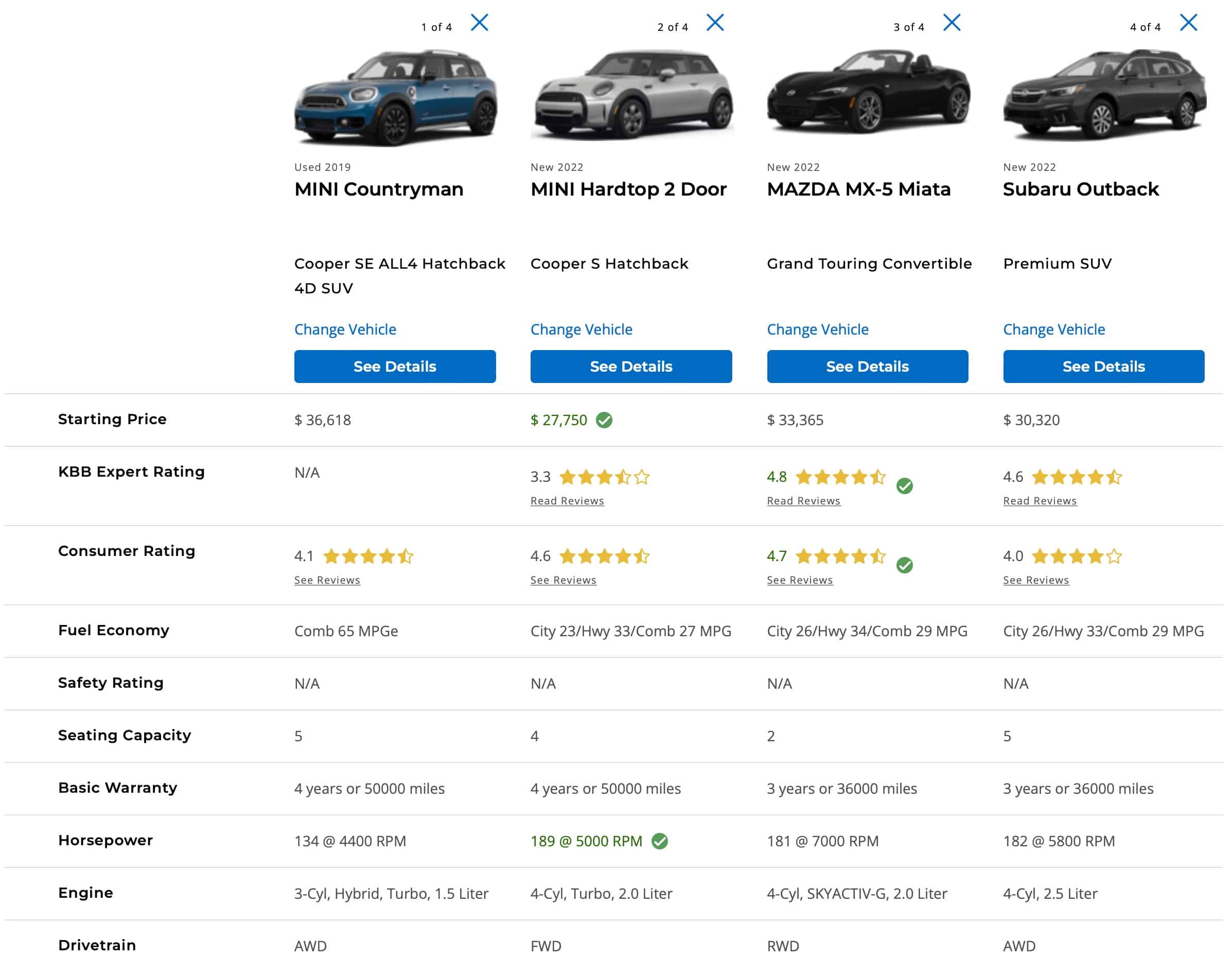
In July 2020, at the height of the pandemic, I found myself in the market for a replacement for my aging 2004 Mini Cooper. Instead of sticking to my gut, I allowed external influence to steer me toward a 2019 Mini Countryman SE All4. I paid $35,990 for what I jokingly dubbed the “Maxi Cooper.”
It was a compact SUV—a segment I have never resonated with. I am a small-car enthusiast; I enjoy the tactile, grounded sensation of a low-slung vehicle. For two years, I drove the Countryman. It was mechanically sound and aesthetically acceptable, but it was fundamentally the wrong car for me. It served as a constant reminder that when we compromise on our personal preferences to satisfy a sense of “practicality,” we often end up paying for it in daily satisfaction.
A Market Anomaly: The Turning Point
The catalyst for change arrived unexpectedly during a routine oil change last August. While I waited in the service lounge, a representative from the dealership approached me with an offer to buy back my vehicle.
I was skeptical, but the numbers told a compelling story. According to the U.S. Federal Reserve, the used-car market had undergone a seismic shift, with prices surging 55% since July 2020. Even new car prices had risen by 18% during the same window. When the dealer offered me $33,000 for a car I had purchased 26 months prior, I was stunned.
I reached out to a contact of mine, a veteran in the automotive sales industry named Jeremy, to gut-check the offer. “It’s not just a good deal,” Jeremy told me. “It’s a miracle. It’s as if you leased that car for $115 per month. You should take the offer. Now. Before they change their mind.”
The Search for the Uncompromised Vehicle
Having inadvertently sold my primary mode of transport, I found myself in a position I hadn’t anticipated: I needed a new car, and for the first time, I refused to settle. I initiated an intensive, 24-hour deep dive into the automotive landscape.
My criteria were clear:
- Size: Must be a small, nimble car.
- Driving Experience: High engagement, manual transmission preferred.
- Reliability: Proven track record.
- Joy Factor: Must be a vehicle that excited me to drive.
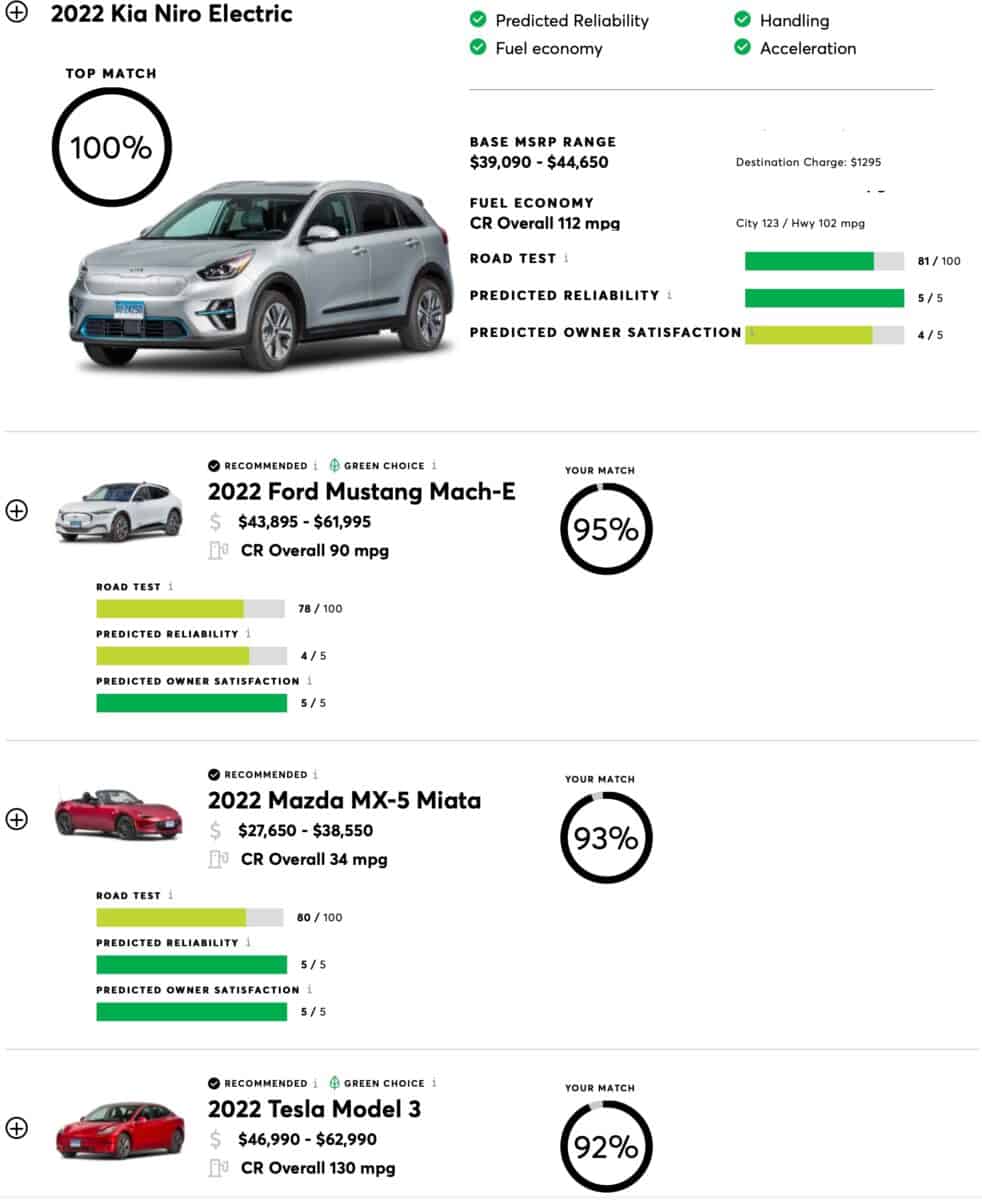
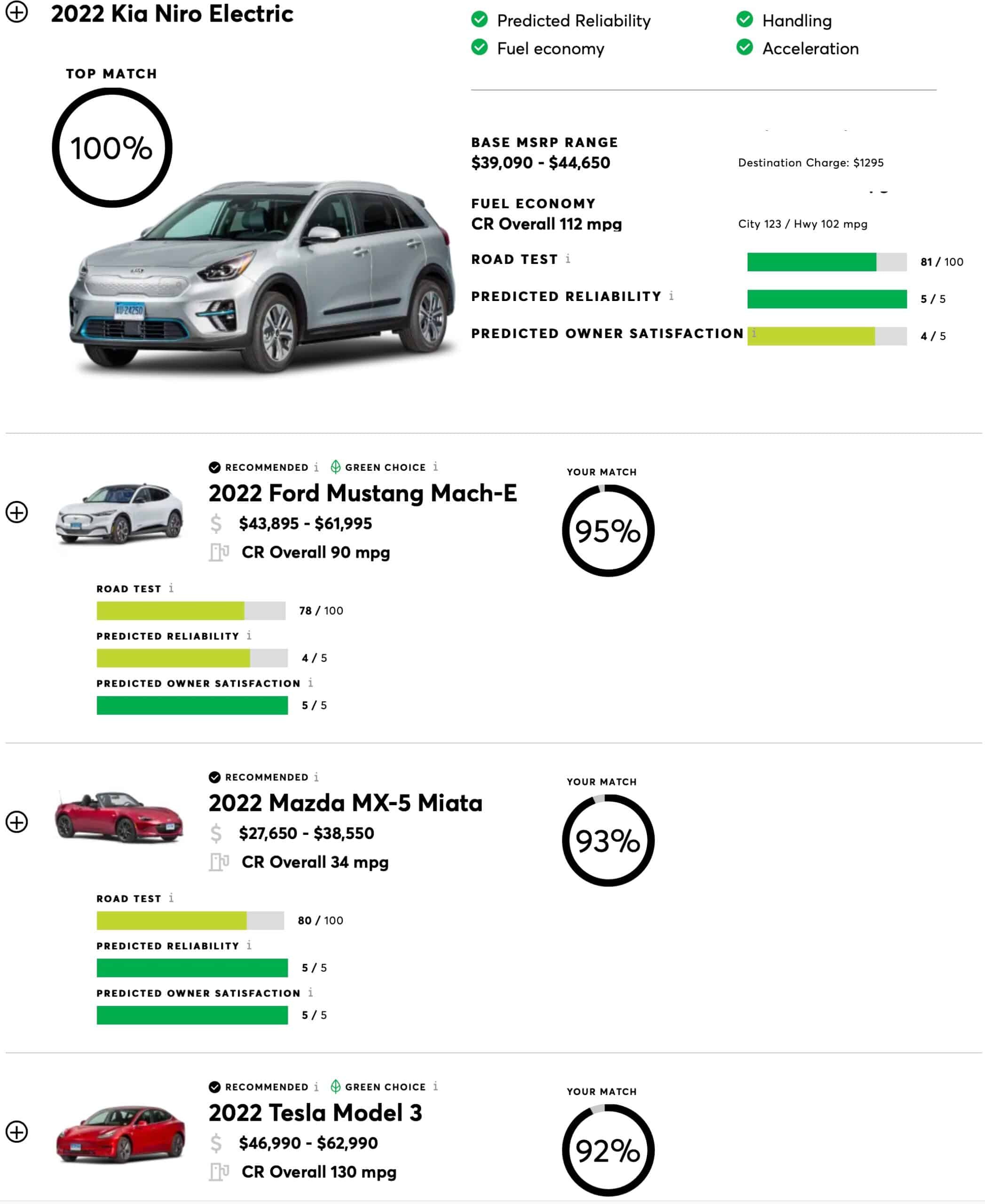
Using the Consumer Reports car finder tool, I whittled down a list of potential candidates. While options like the Kia Niro, Ford Mustang Mach-E, and Tesla Model 3 appeared in the rankings, I systematically eliminated them based on my personal requirements. The Tesla was dismissed due to cost and reliability concerns; the Kia and Hyundai lacked the “fun” factor I craved; and the Mustang Mach-E was, despite its name, another SUV.
That left one clear winner: the Mazda MX-5 Miata.
The Case for the Mazda Miata
The Miata has long been the gold standard for pure, unadulterated driving pleasure. Its reputation for reliability is stellar, and it offers the intimate, mechanical connection to the road that I had missed since my early days with the 2004 Mini.
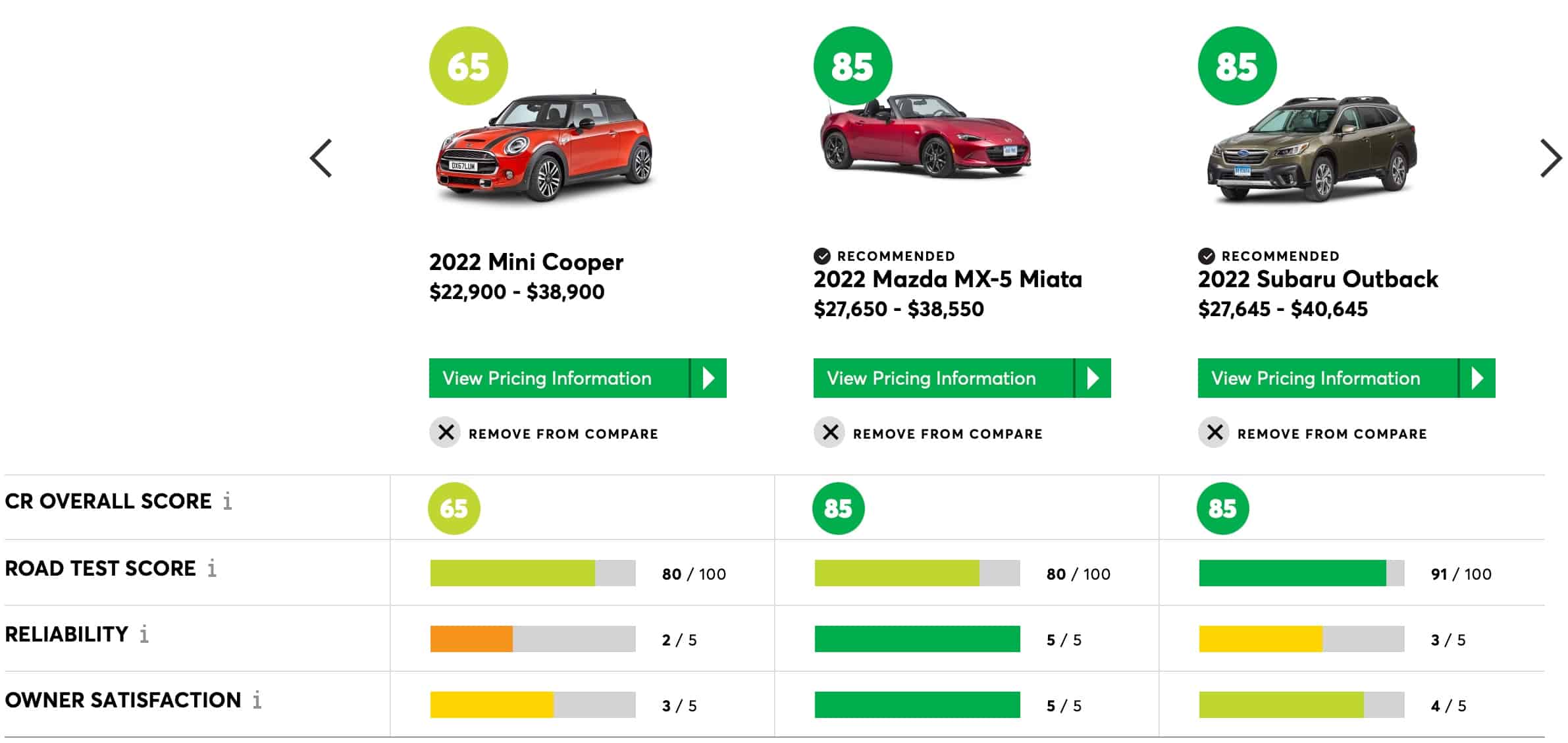
I acknowledge that from a strictly “utility” standpoint, the Miata is arguably the worst vehicle on the market. It seats two—very tightly—it has virtually no cargo space, and the cabin can be noisy. However, as the Consumer Reports review noted, there isn’t a better “fun-per-dollar” performance car available. It isn’t about hauling groceries; it’s about the revival of the senses on a winding road.
The Dealership Experience
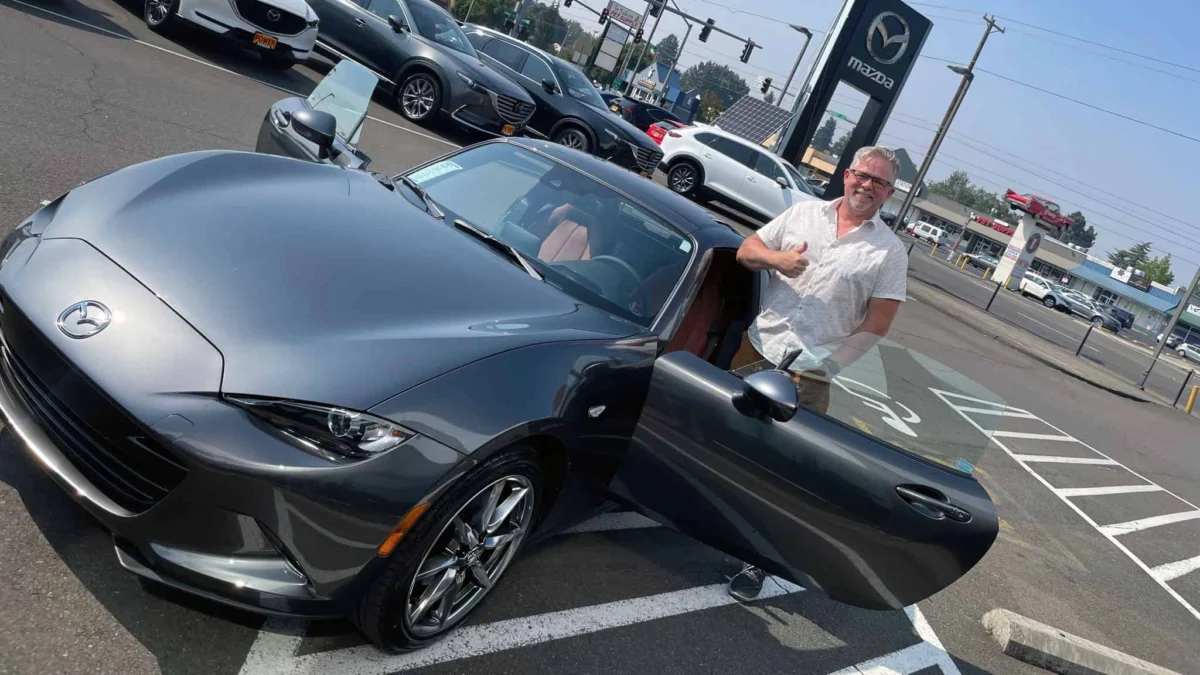
On the last Thursday in August, I traveled to a Mazda dealership in Salem, Oregon. I arrived with a clear goal: if I could get the dealer to match the $33,000 trade-in offer from the Mini dealership, I would proceed.
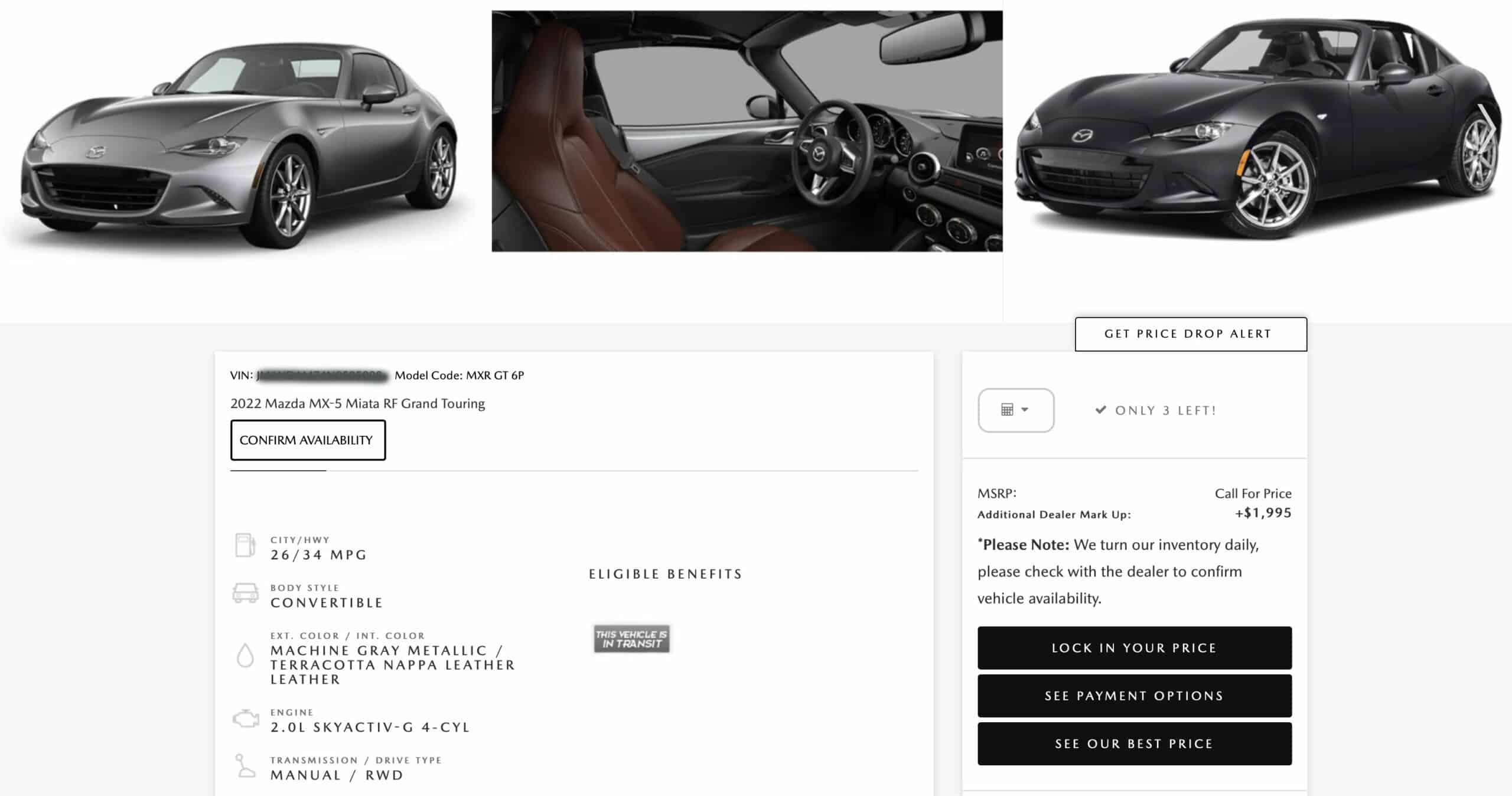
When the salesman attempted the traditional “four-square” sales tactic, I remained firm. I wasn’t there to be pressured into a car currently on the lot; I was there for a specific configuration—a grey hardtop model with a manual transmission. We reached a tentative agreement, and I waited for the vehicle to arrive.
The total cost was $39,245, a figure that included a $1,995 market adjustment premium. While the price was high, I analyzed the transaction through the lens of a trade-off: Would I rather have the “Maxi Cooper” and $7,000, or a brand-new 2022 Mazda Miata? The choice was instantaneous.
Financial Implications and Emotional Growth
For a long time, my background—growing up in a low-income household—dictated my financial behavior. I viewed any expenditure on “nice things” as a moral failure. However, as I’ve progressed in my understanding of personal finance, I’ve adopted the philosophy championed by experts like Ramit Sethi: Money is a tool to build a “rich life.”
This purchase was not a logical, spreadsheet-driven decision. It was an emotional one, but it was not a reckless one. I sought the counsel of trusted peers, including financial writers and friends, all of whom encouraged me to prioritize my own happiness.
Final Reflections: The Drive Home
When the car finally arrived, it had only five miles on the odometer—a record for the finance manager who processed my paperwork. Driving off the lot, I bypassed the highway in favor of the winding riverside roads leading back to Corvallis. With the top down and the wind in my hair, the experience was everything I had hoped for.
The purchase of the Miata represents more than just a change in vehicle; it marks a transition in my relationship with money and self-care. I am no longer interested in living a life of compromises. By allowing myself this purchase, I have moved away from the guilt that once defined my financial life and toward a model of intentional, joy-focused spending.
In the end, the Miata isn’t just a car; it is a manifestation of a life well-lived—a reminder that while we should be wise with our money, we must also be wise enough to enjoy it.