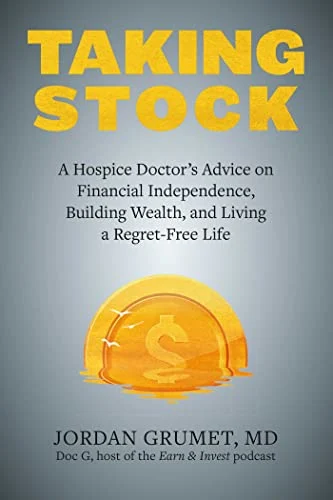
In the high-stakes world of personal finance, we are often conditioned to measure success through the narrow lens of net worth, compound interest, and market volatility. We obsess over index funds, tax-advantaged accounts, and the elusive goal of early retirement. However, according to Dr. Jordan Grumet, a hospice physician and author of Taking Stock, our preoccupation with financial metrics often blinds us to the assets that truly dictate the quality of our final chapters.
Drawing from years of bedside conversations with the dying, Grumet posits a radical shift in perspective: if you want to know what is worth investing in, ask those who are nearing the end of their journey. As he famously notes, "When the undertaker speaks, you should really listen."
The Genesis of a New Investment Philosophy
The insights presented in Taking Stock are not derived from the boardrooms of Wall Street or the portfolios of the ultra-wealthy. Instead, they were forged in the quiet, often somber atmosphere of hospice care. Dr. Grumet spent his career walking the "lonely path" with patients who were forced to confront their life choices in the face of imminent mortality.
These individuals, stripped of the ability to earn more money or change their career trajectories, often spoke with a clarity that the living rarely possess. What Grumet discovered was that while money is a necessary tool for survival and security, it is rarely the primary source of regret or satisfaction at the end of life. The most profound investments—the ones that yield the highest emotional dividends—are fundamentally non-monetary.
The Pillars of Non-Financial Wealth
To live a life of meaning, one must look beyond the balance sheet. Dr. Grumet identifies several key areas where individuals must allocate their "life capital" to ensure a legacy of fulfillment rather than one of regret.
1. The Power of Self-Forgiveness
Perhaps the most significant barrier to a peaceful end-of-life experience is the weight of unresolved remorse. Humans possess an almost infinite capacity for self-blame, fixating on past failures, missed opportunities, and fractured relationships.
Grumet illustrates this through the story of Gerald, a patient whose life was upended by corporate job loss and subsequent alcoholism. By the time Gerald reached hospice, his physical health was beyond repair, and his relationship with his daughter remained severed. Through the process of a "life review," Gerald realized that his inability to forgive himself had been a primary driver of his decline. The implication is clear: self-forgiveness is not merely an emotional luxury; it is a critical investment in one’s long-term health and psychological resilience.
2. The Compounding Nature of Experience
Much like the exponential growth seen in a well-managed investment portfolio, human experience compounds over time. Every skill mastered, every hardship endured, and every uncomfortable situation embraced contributes to a "human capital" that cannot be liquidated. Grumet emphasizes that growth—whether in a career or in personal character—is rarely linear. By committing to incremental, one-percent improvements, individuals can achieve massive transformations over the span of a lifetime.
3. Education as an Emergency Fund
In an uncertain world, knowledge serves as the ultimate hedge against catastrophe. While formal education is valuable, Grumet argues that self-directed learning—reading, debating, and exploring foreign topics—is essential. Knowledge is the "emergency fund" that shields one’s happiness when other resources are depleted. Whether it is learning a new language or gaining basic financial literacy, the act of acquiring knowledge is a high-yield investment that pays out in adaptability and peace of mind.
Investing in the Human Connection
If there is a singular metric for a life well-lived, it is found in the people one leaves behind. Dr. Grumet observes that when he enters a patient’s room, he can almost immediately gauge the success of their "investments" by the presence of family, friends, and shared history.
The Dividend of Relationships
Investing in people is a long-term play. It requires the courage to connect, the vulnerability to be understood, and the time to nurture bonds. For Grumet, this lesson was personal; it was only through finding his own "tribe" in the worlds of writing and podcasting that he was able to redefine his purpose.
The Legacy of Children
The investment in the next generation is perhaps the most profound way to ensure one’s legacy survives. This goes beyond financial inheritance; it involves passing down values, humility, and the example of a life lived with intention. As Grumet notes, he is frequently called by his late father’s name by colleagues, a testament to the enduring impact of a parent’s influence. When you invest in children, you are essentially planting a tree under whose shade you may not sit, but which will continue to grow long after you are gone.
Integrating Physical and Mental Well-being
Financial independence is an empty goal if one lacks the physical and mental health to enjoy it. The body and mind form the framework upon which all other successes are built.
- Mental Health: Seeking professional support, practicing mindfulness, and learning to quiet the internal noise are not signs of weakness but requirements for sustained performance.
- Physical Health: The goal is not athletic perfection but longevity and functional capability. Consistency—such as thirty minutes of daily movement—is far more effective than the "perfectionism" that often leads to burnout and sedentary habits.
The Role of Traditional Investing
While the focus of Taking Stock is on the intangible, Dr. Grumet is clear: one must still "get the money right." Financial security is the foundation that allows for the pursuit of non-monetary goals. By mastering the basics—investing in the stock market, understanding asset allocation, and building a financial safety net—you free up the mental bandwidth required to pursue meaningful work and connections. Financial literacy is not the end goal; it is the enabler.
Implications for Modern Living
The modern world often demands that we live in a state of constant distraction, looking forward to the next milestone or backward at perceived failures. The core implication of Grumet’s work is that we must "take stock" of our lives while we still have the agency to change them.
Waiting until the end of life to prioritize relationships, health, and purpose is a strategy for regret. Instead, Grumet proposes a proactive inventory:
- Allocate Time: Dedicate quiet, electronics-free hours to audit your current trajectory.
- Categorize Assets: Separate your life into non-monetary investment buckets (e.g., relationships, health, skills).
- Calculate Wealth: Determine if your current path allows for the pursuit of your true identity and purpose. If the answer is no, the portfolio needs rebalancing.
Final Thoughts: Preparing for Life
The transition from a life of mere accumulation to a life of significance requires a profound shift in mindset. It is not enough to be prepared for retirement; one must be prepared for the entirety of the human experience.
Dr. Grumet’s message is ultimately one of empowerment. By investing in ourselves—through education, forgiveness, health, and community—we build a foundation that can withstand the inevitable volatility of life. As he concludes, the process is taxing and requires immense energy, but it is the only way to ensure that when we eventually look back at our lives, we see a portfolio not just of numbers, but of meaning.
To achieve true financial independence is to reach a state where your resources are no longer just supporting your lifestyle, but are actively fueling your purpose. Start that process today, because the most valuable investment you will ever make is the one that continues to pay dividends long after you have left the stage.