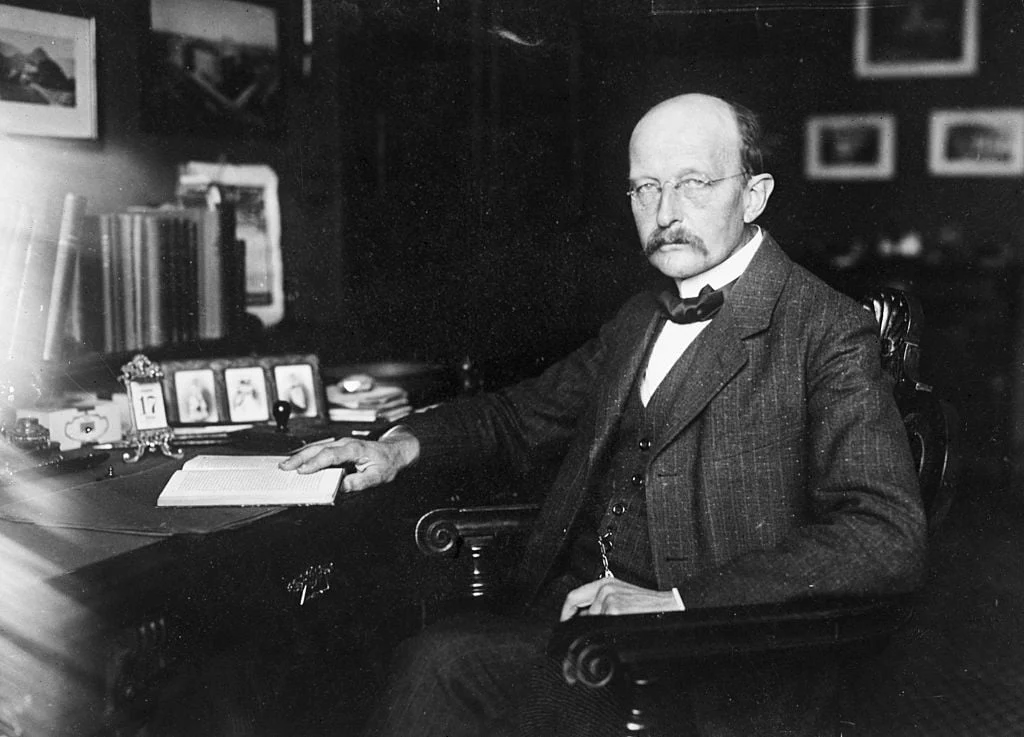
In a move that highlights the precarious intersection of historical scholarship, digital archival management, and the fallibility of modern publishing infrastructure, the academic publisher Springer Nature has officially restored two research papers authored by Nobel laureate Max Planck. The reversal, announced more than a decade after the papers were mysteriously retracted in 2011, follows an exhaustive investigation by historians who concluded that the original decision to scrub the works from the public record was fundamentally flawed.
The papers, originally published in the 1940s in the German-language journal Naturwissenschaften (now rebranded as The Science of Nature), were removed from the publisher’s digital repository under the vague umbrella of "human error." This long-standing correction, which stood for thirteen years, cast an unearned shadow over the legacy of one of the 20th century’s most foundational physicists.
The Chronology of a Correction
The saga began in 2011, a period during which many major academic publishers were aggressively migrating their physical archives into digital formats. During this transition, two of Max Planck’s shorter contributions to Naturwissenschaften were flagged and subsequently retracted. For over a decade, these documents were effectively erased from official electronic databases, leading to confusion among historians and physicists alike.
It was not until the recent intervention of Yves Gingras and Mahdi Khelfaoui, historians from the University of Quebec, that the nature of these retractions was scrutinized. Their research, which involved a deep dive into the context of 1940s scientific publishing, revealed that the retractions were based on a misunderstanding of historical academic norms rather than any evidence of scientific misconduct or fraud.
According to the findings published by Science, the historians determined that the "copyright issues" cited as the justification for the 2011 retraction were effectively non-existent. One of the papers had appeared in multiple publications—a standard and accepted practice in the mid-20th century academic ecosystem—while the second paper was a rebuttal to a critic, mirroring the title used by the detractor. Both practices were common in the era, yet modern administrative systems, governed by rigid, contemporary copyright protocols, appeared unable to account for these historical nuances.
The Mystery of the "Ghost" Retraction
The restoration of these papers has reignited a heated debate regarding the role of automated systems in the governance of scientific archives.
Suzanne Scarlata, the current editor-in-chief of The Science of Nature, offered a provocative theory in her recent comments to Science. She suggested that the original retraction was not a manual human decision at all, but rather the result of automated policing software—often referred to as "bots"—that monitors archives for copyright infringement, duplicate content, or metadata inconsistencies.
If true, this suggests that the retraction of a Nobel laureate’s work was the byproduct of an algorithmic mismatch: a machine designed to flag contemporary plagiarism or copyright theft encountered a historical artifact it could not contextualize, and a lack of human oversight allowed the error to stand for thirteen years.
Official Responses and the "Human Error" Defense
The response from Springer Nature has been swift, if somewhat defensive. A spokesperson for the publishing giant issued a statement refuting the claims regarding automated interference.
"It appears that the decision to retract the papers was a human error, and we can confirm that no software or ‘bot’ would have been involved in the process," the spokesperson stated.

However, this explanation has failed to quell skepticism from the academic community. Yves Gingras, one of the historians instrumental in bringing this issue to light, remains unconvinced. In his critique of the publisher’s narrative, he questioned the logistical feasibility of the "human error" explanation.
"Who can believe that in 2011, someone at Springer manually browsed decades of archived journals and happened to discover two short papers by Planck that allegedly presented a copyright issue?" Gingras asked. The absurdity of a human archivist randomly selecting two obscure, non-fraudulent papers from the 1940s to retract, without any external impetus, lends significant weight to the theory that automated oversight systems are increasingly acting as "silent editors" of the historical record.
Implications for Scientific History
The Springer Nature case serves as a cautionary tale regarding the "digital turn" in scientific publishing. As academic institutions and publishers accelerate the digitization of vast historical archives, they are increasingly relying on algorithms to manage, categorize, and police these collections.
The Erasure of Context
The primary danger highlighted by this incident is the decontextualization of historical science. Academic standards regarding dual publication, citation, and authorship have shifted dramatically over the last century. When modern software, built on 2020s-era legal and ethical frameworks, is applied retroactively to 1940s-era journals, the risk of "false positives" for scientific misconduct is high.
The Burden of Proof
The fact that it took the specialized work of professional historians to reverse this decision underscores a systemic imbalance. If a Nobel laureate’s work can be erased for over a decade due to a perceived "copyright issue," the work of lesser-known scientists is arguably at even greater risk of being unfairly purged from the permanent record. This incident raises the question: How many other historical papers are currently marked as "retracted" or "withdrawn" in digital databases for reasons that would not withstand the scrutiny of a human historian?
Algorithmic Accountability
There is a growing call for transparency regarding the use of AI and automated bots in academic publishing. If publishers are to use these tools to maintain the integrity of their archives, they must also provide a clear, audited path for contesting automated decisions. Currently, the "black box" nature of these systems makes it nearly impossible for authors—or their estates—to challenge retractions that appear arbitrary.
Moving Toward a More Transparent Future
The restoration of Max Planck’s papers is a victory for historical accuracy, but it leaves the fundamental problem of digital archival governance largely unaddressed. Springer Nature’s pivot from an unexplained, multi-year retraction to a full restoration is a positive step, yet the disconnect between their explanation and the reality of archival management remains a point of contention.
As we move further into the digital age, the scientific community must demand greater transparency from publishing houses. We cannot allow the historical record to be sanitized or altered by opaque systems that prioritize administrative efficiency over intellectual integrity.
The case of Max Planck serves as a reminder that science is not merely a collection of data points to be managed by software; it is a living history. Every paper, no matter how old, contributes to the scaffolding of our current knowledge. When we allow those scaffolds to be pulled down by invisible, automated hands, we undermine the very foundation of the scientific enterprise.
Moving forward, the academic publishing industry must implement "human-in-the-loop" protocols for any archival changes involving historical documents. Automated systems may be useful for detecting clear-cut cases of fraud, but they are ill-equipped to handle the complexities of intellectual history. The restoration of these two papers is a victory, but the work of ensuring that our digital archives reflect the truth of our past remains an ongoing, critical necessity for the global scientific community.