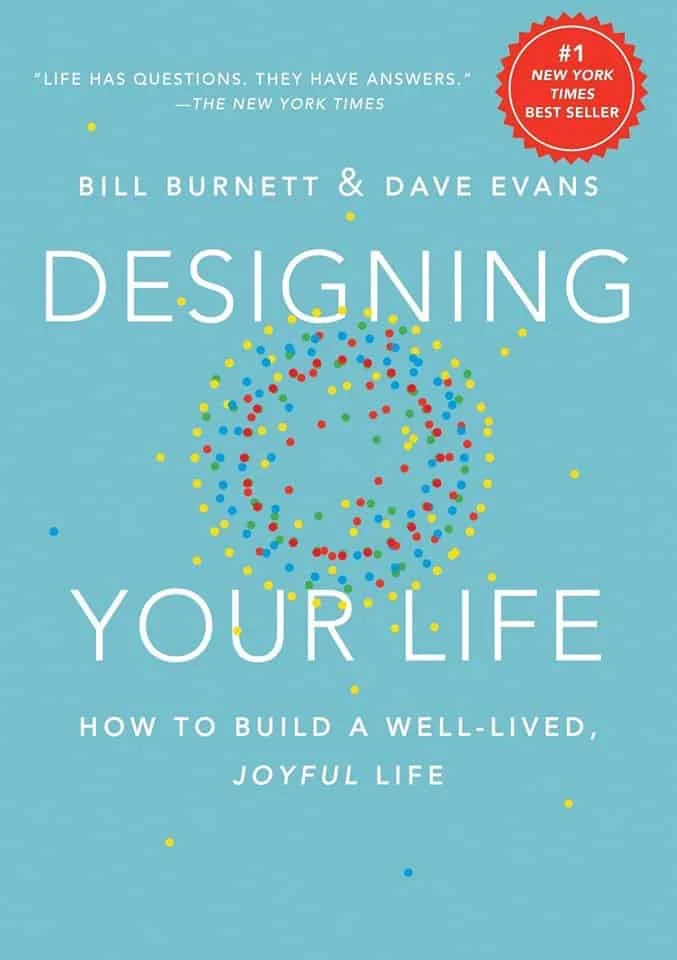
In an era defined by rapid technological shifts and an often overwhelming sense of global uncertainty, the human psyche is increasingly drawn to narratives that address the "what-ifs" of existence. Two disparate cultural touchstones—the chaotic, genre-bending film Everything Everywhere All at Once and the methodical, design-driven manual Designing Your Life by Bill Burnett and Dave Evans—have converged to provide a roadmap for those seeking clarity in a world that feels both fractured and infinite.
What began as a pop-culture obsession for many has evolved into a philosophical framework. By examining the intersection of cinematic nihilism and practical life design, we can better understand how to move past existential dread and toward a life of intentionality and purpose.
The Cinematic Catalyst: Everything Everywhere All at Once
Released to critical acclaim and cult-status adoration, Everything Everywhere All at Once serves as a kaleidoscopic exploration of the multiverse. The film centers on Evelyn Wang, a struggling laundromat owner whose life is a tapestry of unfulfilled potential, strained familial bonds, and looming IRS audits.
The Plot: A Journey Through the Infinite
Evelyn’s trajectory shifts when she is thrust into a conflict that spans parallel realities. The antagonist, Jobu Tupaki, represents the ultimate nihilistic threat: the realization that if every version of oneself exists simultaneously, then individual choices are rendered meaningless. Evelyn, initially a passive observer of her own mediocrity, must master "verse-jumping"—the ability to tap into the skills and memories of her alternate selves—to save existence.
The film is intentionally jarring. It juxtaposes high-concept science fiction with the mundane stresses of tax documentation and the painful complexities of intergenerational trauma. For viewers, the experience is designed to be exhaustive, mirroring the sensory overload of the modern digital age.
The Philosophical Pivot
Critics and audiences alike have noted that the film’s "madness" is not merely stylistic; it is a narrative device. The film argues that in a multiverse where nothing matters, the only logical response is radical kindness. By embracing the Waymond Wang philosophy—the character’s insistence on kindness as a survival strategy—the viewer is invited to reclaim agency. The film suggests that while the universe may be indifferent, the individual remains the architect of their own significance.
Chronology of a Personal Paradigm Shift
The resonance of such themes is rarely accidental. For many, 2022 marked a "nihilistic nadir," a period where global crises and personal losses—such as the passing of a family member—brought the fragility of existence into sharp focus.
- The Phase of Disillusionment: Initial engagement with the concept of the multiverse often begins with despair. The sheer scale of infinite lives suggests that one’s current reality is insignificant.
- The Phase of Reflection: Through literature like Matt Haig’s The Midnight Library, individuals begin to process the idea of "limbo states"—the hypothetical spaces between the lives we lead and the lives we might have led.
- The Phase of Integration: The final stage is the recognition that the "multiverse" is not a physical place, but a mental construct. This is the point where the realization hits: "You are not trapped by your current reality."
The Science of Design: Structuring the Infinite
While film provides the inspiration, the Stanford-based methodology found in Designing Your Life provides the execution. Authored by Bill Burnett and Dave Evans, the book is a departure from traditional self-help, relying instead on the principles of design thinking—a process usually reserved for developing consumer products—to solve the "wicked problem" of career and life satisfaction.
Principles of Coherence
Burnett and Evans introduce the concept of "coherence," which is achieved when three distinct pillars align:
- Who you are: Your internal compass and values.
- What you believe: Your worldview, encompassing both your lifeview and workview.
- What you do: Your daily actions and professional output.
When these three elements are in sync, a "well-designed life" emerges. The authors argue that most people fail to achieve this because they treat their lives as a single, linear trajectory, rather than a series of experiments.
The Odyssey Plan: Mapping Potential Realities
The core utility of the book is the "Odyssey Plan," an exercise that forces the reader to draft three distinct five-year versions of their life:
- The Existing Reality: A refinement of your current path, optimized for growth and fulfillment.
- The Alternative Reality: A pivot to a completely different sector, assuming your current work ceased to exist tomorrow.
- The "Wild Card" Reality: A life path where money and social judgment are non-factors, allowing for pure creative or personal indulgence.
Implications for the Modern Individual
The implication of applying these methodologies is profound. It shifts the burden of "meaning-making" from the universe to the individual. By creating an Odyssey Plan, one effectively treats their life as a portfolio of experiments.
Case Study: The Writer’s Evolution
Consider the practical application of these tools. An individual might currently be focused on content creation (Plan A). Should that career vanish, they might pivot to archival storytelling, focusing on hospice care and preserving the life stories of the elderly (Plan B). Should financial barriers be removed entirely, they might pursue a creative endeavor, such as graphic literature or webcomics (Plan C).
This approach turns the "multiverse" from a paralyzing concept into a toolkit for resilience. It allows for the exploration of multiple identities simultaneously, reducing the fear of failure in any single domain.
Critical Reception and Limitations
It is important to note that the design-thinking approach is not without its detractors. Some critics argue that the terminology—"prototyping your life," "designing a journey"—can feel overly clinical or corporate. Furthermore, the absence of structural support, such as an index in the referenced text, highlights a irony: even the best-designed systems often fail at the point of user interface.
However, the efficacy of the exercises remains high. By forcing a 250-word articulation of one’s "Workview" and "Lifeview," individuals are compelled to confront the friction between their current reality and their desires.
Moving Forward: The Power of Intentionality
As we move further into a decade defined by rapid change, the synthesis of art and methodology is essential. Everything Everywhere All at Once teaches us that the chaos is inevitable, but our response to it is a choice. Designing Your Life provides the technical framework to ensure that choice is calculated, coherent, and aligned with our deepest values.
Whether you are a skeptic looking for a reason to keep moving or a dreamer seeking a way to turn abstract ideas into reality, the answer lies in the intersection of these two worlds. You are not a static entity; you are a work in progress. You are not trapped in one timeline. By adopting a design mindset, you can navigate your own multiverse, curating a life that is not just successful by external metrics, but meaningful by your own.
The message is clear: if you are dissatisfied with your current timeline, it is within your power to draft a new one. The journey from nihilism to purpose is a design problem, and like any problem, it has a solution—if you are willing to do the work.