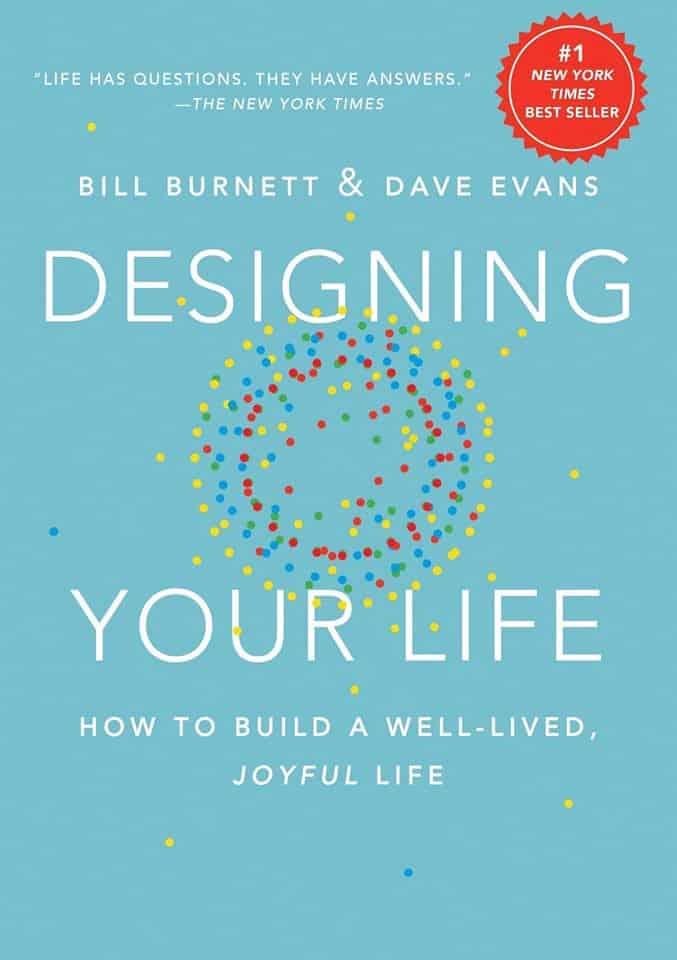
In an era defined by professional burnout, financial uncertainty, and the pervasive "hustle culture," many individuals find themselves drifting through their careers and personal lives without a clear North Star. Addressing this existential malaise, Stanford University design professors Bill Burnett and Dave Evans authored Designing Your Life, a seminal guide that posits that the principles used to build innovative products can—and should—be applied to the architecture of one’s own existence.
This article explores the practical application of these design principles, documenting a collaborative journey undertaken by a group of peers to recalibrate their personal and professional trajectories through self-assessment, reflection, and the creation of a "life compass."
The Genesis of a Collaborative Experiment
The decision to treat life as a design problem was sparked by a recent review of Burnett and Evans’ work. The methodology suggests that life, like a software interface or a piece of industrial hardware, is subject to iteration, prototyping, and refinement. Recognizing that such transformative work is often more effective in a community setting, a small cohort was formed to move beyond passive reading into active engagement.
The group includes the author, his long-term partner Kim, and a former college classmate, Craig. Over the course of several months, the participants have committed to working through the book’s core exercises. By sharing these reflections publicly, the participants aim to provide a roadmap for others seeking to align their daily actions with their deepest values. To preserve the intellectual property of the authors, this series eschews a step-by-step tutorial in favor of a thematic exploration of the exercises and the profound, often unexpected, personal revelations they yield.
Chronology of Discovery: Starting Where You Are
The foundational principle of life design is deceptively simple: Start where you are. This echoes established financial wisdom, where one cannot effectively manage a portfolio or eliminate debt without first conducting an honest audit of current assets and liabilities.
In the context of life design, this requires a rigorous, non-judgmental self-assessment across four critical pillars: Health, Love, Play, and Work. Participants are tasked with rating these categories and drafting brief, honest descriptions of their current states.
This exercise is not meant to be immediately actionable, nor is it a performance review. Rather, it serves as a "snapshot in time"—a geographical coordinate on the map of one’s life. Without this baseline, any attempt to chart a course toward a future state is effectively navigation without a starting point. By acknowledging the current reality, the individual gains the clarity necessary to begin building a metaphorical compass.
Supporting Data: The Workview and the Lifeview
The second phase of the process involves the creation of two core documents: a "Workview" and a "Lifeview." These mini-essays serve as statements of purpose, functioning as the foundational documents for all future decision-making.
The process is inherently collaborative; when the author and his colleague Craig compared their perspectives via video conference, they discovered a startling level of alignment. This shared vocabulary regarding purpose, integrity, and the role of work in a capitalist society suggests that while individual paths may diverge, core ethical frameworks often remain tethered to shared values.
The Philosophy of Work
Craig’s "Workview" emphasizes the necessity of growth and "right livelihood"—a Buddhist concept denoting work that supports life without causing harm to natural systems. He identifies tangible, restorative work as his highest aspiration, seeking to foster abundance rather than mere profit.

The author’s "Workview" mirrors this sentiment, focusing on the concept of ikigai—the Japanese intersection of passion, mission, vocation, and profession. He views his work as a dual-purpose endeavor: providing financial stability while acting as a reliable, uncluttered resource for others. Both men concluded that while money is a necessary byproduct of labor, it is an insufficient driver for long-term fulfillment.
The Philosophy of Life
The "Lifeview" exercises proved even more revealing. Both participants arrived at a secular, humanistic approach to existence. They argue that life lacks inherent meaning, which they interpret not as a prompt for nihilism, but as an invitation to construct their own significance through kindness, curiosity, and community engagement.
The participants emphasize "social capital"—the networks of relationships and community trust that define a healthy society. Reflecting on Robert Putnam’s Bowling Alone, they expressed concern over the atomization of modern life, exacerbated by digital isolation. They believe that by prioritizing local connections and acting with rational self-centeredness—ensuring one’s own needs are met so one can effectively assist others—they can contribute to a more cohesive, resilient society.
Official Context: The Willamette Connection
The striking alignment between the participants’ worldviews is not entirely coincidental. Both the author and Craig—as well as other contemporaries like Angela Rozmyn—are alumni of Willamette University. The institution’s motto, non nobis solum nati sumus ("not unto ourselves alone are we born"), appears to have left an indelible mark on their collective approach to civic duty and professional purpose.
This shared background highlights the role of environment in shaping our "compass." When individuals are exposed to a common ethical framework during their formative years, they often find it easier to articulate a coherent life strategy later in adulthood. The Designing Your Life framework effectively codifies this, providing the tools to bridge the gap between abstract academic values and concrete daily decisions.

Implications for Future Growth
The implications of this exercise are significant. By codifying their Workview and Lifeview, the participants have created a filter for future opportunities. When faced with a career change, a personal conflict, or a major life transition, they now possess a diagnostic tool to determine whether a potential path aligns with their established purpose.
As the experiment progresses, the cohort is moving into the next phase: the "Good Time Journal." For the coming weeks, participants will track their daily activities, logging levels of engagement and energy. This data will be used to create "mind maps"—visual representations of what truly energizes them versus what depletes them.
Moving Toward Action
The ultimate goal of this process is not merely self-reflection, but the radical redesign of daily routines. By identifying which activities foster growth and which hinder it, the participants hope to:
- Prototype new career directions without the risk of total disruption.
- Reallocate time and energy from low-value tasks to high-value social or professional endeavors.
- Strengthen community bonds by consciously choosing activities that build social capital.
Conclusion: A Call to Intentionality
The journey of designing one’s life is an ongoing, iterative process. It requires the courage to admit where one is failing, the intellectual honesty to define what one truly values, and the discipline to prototype a new way of living.
For those who feel stagnant, the lesson from this ongoing experiment is clear: You are not a static entity defined by your current job title or bank balance. You are the designer of your own experience. By starting where you are and building a compass rooted in your unique values, you can navigate the complexities of modern life with a greater sense of clarity, purpose, and, ultimately, fulfillment. The work continues, and with it, the potential for a more intentional, design-led existence.