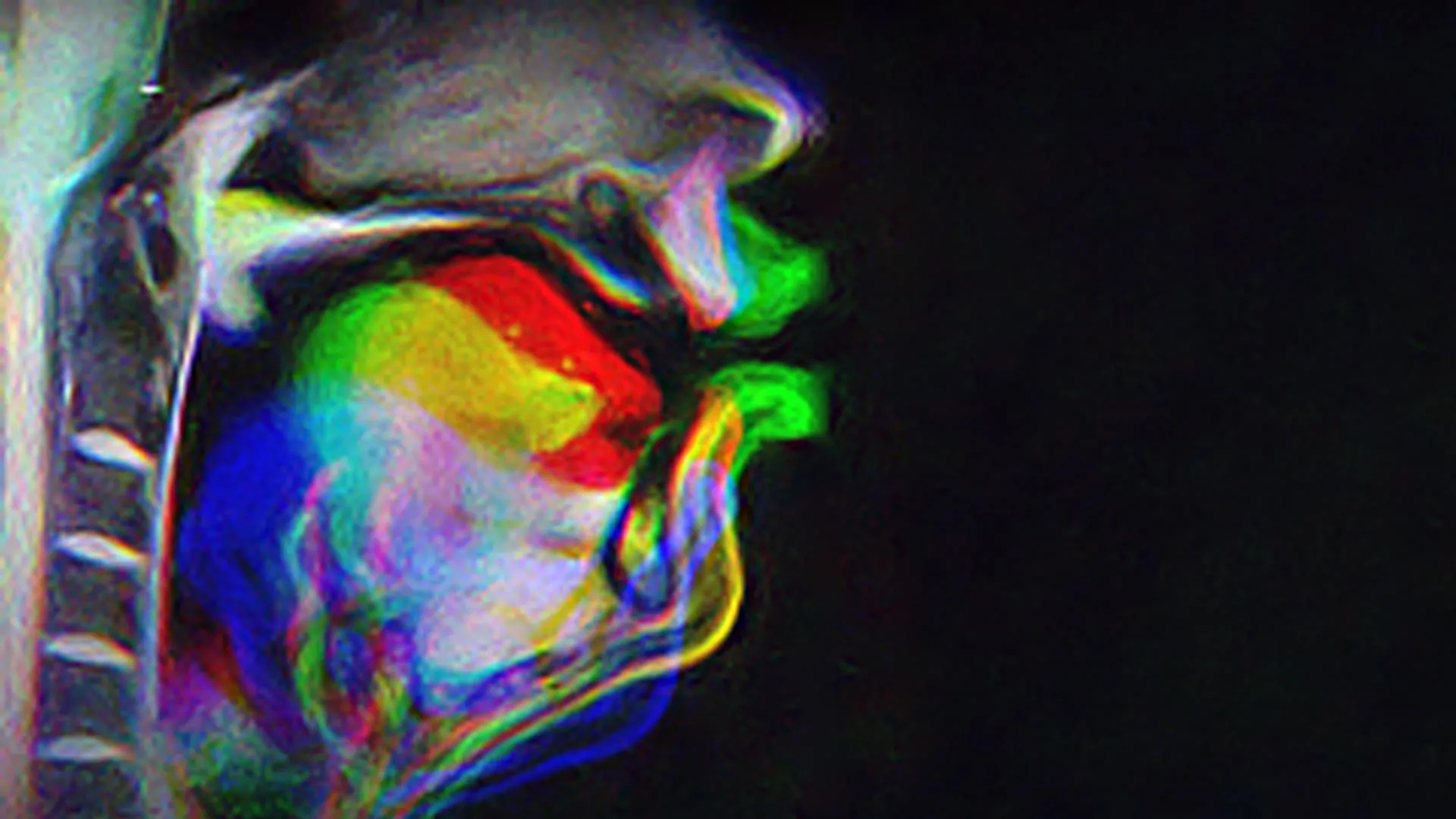
For decades, the prevailing doctrine in neuroscience held that human speech was a feat of motor control. Scientists operated under the assumption that the brain’s frontal motor areas—the command centers governing the lips, tongue, and vocal tract—were the primary architects of how we learn, refine, and memorize the complex articulation of language. However, a groundbreaking study conducted by researchers at McGill University and the Yale School of Medicine is upending this long-standing paradigm.
The research suggests that the keys to speech learning and memory do not lie solely in the "doing" of speech, but in the "feeling" and "hearing" of it. By identifying the auditory and somatosensory cortices as the essential hubs for acquiring new speech patterns, the findings promise to reshape our understanding of neuroplasticity and pave the way for revolutionary advancements in stroke rehabilitation and brain-computer interface (BCI) technology.
The Paradigm Shift: Sensory Systems Take Center Stage
The traditional model of motor learning—the idea that the brain’s "motor cortex" is the master controller of physical movement—has been the foundation of neurological rehabilitation for years. Whether learning to play the piano or learning a new language, the assumption was that the brain’s motor output regions were where the "learning" actually happened.
However, the new study, published in the Proceedings of the National Academy of Sciences (PNAS), suggests that speech is fundamentally different. While motor areas are undeniably involved in the execution of speech, the researchers found that they are not the primary drivers of the memory consolidation process. Instead, the auditory cortex—which processes sound—and the somatosensory cortex—which processes touch and physical sensation—act as the primary storage facilities for speech-related learning.
"Sensorimotor neuroscience has traditionally focused on frontal motor areas as the principal drivers of movement," says David Ostry, a Professor of Psychology at McGill University and a lead author of the study. "This study changes that understanding by showing that human speech learning is extensively sensory in nature."
Chronology of the Discovery: A Systematic Investigation
To reach these conclusions, the research team—comprising Nishant Rao, Rosalie Gendron, Timothy Manning, and David Ostry—employed a rigorous, multi-stage methodology designed to isolate the function of specific brain regions during the learning process.
Phase 1: Real-Time Speech Manipulation
The experiment began by creating a controlled learning environment. Participants were asked to speak while their own voices were subtly altered in real-time and played back to them through headphones. This sensory feedback loop forced the participants’ brains to adjust their articulation patterns to compensate for the perceived changes, effectively inducing a state of "speech motor learning." This process mimicked the way humans naturally adapt their speech when faced with a new accent or a slight physical obstruction, such as a dental appliance.
Phase 2: Targeted Neurological Disruption
Once the participants had successfully adapted their speech patterns, the researchers utilized transcranial magnetic stimulation (TMS). TMS is a non-invasive procedure that uses magnetic fields to temporarily disrupt electrical activity in specific, localized areas of the brain. The team targeted three distinct regions:
- The Auditory Cortex: Responsible for processing sound.
- The Somatosensory Cortex: Responsible for processing the tactile sensations of the mouth and throat.
- The Motor Cortex: Responsible for the physical execution of speech movements.
Phase 3: The 24-Hour Retention Test
The critical test occurred 24 hours later. The researchers invited the participants back to determine how well they had retained the new speech patterns they had learned the previous day. The logic was simple: if a specific brain region was responsible for the long-term storage of that speech memory, then disrupting that region during the learning phase would result in "forgetting" or a significantly diminished ability to reproduce the adapted speech patterns.
Supporting Data: Challenging the Motor-Centric View
The results were unequivocal and stood in stark contrast to the team’s original expectations.
When the researchers disrupted the auditory cortex or the somatosensory cortex, the participants demonstrated a significant deficit in memory retention. They had essentially "lost" the speech adaptations they had acquired the day before. Conversely, when the motor cortex—the region traditionally thought to be the seat of speech learning—was disrupted, the participants showed almost no impact on their retention. Their ability to recall and execute the learned speech patterns remained intact.
These data points provide compelling evidence that while the motor cortex executes the physical command to speak, it is the sensory systems that "encode" the success or failure of those commands. The brain uses sensory input to verify if a speech sound was accurate; it is this sensory verification process that seems to form the basis of the memory itself.
Official Responses and Scientific Context
The implications of this research extend far beyond the laboratory. By shifting the focus from the motor cortex to the sensory cortex, the study challenges the current standards of neurological therapy.
"Our study challenges the assumption that new speech memories are solely reliant on changes in motor areas of the brain," says co-author Nishant Rao, an Associate Research Scientist at Yale University. "Instead, it underscores the importance of changes in auditory and somatosensory brain areas in shaping how we learn to speak."
This study does not exist in a vacuum; it is the culmination of years of inquiry into brain plasticity. The research group had previously conducted similar studies involving the arm and hand, which yielded remarkably similar results: disrupting the sensory regions of the brain consistently interfered with the acquisition of new motor skills. By confirming that this phenomenon applies to the highly complex task of speech, the researchers have identified a universal principle of human motor learning.
Implications for Future Medicine and Technology
The potential applications of these findings are vast, particularly for the fields of rehabilitation and neuro-engineering.
Revolutionizing Stroke Rehabilitation
For patients recovering from a stroke, speech therapy is often a grueling and sometimes frustrating process. Current therapies largely focus on repetitive motor exercises—repeatedly asking a patient to move their tongue or lips in specific ways. If, as this study suggests, speech learning is driven by sensory processing, then rehabilitation strategies may need a complete overhaul.
Future therapies could incorporate "sensory-based" exercises. By stimulating the auditory and somatosensory pathways, clinicians might be able to accelerate the recovery of speech in patients whose motor cortices have been damaged. By "teaching" the brain to rely on sensory feedback, the brain may be able to bypass damaged motor areas and form new neural pathways for speech.
Enhancing Brain-Speech Technology
The field of brain-computer interfaces (BCIs)—technologies that allow computers to translate brain signals into speech—is currently one of the most exciting frontiers in medical science. Most current BCI designs prioritize reading signals from the motor cortex.
The McGill and Yale study suggests that these technologies could be significantly improved by incorporating sensory data. By mapping how the auditory and somatosensory cortices process speech, engineers could develop "smarter" interfaces that not only interpret the intent to speak but also integrate the sensory feedback loop that makes human speech natural and fluent. This could lead to more intuitive, user-friendly communication devices for individuals with paralysis or neurodegenerative conditions.
Conclusion: A New Frontier in Neuroplasticity
The work of Rao, Ostry, and their colleagues serves as a poignant reminder that the brain is far more integrated and sensory-dependent than we often give it credit for. By proving that our ability to speak is tied as much to what we hear and feel as it is to what we move, the study opens a new chapter in neuroscience.
As the team looks toward future research, they intend to identify the specific cortical circuits that facilitate this sensory-based learning. This quest to map the brain’s "hidden" learning centers will likely provide the missing pieces of the puzzle for treating movement disorders, restoring the voices of those who have lost them, and fundamentally changing how we perceive the act of communication.
The study, "Sensory Basis of Speech Motor Learning and Memory," funded by the U.S. National Institute on Deafness and Other Communication Disorders, stands as a landmark contribution to our understanding of the human mind. It is a testament to the idea that to understand how we act, we must first understand how we sense.