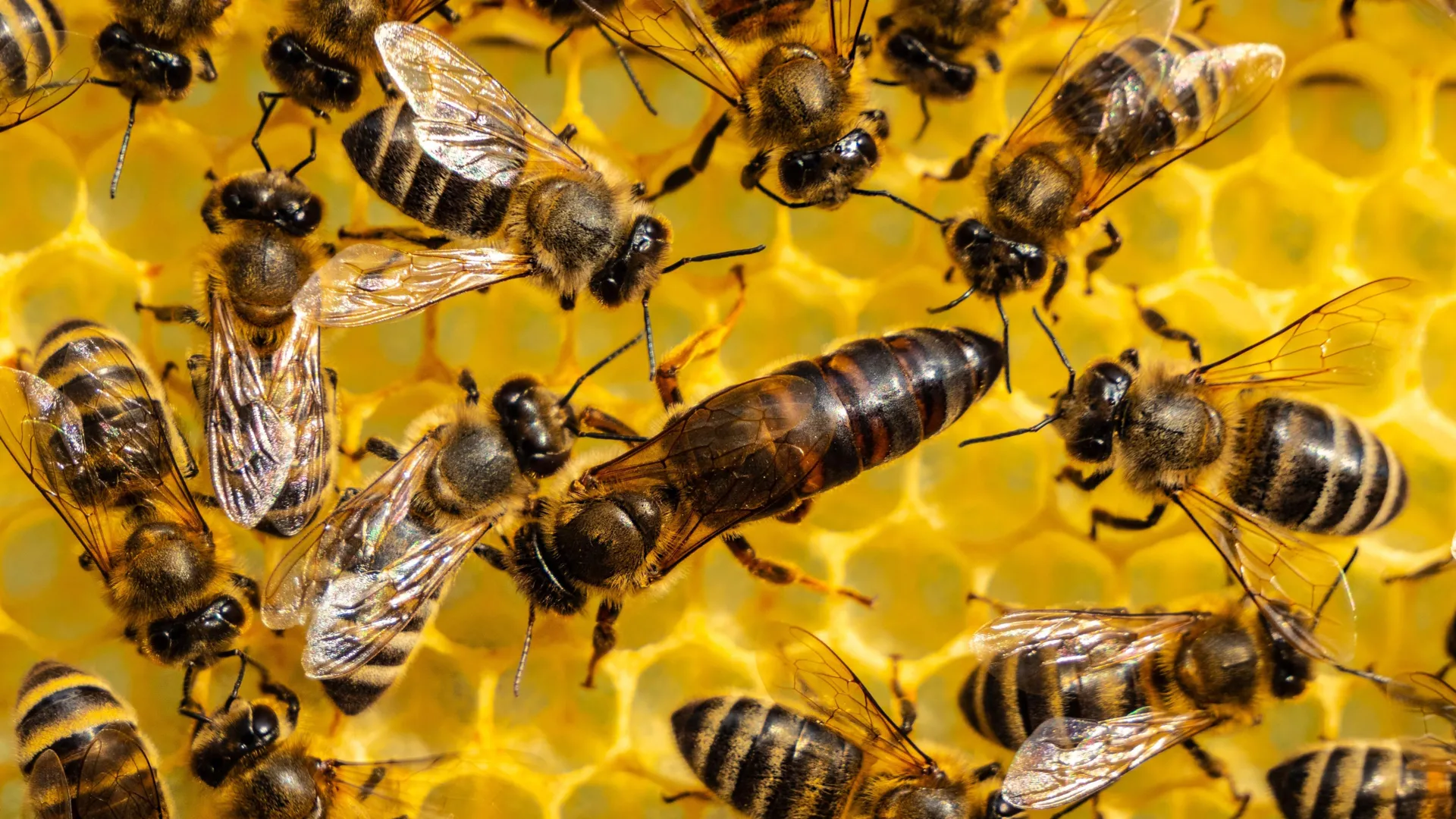
In the intricate social architecture of a honeybee hive, the queen stands as the singular source of life, laying up to 2,000 eggs a day to sustain a colony that pollinates one-third of the world’s food crops. For decades, scientists have operated under the assumption that worker bees—the diligent sentinels of the hive—serve as a robust biological shield, filtering out environmental toxins before they can reach the queen. However, groundbreaking research from the University of California, Davis, has unveiled a more precarious reality: when that filtration system fails, queens possess a desperate, self-preserving mechanism known as "maternal offloading."
The study, published in the journal Current Biology, provides the first empirical evidence that honeybee queens actively transfer accumulated pesticides into their eggs to reduce their own internal chemical burden. While this maneuver may extend the life of the queen, it poses a profound threat to the next generation of workers, potentially acting as a "slow-creeping" catalyst for colony collapse.
The Mechanisms of Hive Defense: A Shift in Understanding
For years, the narrative of hive health has focused almost exclusively on the worker bees. These insects are responsible for foraging, nursing, and maintaining the hive’s internal climate. Crucially, they have been viewed as the primary gatekeepers of toxicology. By consuming and processing nectar and pollen, worker bees effectively act as biological filters, ensuring that the food delivered to the queen is as clean as possible.
However, the UC Davis team, in collaboration with the Lawrence Livermore National Laboratory (LLNL) and the U.S. Department of Agriculture (USDA-ARS), discovered that this protective barrier is not absolute. As pesticides accumulate within the hive over time, the worker bees’ filtration capacity begins to wane.
"In our study, pesticides began to accumulate in queens over time, suggesting that worker filtration capacity can be overwhelmed," explained Angela Encerrado-Manriquez, the paper’s lead author and a recent Ph.D. graduate from UC Davis. "When this happens, queens have their own defense. Maternal offloading allows them to shunt the toxic burden to their eggs."
This discovery challenges the traditional view of the queen as a passive recipient of the colony’s care. Instead, she is an active biological agent, prioritizing her immediate survival by offloading environmental toxins into her progeny.
Chronology of the Study: Building the "Nanocolonies"
To observe these subtle, low-level interactions, the research team engineered "nanocolonies"—miniaturized experimental systems that replicated the internal environment of a functional hive. Each system consisted of a conical plastic container featuring a netted bottom, housing one queen and 60 worker bees.
The experimental timeline was structured to mimic real-world exposure scenarios:
- Day 1: Initial Resilience: Researchers introduced pollen, water, and food contaminated with the pesticide methyl parathion. The pesticide was tagged with a low-level radioactive marker, allowing the team to trace its movement with unprecedented precision. At this early stage, the worker bees performed their duties effectively, filtering out 95% of the pesticide and sequestering it within the honeycomb.
- Days 2–9: The Accumulation Phase: As exposure continued, the researchers observed a gradual decline in the efficacy of the worker bees. The cumulative load of chemicals began to saturate the colony’s internal pathways.
- Day 10: The Filtration Gap: By the tenth day, the filtration rate had dropped to 86%. This 9% decrease in efficiency, while seemingly minor, represents a significant breakdown in the hive’s primary line of defense. It was at this juncture that the chemical burden began to manifest within the queen’s body, her ovaries, and subsequently, her eggs.
Supporting Data: Precision Tracking with BioAMS
The scientific rigor of this study relied heavily on the use of biological accelerator spectrometry (BioAMS), a specialized technology housed at LLNL. Because the concentrations of pesticides used in the experiment were environmentally relevant—meaning they were not lethal but mirrored the chronic, low-level exposure bees encounter in agricultural landscapes—they were notoriously difficult to detect using standard toxicology methods.
"With BioAMS, we can trace very low levels of a pesticide," said Bruce Buchholz, an LLNL scientist and co-author of the paper. "The pesticide concentrations we used were not lethal and were environmentally relevant to that seen in nature."
By tracking the radioactive isotopes, the researchers were able to quantify exactly where the toxins settled. The findings demonstrated a clear path of movement: from the food, through the worker bees, into the queen, and finally, concentrated within the eggs. This mapping provides irrefutable evidence that the queen’s biological system is not merely being contaminated, but is actively participating in the translocation of these chemicals.
Official Responses and Expert Perspective
The research has drawn significant attention from the agricultural and environmental science communities, as it highlights a previously unconsidered facet of the global "colony collapse disorder" crisis.
"In order to protect herself, the queen bee offloads these chemicals into her eggs to get rid of them," said Sascha Nicklisch, the paper’s senior author and an associate professor in the Department of Environmental Toxicology at UC Davis. "No one has shown this in honeybees before."
Nicklisch emphasizes that this self-preservation strategy comes at a steep price. If the concentration of pesticides within the eggs becomes too high, the embryos may fail to develop properly, leading to a decline in the hive’s population. "When pesticides accumulate to the extent that the queen bee has eggs that are so loaded they may no longer develop properly, there could be a tipping point," Nicklisch warned. "There may be a slow creeping effect of chemical accumulation that will contribute to delayed colony collapse."
The collaboration between UC Davis, LLNL, and the USDA-ARS underscores the interdisciplinary nature of modern environmental toxicology. By combining biological expertise with advanced nuclear physics-based tracking, the team has opened a new window into how chronic pesticide exposure reshapes the life history of social insects.
Implications for Global Agriculture and Food Security
The implications of these findings extend far beyond the laboratory. With honeybees responsible for pollinating roughly one-third of the human food supply, the health of the colony is synonymous with the health of global agriculture.
1. Reassessing Integrated Pest Management (IPM)
Current IPM strategies focus on minimizing acute, lethal doses of pesticides. This study suggests that the industry must also account for chronic, sub-lethal exposure. If colonies are silently accumulating toxins while appearing healthy, the collapse of a hive might occur long after the initial exposure event, making it difficult for growers to identify the source of the problem.
2. A New Metric for Hive Health
For beekeepers and regulatory bodies, this research suggests that the presence of a living queen is not, by itself, a guarantee of colony stability. If a queen is in a state of chronic "offloading," her brood may be compromised, leading to a weakened labor force. Future hive management practices may need to incorporate diagnostic testing for pesticide accumulation within eggs and brood, rather than focusing solely on adult worker populations.
3. The Need for Further Investigation
Despite the clarity of the initial results, the research team acknowledges that significant questions remain. Scientists have yet to determine:
- Duration: How long can a queen sustain this offloading process before her own health or fertility is irreparably compromised?
- Chemical Diversity: Does this response differ when the hive is exposed to a cocktail of different pesticides versus a single compound?
- Long-term Consequences: What are the epigenetic effects on the larvae that develop from these contaminated eggs? Are they born with suppressed immune systems or behavioral deficits?
As the research team moves forward, these questions will be central to understanding how to mitigate the hidden toll of pesticides on the pollinators that sustain our food systems. This study serves as a sobering reminder that nature’s defenses—even those as sophisticated as the honeybee colony—have limits, and that the "slow creep" of chemical accumulation may be a silent, persistent threat to the future of global biodiversity.
The study was supported by the USDA’s National Institute of Food and Agriculture and the Non-Assistance Cooperative Agreement program. Additional support was provided by the PAm-Costco USA Scholarship program and the University of California National Laboratory Fees Research Program. Work at Lawrence Livermore National Laboratory was conducted under a U.S. Department of Energy contract.