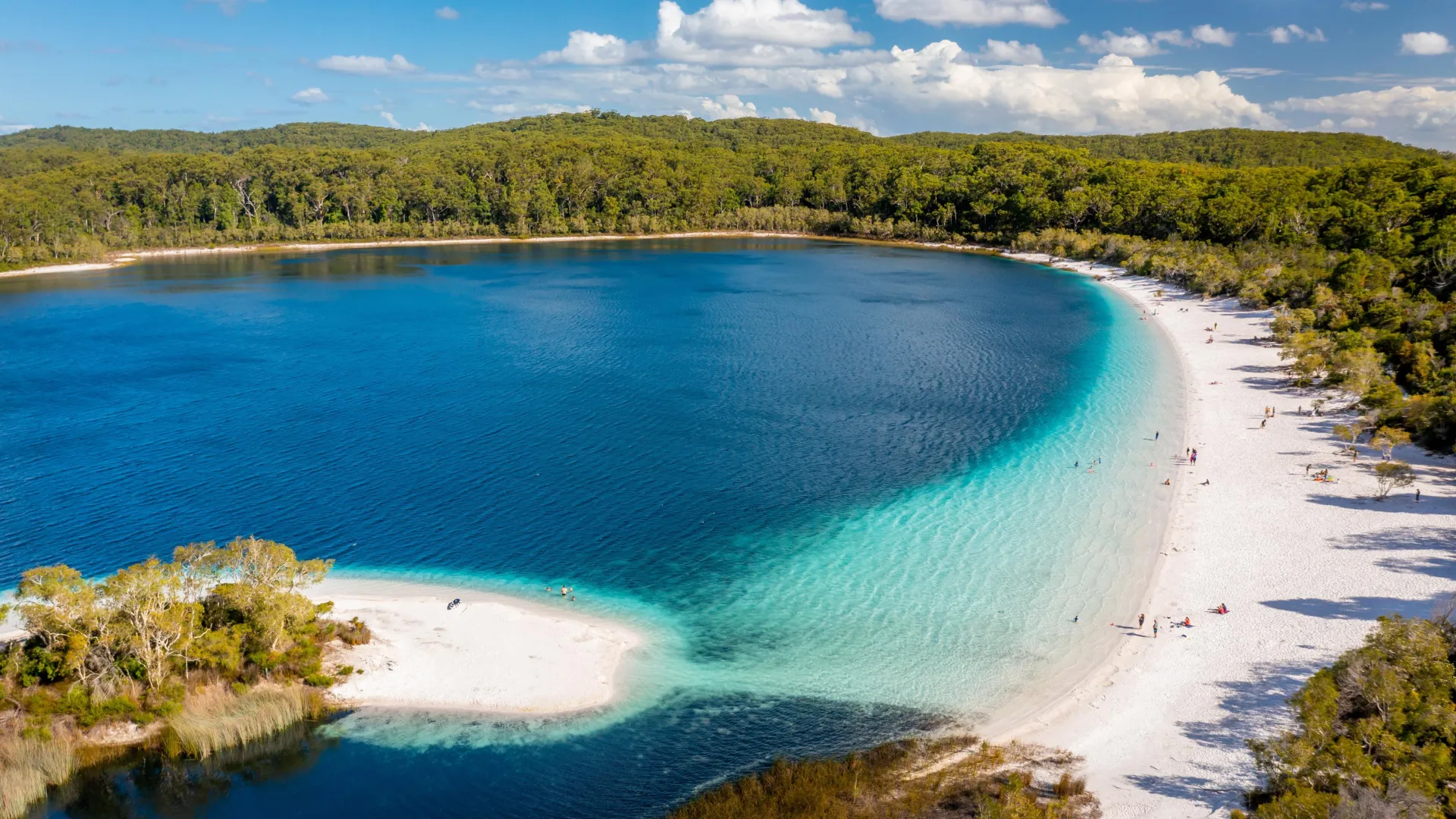
K’gari, the world’s largest sand island, is a geological anomaly—a sprawling landscape of ancient dunes, rainforests, and crystalline freshwater lakes. For tourists and ecologists alike, these lakes, often called the "Eyes of K’gari," appear to be permanent fixtures of the landscape. However, groundbreaking research from the University of Adelaide has shattered the assumption of their eternal resilience. By peering into the geological past, scientists have discovered that even the deepest, most iconic lakes on the island are susceptible to drying out, even during periods of abundant regional rainfall.
The Geological Journal: Unlocking the Past
To understand the future of K’gari, researchers turned to the silent, layered archives hidden beneath the surface of the island’s lake beds. Associate Professor John Tibby of the University of Adelaide led a team that extracted sediment cores from the island’s oldest water bodies—some of which have existed for between 35,000 and 55,000 years.
Sediment layers are the journals of a landscape. As organic matter, pollen, and sand settle over millennia, they create a chronological record of environmental shifts. When a lake is full, it captures this material in pristine, sequential layers. When a lake disappears, that record is interrupted.
The team’s analysis revealed a startling discovery: a significant "gap" in the sediment record spanning roughly 2,000 years, between 7,500 and 5,500 years ago. This missing chapter indicates that the lake basins were completely dry during this period. "A lake’s sediment is like a journal where what happens in and around the lake gets recorded," explains Associate Professor Tibby. "The absence of sediment across that period tells us that the area was not covered by water, meaning the lakes were not there."
Chronology of a Disappearing Act
The timeline of this drying event is particularly counterintuitive. The middle Holocene, the era in which the lakes vanished, is historically categorized by scientists as a period of higher-than-average rainfall.
- 35,000–55,000 Years Ago: The formation of the oldest lake systems on K’gari.
- 7,500 Years Ago: The onset of a paradoxical drying event. Despite a regional climate characterized by high rainfall, K’gari’s deep lakes receded and eventually dried up entirely.
- 5,500 Years Ago: The return of water to the basins, allowing for the resumption of sediment accumulation.
- Present Day: The lakes stand as ecological jewels, but researchers warn that the environmental conditions that caused their past disappearance remain poorly understood and potentially relevant to modern climate change.
Supporting Data: The Trade Wind Conundrum
The primary question facing the researchers was: how could a lake dry up during a period of heavy rainfall? The answer, according to Dr. Harald Hofmann of the CSIRO, lies in the shifting dynamics of atmospheric patterns.
During the middle Holocene, it appears that the persistent south-east trade winds played a decisive role in the island’s hydrology. These winds act as a conveyor belt for moisture, dictating where clouds form and where precipitation lands. The data suggests that during this specific window of history, these trade winds were angled in such a way that they directed rainfall primarily toward nearby Minjerribah (North Stradbroke Island), bypassing K’gari entirely.
"Prior research shows Minjerribah also experienced heavy rainfall events at this time," Dr. Hofmann notes. "However, because of the south-east trade winds, rainfall from the south only fed into lakes on Minjerribah, not those on K’gari."
This discovery shifts the focus of conservationists. It proves that the survival of K’gari’s lakes is not merely dependent on the total volume of rain falling in the region, but on the precise, delicate path that moisture takes across the landscape. If the wind direction shifts, even a "wet" climate can result in a local drought.
Official Responses and Scientific Implications
The study, published in Quaternary Science, serves as a wake-up call for environmental managers. As the global climate faces unprecedented shifts, the assumption that K’gari’s lakes are buffered against drought is no longer tenable.
Associate Professor Tibby and Dr. Hofmann emphasize that the current trend toward a drier climate, punctuated by more intense but erratic rainfall events, creates a volatile environment for the island’s ecosystems. "With a climate that is expected to get drier, but with more intense rainfall, we simply don’t know if these lakes are at risk of drying out," says Dr. Hofmann.
The danger lies in the nature of "intense" rainfall. When rain falls in violent, rapid bursts rather than steady, soaking showers, it often results in immediate surface runoff rather than the slow, steady recharge of the groundwater systems that sustain the lakes. If the water runs off into the ocean too quickly, or if the atmospheric "steering" of rainfall shifts away from the island as it did 7,500 years ago, the lakes could effectively be cut off from their lifeblood.
The Cultural Significance: The Eyes of K’gari
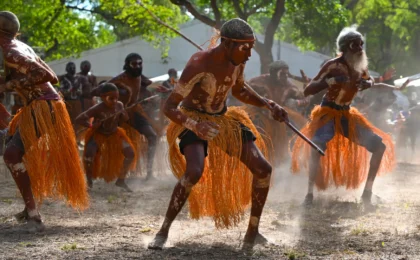
For the Butchulla people, the Traditional Owners of K’gari, the lakes are far more than scientific specimens or hydrological features; they are the "Eyes of K’gari," imbued with deep spiritual and ancestral significance.
Conway Burns, a Butchulla man and co-author of the study, provides a poignant perspective on the findings. To the Butchulla, the lakes are not merely bodies of water; they are living, breathing entities connected to the Dreaming.
"K’gari is the name of the dreaming spirit who formed the island, and her eyes are not just water—they are windows to eternity," Burns says. "When you stand before the lakes of K’gari, you do not merely see reflections of sky and forest; you see the soul of Country gazing back at you. Her eyes hold ceremony, memory, and the whispers of the Creator."
The potential drying of these lakes, therefore, is not just an ecological concern—it is an existential one for the Butchulla people. The lakes are places of ancestral connection, and their presence is fundamental to the maintenance of cultural memory.
"These waters are sacred and secret," Burns adds. "They are not ours to own, but ours to protect. As we are her children, we are entrusted with a responsibility that is both heartfelt and eternal: to preserve her beauty, her spirit, her voice that whispers through the creeks and her eyes so that future generations may feel the same connection and respect."
A Future in the Balance
The study from the University of Adelaide represents a critical convergence of ancient history and modern climate science. By looking back 7,500 years, researchers have gained a better understanding of the precarious nature of the island’s water supply.
The "Eyes of K’gari" have closed before, and the geological record suggests they could close again. The challenge for the modern era is to reconcile the realities of a changing climate with the stewardship of a landscape that is as fragile as it is magnificent. As scientists continue to monitor the interplay between wind patterns, rainfall intensity, and groundwater health, the message remains clear: the natural world is a dynamic system, and the beauty of K’gari is a gift that requires constant vigilance to protect.
The research not only underscores the need for continued funding and monitoring of K’gari’s unique hydrological system but also highlights the importance of integrating Indigenous knowledge with Western science. By listening to the wisdom of the Traditional Owners and the data hidden in the lake beds, we may be better equipped to ensure that the "Eyes of K’gari" continue to gaze upon the world for thousands of years to come.