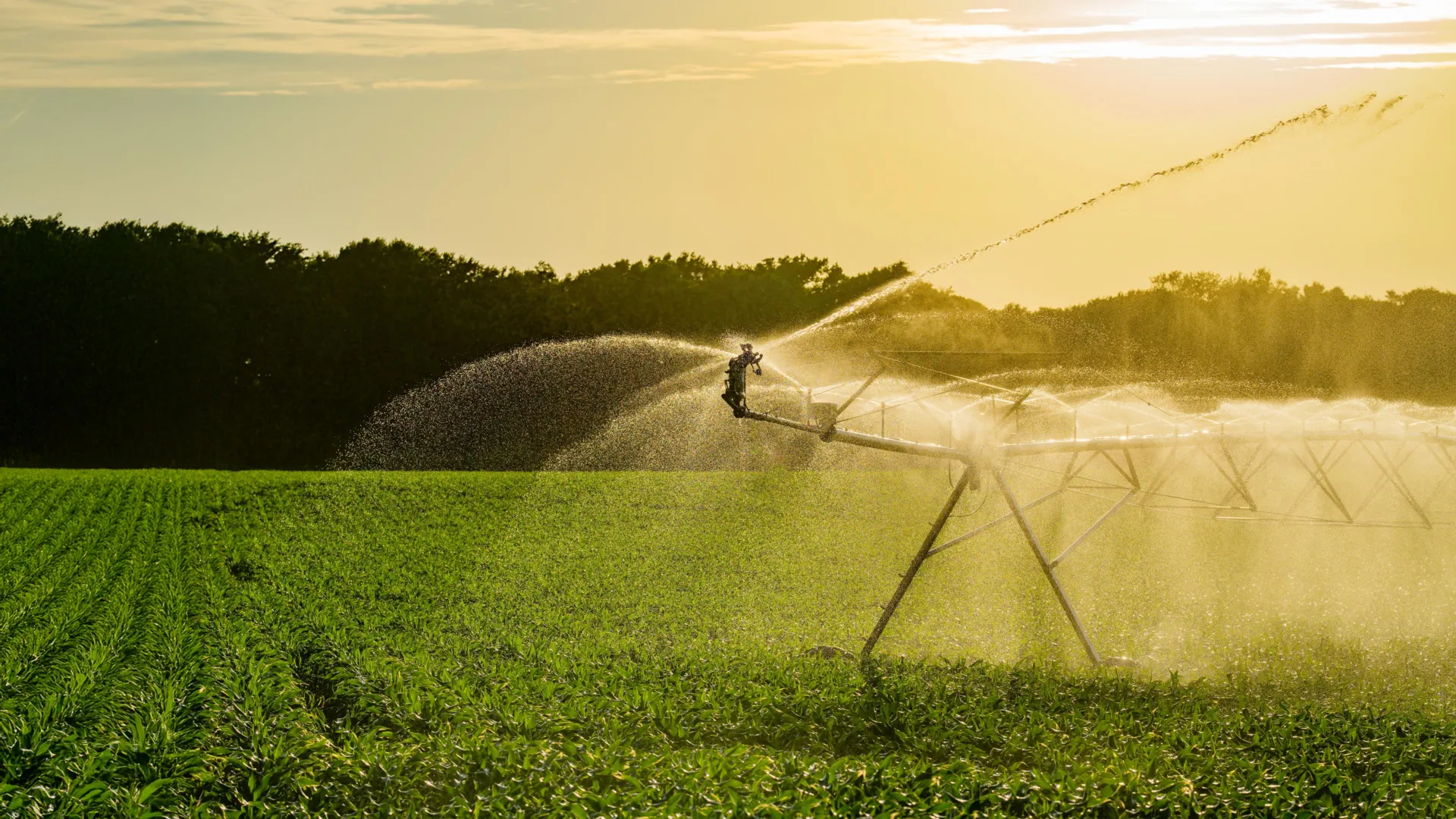
In the complex calculus of climate change, irrigation is often viewed through a lens of scarcity—a resource-intensive practice that strains aquifers and depletes rivers. However, groundbreaking new research from Colorado State University (CSU) suggests we have been missing a critical piece of the puzzle. According to a study published on September 14 in the Proceedings of the National Academy of Sciences, irrigation is a powerful, albeit indirect, engine for climate mitigation. By dramatically increasing crop yields, irrigation allows farmers to produce more food on less land, effectively preventing the mass conversion of forests and grasslands into farmland—a process that would otherwise release massive stores of sequestered carbon into the atmosphere.
The Climate Math: 363 Times the Impact
The research team, led by then-CSU doctoral student Avery Driscoll, set out to quantify the relationship between irrigation and land-use change. Their findings are staggering: the greenhouse gas emissions avoided by preventing additional land conversion are 363 times greater than the emissions generated by the irrigation process itself.
To put this in perspective, the researchers estimate that irrigation saves approximately 6.86 gigatons of greenhouse gas emissions by sparing land from the plow. To grasp the scale, consider that this figure exceeds the total annual greenhouse gas emissions for the entire United States in 2024 (roughly 5.91 gigatons) and represents nearly 13% of total global emissions for that same year. If the United States were to suddenly eliminate irrigation, the resulting need to expand agricultural acreage to meet global food demand would trigger a carbon release 363 years’ worth of current irrigation-related emissions.
A Chronology of Discovery: Modeling the "No-Irrigation" Scenario
The path to these findings required a sophisticated multi-step modeling approach. The researchers began by evaluating the current state of U.S. agriculture, measuring the precise yield gap between rainfed and irrigated crops across every U.S. county.
- Baseline Calibration: Using existing agricultural survey data, the team employed machine learning algorithms to establish the precise productivity delta that irrigation provides in different climate zones and soil types.
- Global Economic Simulation: The researchers fed this data into a global economic model designed to simulate shifts in agricultural production, international trade, and consumption. This model effectively "turned off" U.S. irrigation to see how the global market would react.
- Land-Use Mapping: Once the model determined where and how much additional farmland would be required to offset the loss of U.S. irrigation, the researchers mapped those needs against global carbon sequestration data.
- Carbon Impact Assessment: Finally, they calculated the greenhouse gas emissions that would be released if those specific regions were converted from natural landscapes—forests and grasslands—into active, tilled agricultural land.
This analysis, which stands as the first of its kind to directly compare direct irrigation emissions against indirect land-use benefits, provides a holistic view of the food system’s carbon footprint.
The Sources of Irrigation Emissions
While the net impact of irrigation is overwhelmingly positive for the climate, the researchers acknowledge that irrigation is not carbon-neutral. The primary source of direct emissions is the energy required to move water. In many regions, the pumps that draw water from aquifers or transport it between river basins are powered by fossil fuels.
Secondary, though smaller, emissions sources include:
- Microbial Respiration: Changes in soil moisture can influence microbial activity, leading to small releases of nitrous oxide.
- Dissolved CO2: Groundwater often contains dissolved carbon dioxide, which is released into the atmosphere when the water is sprayed across fields via center-pivot or sprinkler systems.
However, the study notes that these emissions are highly susceptible to technological intervention. Replacing diesel-powered pumps with electric systems, particularly as the U.S. power grid moves toward renewable energy, could render the direct emissions from irrigation negligible, further widening the "net positive" gap.
Official Responses and Expert Perspectives
The study has sent a ripple through both the agricultural and climate science communities, shifting the conversation from a binary debate about water consumption to a nuanced discussion about land-use efficiency.
"It was clear from this work that irrigation has a net positive effect on emissions," says Avery Driscoll, now a postdoctoral researcher at Purdue University. "The avoided emissions from reductions in indirect land-use change were much greater than the direct emissions, and that could decline further with electrification."
Dr. Nathan Mueller, a co-author and associate professor in CSU’s departments of Ecosystem Science and Sustainability and Soil and Crop Sciences, emphasizes that while the climate benefit is undeniable, it must be balanced against local realities. "We’re able to show this large benefit of U.S. irrigation to greenhouse gas emissions from the food system," Mueller notes. "Yet, when we talk about water use, particularly in the western U.S., there are trade-offs with every use and trade-offs beyond food and beyond greenhouse gas emissions. Our work provides one piece of the puzzle."
The Farmer’s Reality: A Legacy of Efficiency
For farmers like Alex Brown, whose family has operated a farm in Yuma County, Colorado, for over a century, the study confirms what they have observed in the fields for generations. Brown views irrigation not just as a tool for yield, but as a fundamental necessity for global food security.
"We need irrigation to fulfill our needs and our duty to continue to feed the world," Brown explains. He points out that without irrigation, the pressure to plow up marginal, ecologically sensitive land would skyrocket. "As the population increases, the demand for food increases, and the demand for agriculture on less land increases."
For the Brown family, the future of the farm relies on "smart" irrigation—adopting newer, more efficient technology that minimizes waste while maximizing the return on every drop of water. This approach aligns with the study’s recommendation that policymakers consider incentives for the electrification and modernization of irrigation infrastructure as part of broader climate-smart agriculture programs.
Implications for Climate Policy
The implications of this research for policymakers are profound. Historically, agricultural climate policies have focused on "in-field" emissions—such as fertilizer application or methane from livestock—while often overlooking the "land-use" consequences of agricultural productivity.
The CSU study argues for a more comprehensive accounting method. By acknowledging the global carbon savings generated by high-yield regions, the government can better incentivize "climate-smart" practices that prioritize yield optimization in high-efficiency areas while simultaneously investing in water conservation and grid decarbonization.
Toward a "Win-Win" Strategy
The research suggests that the path forward involves a delicate balancing act:
- Electrification: Providing grants or tax incentives for farmers to switch from fossil-fuel pumps to electric systems.
- Grid Integration: Ensuring that the electricity powering agricultural pumps comes from clean, renewable sources.
- Adaptation Planning: Using irrigation as a deliberate strategy to build resilience against the increasingly erratic weather patterns associated with climate change, such as severe drought and heat waves.
"Ideally, this is a win-win for addressing local emissions and also harnessing the global benefits of irrigation," Driscoll concludes.
As the world faces the dual challenges of a growing population and a warming planet, the ability to produce more food on less land has never been more critical. By reframing irrigation as a tool for carbon preservation, this study provides a new, evidence-based roadmap for integrating agriculture into the global climate solution. The challenge now remains to manage these water resources in a way that respects local ecological limits while continuing to leverage the massive, hidden climate dividends that modern, efficient agriculture provides to the world.