For generations, the narrative of human origins has been painted with a lush, equatorial brush. We imagine our distant ancestors as agile creatures swinging through dense, sun-drenched rainforests, their survival dictated by the abundance of tropical fruit and the constant warmth of a verdant canopy. This long-standing paradigm, rooted in the observation of modern primates, has recently been dismantled by a groundbreaking study that suggests our evolutionary roots were forged not in heat, but in the biting cold.
Recent research published in the Proceedings of the National Academy of Sciences (PNAS) has fundamentally rewritten the opening chapters of the primate story. By mapping the geographic origins of early primates against historical climate data, a team led by Jorge Avaria-Llautureo of the University of Reading has revealed that the "cradle of primates" was far more inhospitable than previously believed.
The Cold Truth: A Paradigm Shift in Evolutionary Origins
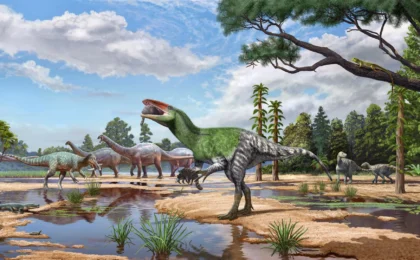
The prevailing scientific consensus for decades held that the order Primates emerged and diversified in warm, stable tropical environments. This assumption was logically tethered to the modern distribution of monkeys, apes, and lemurs, the vast majority of which inhabit tropical zones. Furthermore, the fossil record seemed to corroborate this; the earliest primate specimens were largely found in regions that researchers assumed were ancient tropics.
However, Avaria-Llautureo’s study challenges this by integrating fossilized spore and pollen data—a proxy for ancient paleoclimates—with the known coordinates of early primate fossils. The findings indicate that the earliest primates lived in regions that were cold, seasonal, and dry.
This discovery effectively decouples the primate lineage from the "tropical trap." If our ancestors were not born in the tropics, the pressures that defined our early development were not the competitive stresses of fruit-heavy rainforests, but rather the rigorous demands of surviving temperate, variable, and often harsh environments. This revelation suggests that the defining traits of primates—dexterity, intelligence, and social complexity—may have been early responses to environmental scarcity rather than the luxuries of abundance.
Chronology: A 56-Million-Year Journey
To understand the trajectory of our lineage, one must look back to the aftermath of the K-Pg extinction event, which ended the reign of the dinosaurs 66 million years ago.
The Rise of the Tiny Pioneer
Roughly 10 million years after the extinction of the dinosaurs, approximately 56 million years ago, the genus Teilhardina emerged. Weighing a mere 28 grams—comparable to the Madame Berthe’s mouse lemur, the smallest primate alive today—Teilhardina was a marvel of survival. Its existence in the fossil record is characterized by a high-calorie diet of insects, gum, and fruit, necessitating a high metabolism and constant foraging.
Crucially, Teilhardina displayed anatomical adaptations that distinguished it from other mammals of the Eocene epoch. Unlike its contemporaries, which relied on claws, Teilhardina possessed fingernails. This seemingly minor evolution provided a critical advantage: the ability to grasp branches with precision and manipulate small, high-energy food sources. This shift in manual dexterity laid the morphological foundation for the manipulative capabilities that would eventually lead to tool use and the sophisticated technology of modern humans.
Rapid Dispersal and Arctic Colonization
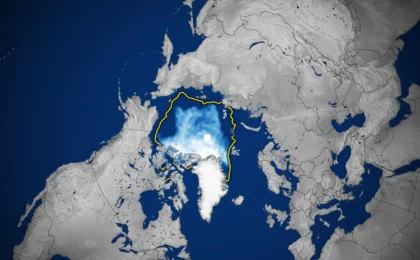
Following its emergence in what is now North America, Teilhardina did not remain static. Despite the harsh climates of the period, the species dispersed with remarkable speed across Europe and Asia. Perhaps most striking is the evidence that these early primates even colonized Arctic regions.
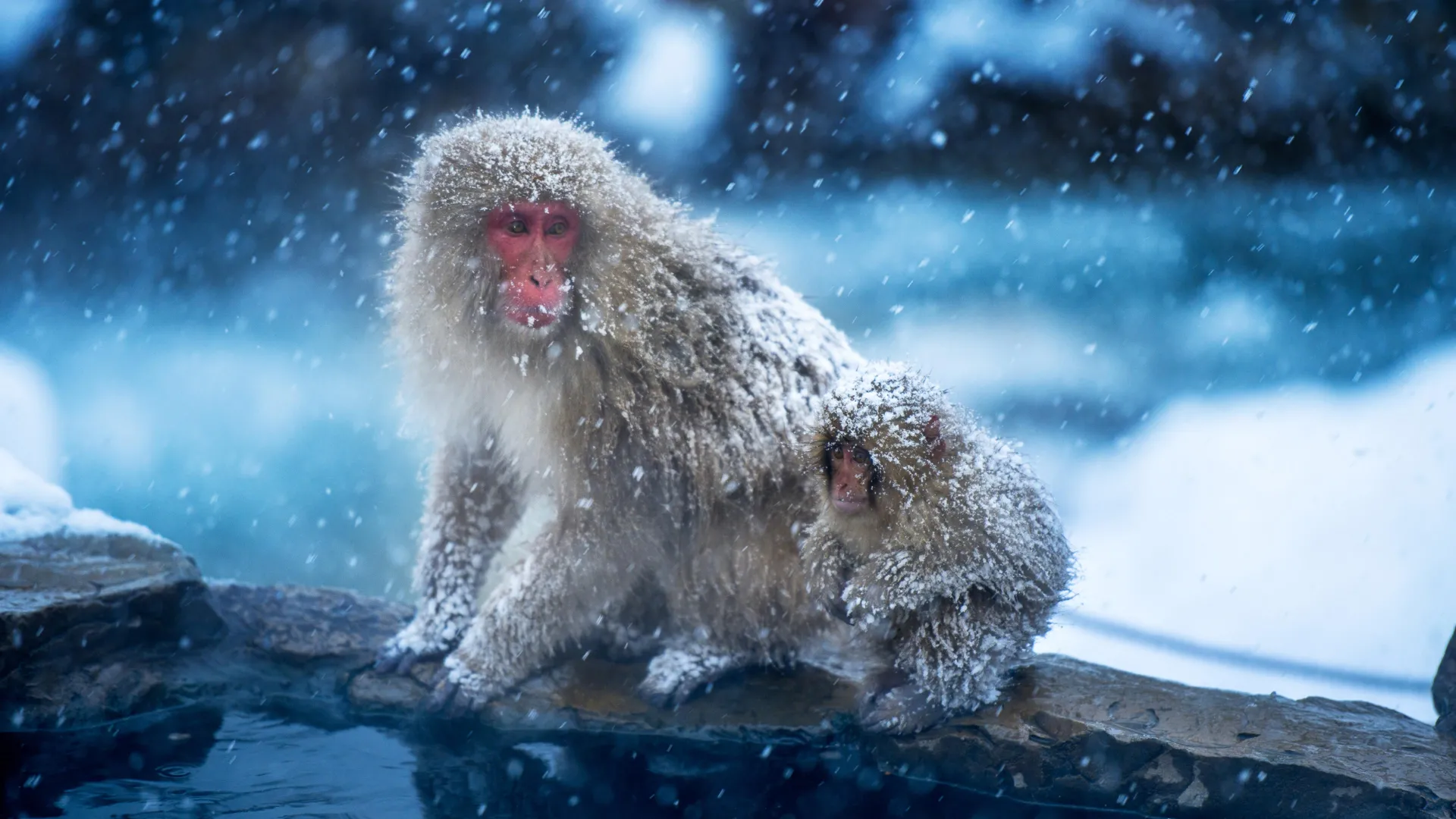
How did a 28-gram creature survive the long, dark, and freezing winters of the ancient Arctic? The study posits that these primates utilized physiological strategies similar to those seen in modern mouse and dwarf lemurs: metabolic suppression and bouts of hibernation. By slowing their internal clocks, these ancestors were able to weather seasonal food shortages, a survival tactic that highlights the extreme adaptability of the early primate order.
Supporting Data: Decoding the Paleoclimate
The researchers employed sophisticated paleoclimate modeling to reconstruct the environments of the Eocene. By analyzing the fossilized remains of flora—specifically pollen and spores found in the same strata as primate fossils—they were able to determine that many of the sites previously thought to be tropical were, in fact, temperate or even sub-polar.
The data suggests that while global temperatures during the Eocene were generally higher than today, the primates did not necessarily thrive by "chasing the heat." In fact, the research indicates that warmer global temperatures did not correlate with a faster spread of primate species. Instead, the primary driver of evolution and dispersal was the rapid oscillation between wet and dry climates.
These environmental stressors acted as a crucible. The species that survived were those that possessed high mobility, allowing them to traverse landscapes in search of dwindling resources. The primates that exist today—including us—are the descendants of these highly mobile, adaptable pioneers. Those populations that were sedentary or unable to navigate changing climates vanished, leaving no trace in the modern genetic record.
Implications for Today: Lessons from the Past
The study of our origins is not merely an academic exercise; it is an urgent requirement for the future of conservation. As an ecologist who has spent years in the forests of Uganda and Madagascar, the lessons of the Eocene are painfully relevant to the modern extinction crisis.
The Fragmented Habitat
Today, we see a reversal of the mobility that allowed our ancestors to thrive. Human activity, particularly deforestation and land-use change, has created "ecological islands." When habitats are fragmented, primates lose their ability to migrate in response to environmental shifts. This lack of mobility is a death sentence in a rapidly warming world.
The modern primate population is suffering from a lack of genetic diversity, a direct result of being confined to smaller, isolated patches of forest. Without the ability to intermingle and move across landscapes, these species cannot adapt to the anthropogenic climate change that is altering their environments at a pace far faster than natural historical fluctuations.
The Call to Action
The implications for conservation are clear: we must move beyond the preservation of static "protected areas." We must create corridors that allow for the migration of primate species. However, as the research emphasizes, scientific knowledge alone is insufficient.
Conservationists and policymakers are increasingly vocal about the need for systemic change. This includes:
- Addressing Bushmeat Consumption: The hunting of primates for food remains a leading cause of population decline in many regions.
- Reversing Habitat Loss: Stopping the encroachment of agriculture into primary forests is non-negotiable.
- Climate Mitigation: As primates are particularly sensitive to shifts in temperature and humidity, global efforts to stabilize the climate are essential to preventing the loss of our closest living relatives.
Conclusion: A Shared Fate
The story of our ancestors is a testament to resilience, but it is also a warning. We are the beneficiaries of a lineage that survived millions of years of climate-induced hardship, yet we are currently engineering an environment that even our most adaptable ancestors might struggle to survive.
The study by Avaria-Llautureo et al. reminds us that our origins are not just in the tropics, but in the ability to change, move, and endure. As we face the unprecedented challenges of the 21st century, we must recognize that the fate of the world’s primates is inextricably linked to our own. If we fail to protect the evolutionary legacy that produced us—the diverse, mobile, and intelligent primates of the world—we risk not only losing a vital piece of our history but also jeopardizing the very ecological systems that sustain our future. The "cold truth" of our past is that adaptability is our greatest strength; it is time we put that trait to work to save the world that birthed us.