In a high-stakes legal maneuver that escalates the ongoing national battle over the Second Amendment, the United States Department of Justice (DOJ) filed two federal lawsuits on Wednesday, directly challenging firearm regulations in Virginia and California. The legal actions target state-level bans on specific weapon types and accessories, asserting that these statutes violate the constitutional rights of American citizens as interpreted by the Supreme Court’s landmark Bruen decision.
The filings represent a significant shift in federal intervention, with the DOJ invoking 34 U.S.C. § 12601 to seek equitable relief against what it characterizes as a "pattern or practice" of constitutional deprivation. As these cases proceed, they are poised to move toward the Supreme Court, which is already grappling with the constitutionality of similar bans in other jurisdictions.
The Scope of the Federal Challenges
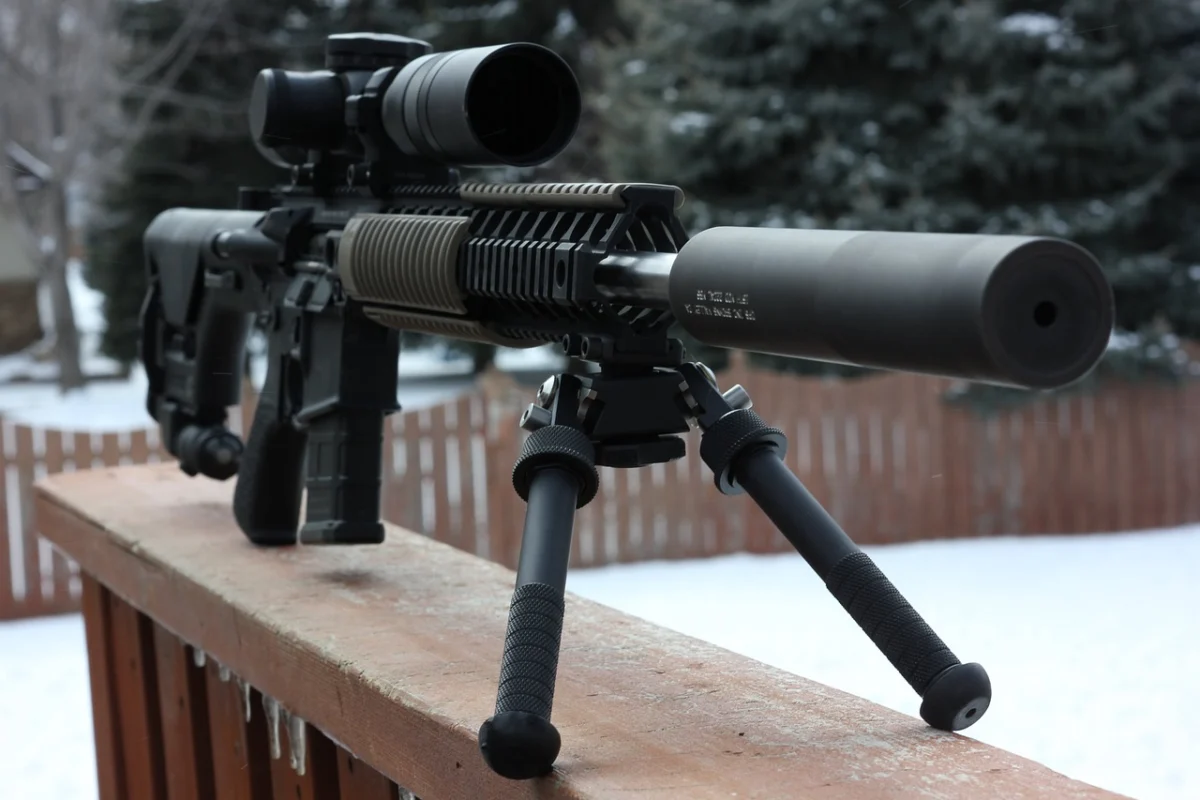
The DOJ’s dual-front offensive targets two distinct legislative approaches to gun control. In Virginia, the challenge is directed at Senate Bill 749, signed into law by Governor Abigail Spanberger earlier this year. This sweeping legislation institutes a rigorous ban on the sale, purchase, manufacture, and transfer of firearms categorized as "assault firearms," a definition that encompasses the widely popular AR-15-style rifles. Furthermore, the bill prohibits the possession of magazines capable of holding more than 15 rounds of ammunition.
In California, the federal government is challenging Assembly Bill 1127, championed by Governor Gavin Newsom. This law, which took effect Wednesday, prohibits licensed dealers from selling certain semiautomatic handguns—specifically those featuring a "cruciform trigger bar"—which state legislators argue are susceptible to illegal conversion into fully automatic weapons. Additionally, the DOJ is seeking to strike down California’s "Handgun Roster," a regulatory mechanism that limits retail availability to models meeting specific state-mandated safety certifications.
Chronology of the Legislative and Legal Conflict
The trajectory leading to Wednesday’s filings has been marked by rapid legislative action at the state level and an increasingly restrictive judicial environment for gun control proponents.
- May 2026: Virginia Governor Abigail Spanberger signs Senate Bill 749 into law, setting a July 1 implementation date for the state’s new assault weapons and high-capacity magazine prohibitions.
- June 2026: Just days before the law was set to take effect, a Lancaster County judge issued an injunction, temporarily blocking the enforcement of Virginia’s SB 749 following legal challenges from gun rights advocacy groups.
- October 2026: California Governor Gavin Newsom signs Assembly Bill 1127 into law, targeting specific handgun designs and the state’s existing roster of authorized firearms.
- Early 2026–Present: The Supreme Court issues its ruling in Wolford v. Lopez, which curtailed Hawaii’s ability to restrict the carrying of firearms on private property accessible to the public, signaling a trend of judicial skepticism toward state-level gun restrictions.
- July 1, 2026: The Department of Justice formally files complaints in the US District Court for the Eastern District of Virginia and the US District Court for the Central District of California.
- July 2026: The Supreme Court agrees to hear Viramontes v. Cook County and Grant v. Higgins, consolidating the legal pressure on state-level bans across the country.
Legal Arguments and Supporting Data
The core of the DOJ’s argument relies heavily on the precedent established in New York State Rifle & Pistol Association v. Bruen (2022). The DOJ contends that the firearms targeted by these states are in "common use" by law-abiding citizens for lawful purposes, such as self-defense and sport. Under the Bruen standard, regulations that infringe upon such common usage must be deeply rooted in the nation’s historical tradition of firearm regulation—a bar the DOJ argues these state laws fail to clear.
In the Virginia complaint, the DOJ directly addresses the Fourth Circuit’s decision in Bianchi v. Brown, which previously upheld Maryland’s assault weapons ban. The federal government argues that the Bianchi decision was fundamentally flawed and should be overturned, asserting that the Second Amendment’s protections are not subject to the discretion of state legislatures.
For California, the DOJ argues that the "Handgun Roster" and the ban on specific pistol designs constitute a "blatant trampling of rights." By limiting the marketplace to only state-approved models, the DOJ argues that California is effectively depriving citizens of their right to acquire standard-issue defensive tools.
Official Responses: A Divided Nation
The government’s actions have drawn sharp, polarized reactions from both state administrations and federal officials.
Acting Attorney General Todd Blanche provided a forceful defense of the DOJ’s position, stating, "The Constitution is not a suggestion, and the Second Amendment is not a second-class right." Blanche’s comments reflect a DOJ that is increasingly willing to use its federal authority to ensure that state laws align with its interpretation of the Bill of Rights.
Conversely, state officials have doubled down on their commitment to public safety. A spokesperson for Virginia Attorney General Jay Jones emphasized the state’s intent to fight the suit, noting, "The Commonwealth will defend the measure, arguing that it will keep Virginians safe, protect law enforcement, and safeguard communities across the Commonwealth."
In California, the response was equally defiant. A representative for Governor Gavin Newsom characterized the DOJ’s lawsuit as an attempt to "dismantle California’s commonsense gun safety laws," positioning the state as a protector of public welfare against federal overreach.
Broader Implications for the Second Amendment
These lawsuits represent a defining moment in the interpretation of the Second Amendment. By simultaneously challenging laws in two of the most populous and influential states in the country, the DOJ is forcing a national reckoning on the limits of state police power.
1. Judicial Precedent and the Supreme Court
The timing of these lawsuits is not incidental. With the Supreme Court already set to hear Viramontes (Illinois) and Grant (Connecticut), the judiciary is moving toward a comprehensive ruling on the status of "assault weapon" bans. These new lawsuits provide additional vehicles for the Supreme Court to issue a definitive, nationwide ruling that could effectively nullify hundreds of state and local firearm ordinances.
2. The Erosion of State-Level Discretion
For decades, states have operated under the assumption that they possess broad authority to regulate firearms within their borders. The success of the DOJ’s current legal strategy would mark a significant contraction of this authority. If the federal government is successful, state legislatures may find themselves largely preempted from enacting any gun control measures that go beyond federal statutes.
3. The Role of 34 U.S.C. § 12601
The use of this statute is a rare and aggressive tool. Originally intended to address systemic misconduct by law enforcement, its application here suggests that the federal government views state-level gun control as an infringement comparable to civil rights violations. This sets a precedent for future federal involvement in state policy that could extend well beyond the realm of the Second Amendment.
4. Public Safety vs. Individual Liberty
Ultimately, these cases force a confrontation between two deeply held American values: the desire for enhanced public safety through regulation and the commitment to individual liberty as protected by the Constitution. As the debate moves through the district courts and toward the Supreme Court, the outcome will likely reshape the legal landscape for decades to come, defining what it means to be a "law-abiding citizen" in an era of heightened political and social polarization.
As the litigation proceeds, both proponents and opponents of gun control will be watching the courts closely. The DOJ’s intervention has effectively raised the stakes, ensuring that the debate over the Second Amendment will remain the central focus of the national legal agenda for the remainder of the year and likely beyond.