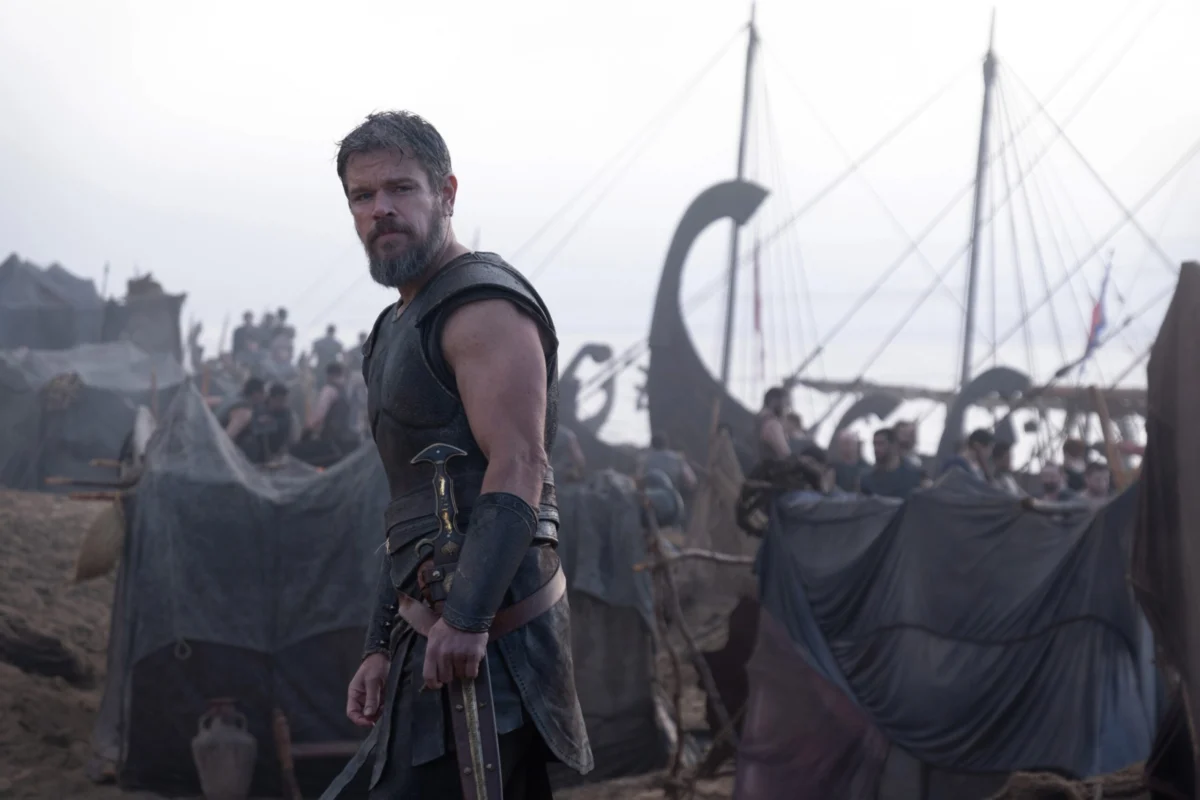
For over seven decades, Hollywood has approached Homer’s The Odyssey with a mixture of reverence and terror. It is the narrative bedrock of Western literature—the ur-text of the "hero’s journey"—yet it has remained largely untouched by major studios since the mid-20th century. While the industry is notorious for recycling intellectual property until it loses its luster, the sheer, crushing weight of Odysseus’s decade-long voyage has kept even the most ambitious auteurs at bay. That is, until 2026, when Christopher Nolan, a director whose career has been defined by his ability to bridge the gap between high-concept intellectualism and blockbuster scale, finally brought his vision to the screen.
The Architecture of an Epic: Nolan’s Structural Gamble
Christopher Nolan’s adaptation is a massive, three-hour cinematic monolith that is as much a testament to his own stubborn creative philosophy as it is to Homer’s text. Known for his "puzzle-box" narratives, Nolan has famously reshaped the linear structure of the epic. Much like Penelope weaving and unweaving her shroud to keep the suitors at bay, Nolan weaves and unweaves time, eschewing a straightforward chronological retelling in favor of a fragmented, non-linear experience.
By complicating the in medias res structure of the original poem, Nolan places the audience in a state of constant, bleary disorientation—a mirror of Odysseus’s own struggle against the gods and the tides. While this stylistic choice risks alienating viewers who prefer a traditional narrative, it succeeds in turning the film into a sensory experience that mirrors the internal fracturing of a man who has been away from home for twenty years.
Chronology of a Production: From Script to Screen
The path to bringing The Odyssey to the screen was as arduous as the hero’s own journey. Development began in early 2022, with Nolan working closely with screenwriter and long-time collaborator partners to condense thousands of lines of verse into a cohesive, if dense, screenplay.
- Early 2023: Pre-production commenced, with a heavy emphasis on practical, location-based filmmaking.
- Late 2023: Principal photography took place across the Mediterranean, utilizing the same rugged coastal landscapes that inspired the original epic.
- Mid-2024: Post-production began, overseen by editor Jennifer Lame, who played a crucial role in managing the film’s complex temporal shifts.
- Early 2026: The final cut was locked, boasting a runtime of just under three hours, and prepared for its massive IMAX rollout.
Supporting Data: A Cast of Thousands and a Technical Marvel
The sheer scale of the production is reflected in the film’s technical achievements and its sprawling, star-studded cast. The cinematography by Hoyte van Hoytema offers a burnt, bleached aesthetic that captures the unforgiving nature of the Aegean, while Ludwig Göransson’s electro-orchestral score provides a pulse that matches the film’s relentless momentum.
Key Performances
- Matt Damon as Odysseus: Damon delivers a performance characterized by a "grizzled sadness." His portrayal of the king of Ithaca is far removed from the swashbuckling heroes of the past; he is a man broken by time, war, and the loss of his men.
- Anne Hathaway as Penelope: Hathaway provides a stoic, tremulous anchor for the story, representing the home that seems increasingly like a dream to the wandering king.
- Robert Pattinson as Antinous: Pattinson embraces the role of the primary antagonist with a pantomime-style villainy that provides a necessary foil to the film’s darker themes.
- Samantha Morton as Circe: In perhaps the film’s most indelible turn, Morton brings a raw, wily, and dangerously sensual energy to the enchantress, marking a high point in the film’s middle act.
- John Leguizamo as Eumaeus: Providing the film’s most genuine emotional heartbeat, Leguizamo’s performance as the blind, loyal servant offers a poignant look at the human cost of the hero’s absence.
Official Responses and Industry Reception
The film’s reception has been largely categorized by its technical brilliance. Industry insiders and critics have noted that while the film excels as a "movie-movie," it possesses a distinct emotional chill. It is a film that demands to be looked at and listened to, yet it sometimes leaves the viewer feeling detached from the hero’s internal plight.
Critics have specifically pointed to the "spectacular" nature of the set pieces—most notably the sequence involving the Cyclops, Polyphemus, played by Bill Irwin with the aid of groundbreaking digital effects. The Trojan Horse sequence, featuring Elliot Page as the sacrificial soldier Sinon, has also been lauded for its balance of tension and dark humor.
However, some have questioned the film’s structural density. There is a palpable sense that the film is "one battle after another," a relentless march of incident that occasionally buries the emotional resonance of the characters. Yet, in the eyes of the studio and fans of Nolan’s specific brand of "spectacle-driven cinema," the film is an undeniable success, pushing the boundaries of what a summer blockbuster can achieve.
Implications: The Legacy of the 2026 Adaptation
What does Nolan’s The Odyssey mean for the future of epic filmmaking? It demonstrates that there is still a massive appetite for "event cinema" that engages with historical and mythological source material, provided it is handled with a singular, auteur-driven vision.
The implications for the industry are twofold:
- The Return of the Intellectual Blockbuster: Nolan has proven that complex, non-linear narratives can coexist with the massive budgets and IMAX-scale set pieces of a modern studio production.
- The Evolution of Adaptation: By modernizing the language while maintaining the "heft" of the original epic, Nolan has set a new standard for how classic literature should be adapted for the 21st-century audience.
The film has also sparked important conversations regarding casting and representation. The decision to cast Lupita Nyong’o in a dual role—which became a focal point for misguided online controversy—has ultimately been eclipsed by the quality of the performance itself. The film stands as a rejection of the culture wars, choosing instead to focus on the universality of the human experience.
Ultimately, Nolan’s The Odyssey is a sensory banquet. It is a film that demands to be seen on the largest screen possible, where the deep throb of the score and the sprawling, arid vistas can fully envelop the audience. If the film lacks a certain "warmth," it compensates with an exhilarating sense of purpose. We leave the theater not necessarily feeling that we have returned home with Odysseus, but feeling that we have survived a journey to the ends of the earth and back again.
In an era where cinema is often criticized for being overly safe and predictable, Christopher Nolan’s The Odyssey serves as a stark reminder of what is possible when a visionary filmmaker is given the resources—and the audacity—to tackle the greatest stories ever told. Whether or not it becomes the definitive version of Homer for our time, it is, without a doubt, one of the most significant cinematic achievements of the decade.