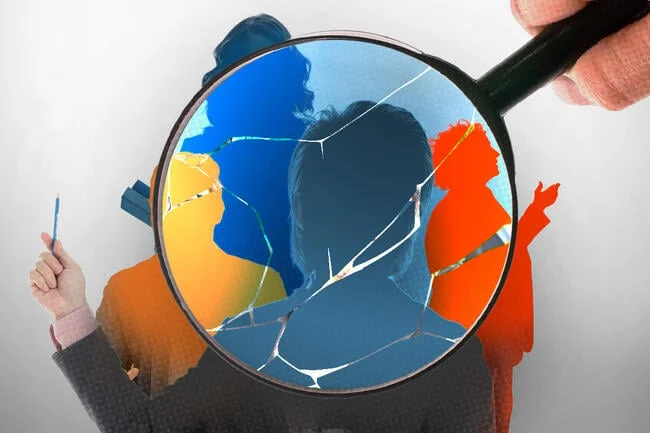
For nearly a decade, the "Professor Watchlist"—a digital registry spearheaded by the conservative organization Turning Point USA—served as a lightning rod for the culture wars, transforming the American classroom into a battleground for political ideology. The website, which sought to catalog academics accused of "advancing leftist propaganda" and discriminating against conservative students, operated as a high-tech pillory, facilitating a network of harassment, doxing, and institutional pressure.
Today, that website has vanished. A visit to professorwatchlist.org now triggers an automatic redirect to the Turning Point USA homepage, and the registry has been relegated to the annals of internet history. Yet, for the scholars who were targeted, the disappearance of the site offers little solace. Experts in academic freedom argue that the list did not fail; rather, it succeeded so thoroughly that it rendered itself obsolete. The tactics once pioneered by an obscure website have now been integrated into the machinery of state policy, institutional governance, and decentralized, algorithmic harassment.
A Chronology of Conflict: From Inception to Obsolescence
The genesis of the Professor Watchlist dates back to November 2016, a volatile period following the first election of Donald Trump. Turning Point USA, under the leadership of Charlie Kirk, launched the platform with an initial roster of nearly 200 academics. The stated mission was to protect conservative students, but the impact was almost immediate, drawing intense criticism for its potential to chill free speech and invite targeted harassment.
In its early years, the site was met with a mixture of mockery and alarm. Digital activists and humorists flooded the site’s tip line with entries for fictional characters like Indiana Jones and Professor Plum, attempting to delegitimize the project. However, the humor belied a darker reality. As the years progressed, the list ballooned, eventually encompassing over 1,100 faculty members and institutions.
By early 2026, the site’s activity began to wane. According to archival data from the Wayback Machine, consistent 404 errors began appearing in March 2026, and the last functional snapshot was recorded in February. Turning Point USA has remained tight-lipped regarding the silent dismantling of the project, declining multiple requests for comment from Inside Higher Ed.
The Mechanics of Harassment: Supporting Data and Trends
The Professor Watchlist was never merely a static list; it was an accelerant for an existing ecosystem of right-wing media and social media mobilization. The Foundation for Individual Rights and Expression (FIRE), which has monitored efforts to sanction scholars since the turn of the millennium, has documented a chilling trajectory in their Scholars Under Fire reports.
In 2000, FIRE recorded just four instances of attempts to sanction academics. By 2022, that number had surged to 145. The record high occurred in 2021—a year in which Turning Point USA actively solicited parents and students to contact the administrations of the 61 faculty members featured on their list. While direct, formal sanctions were rarely successful, the psychological and professional toll on the targets was immense.

The network created by the list functioned as a "digital panopticon." A professor’s offhand remark in a lecture or a controversial post on a personal blog could be recorded, clipped, and amplified by far-right influencers. This digital trail would then be picked up by news outlets like The Daily Caller or Campus Reform, eventually reaching the desks of university donors, boards of trustees, and state legislators.
Case Study: Joseph Kuilema and the Anatomy of a Target
For Joseph Kuilema, a social work professor at Grand Valley State University, the list was not a theoretical danger but a life-altering force. His inclusion on the list in 2016 followed a campus newspaper article he wrote at Calvin University regarding white supremacy and white privilege.
"I always thought it was kind of funny that I was included on the list," Kuilema recalls, "because I was this little-known social work professor at a small Christian liberal arts school in Michigan, and I was being listed as this indoctrinating person alongside scholars with a lot more reach than I had."
The humor, however, was quickly eclipsed by the reality of being "doxed." After his information was circulated through right-wing media and white nationalist forums, Kuilema received numerous threats, including graphic messages from people claiming to be alumni who knew the location of his office. Beyond the immediate fear, Kuilema believes his inclusion on the list made him a marked man for his university’s Board of Trustees. Despite unanimous support from faculty and administrators for his tenure, the board rejected his bid in 2017. His subsequent legal battle, sparked by his dismissal after officiating a queer wedding, remains a subject of intense scrutiny in the Michigan Supreme Court.
Official Responses and the Shifting Political Landscape
The influence of the Watchlist’s tactics has moved far beyond campus borders and into the halls of government. Conservative politicians, recognizing the populist appeal of anti-intellectual rhetoric, have adopted the "fire the radicals" framework as a standard campaign tool.
In September 2025, Florida Governor Ron DeSantis utilized this rhetoric in a fundraising email, boasting about the implementation of post-tenure review policies and decrying the "radical Left" in higher education. Similar pressures led to high-profile ousters at Texas A&M University following viral social media campaigns against specific lessons on gender identity.
Perhaps the most aggressive mobilization of this network occurred following the death of Charlie Kirk, who was killed while speaking at Utah Valley University. In the aftermath, anonymous social media accounts and political figures turned their sights on any professor who had publicly criticized Kirk or even quoted him in a neutral context. The subsequent pressure campaigns resulted in multiple terminations, forcing many affected faculty to seek legal recourse to reclaim their livelihoods.

The Broader Implications: A Chilling Effect on Intellectual Life
Academic freedom experts warn that we have entered a permanent state of vulnerability. Kristen Shahverdian, director of higher education and free expression at PEN America, notes that while the specific website may be gone, the infrastructure it helped build remains fully functional.
"The Professor Watchlist and other online lists have built up an ecosystem where individuals can target a professor, record a video clip, and put it in front of politicians who then continue the rhetoric," Shahverdian says. "The list may be down, but I don’t think that its coming down is going to change anything. We are going to continue to see these attacks."
The consequences extend to the demographic makeup of the professoriate. Jessie Daniels, a sociology professor at Hunter College, points out that the list disproportionately targeted professors of color. "It was a way of signaling that these individuals were inherently unqualified or illegitimate," Daniels observes.
The most devastating consequence, many argue, is the toll on mental health and academic integrity. The recent death of University of Cambridge professor Jason Arday—who resigned following months of intense public scrutiny and accusations of plagiarism—serves as a grim indicator of the human cost. In his final statement, Arday described an "unrelenting level of public scrutiny and personal attack" that went far beyond scholarly disagreement.
Conclusion: The New Normal
As the Professor Watchlist fades into the archives, its legacy is not one of defeat, but of integration. By normalizing the surveillance of faculty, the list helped pave the way for state-level legislation that seeks to restrict the teaching of specific concepts like "diversity" and "antiracism."
"The people behind the Watchlist have won," Kuilema reflects. "They are now dictating policy at the Department of Education and the Department of Justice. It’s no longer necessary to warn conservatives about professors they may encounter on campuses when states are passing laws that allow them to fire tenured academics."
The "Watchlist era" has effectively ended, but the environment it cultivated—one of suspicion, doxing, and top-down political interference—has become a fixture of the American academic experience. For those within the walls of the academy, the challenge now is to navigate a landscape where the threat is no longer a centralized website, but a decentralized, hyper-politicized culture that has turned the pursuit of knowledge into a high-stakes act of defiance.