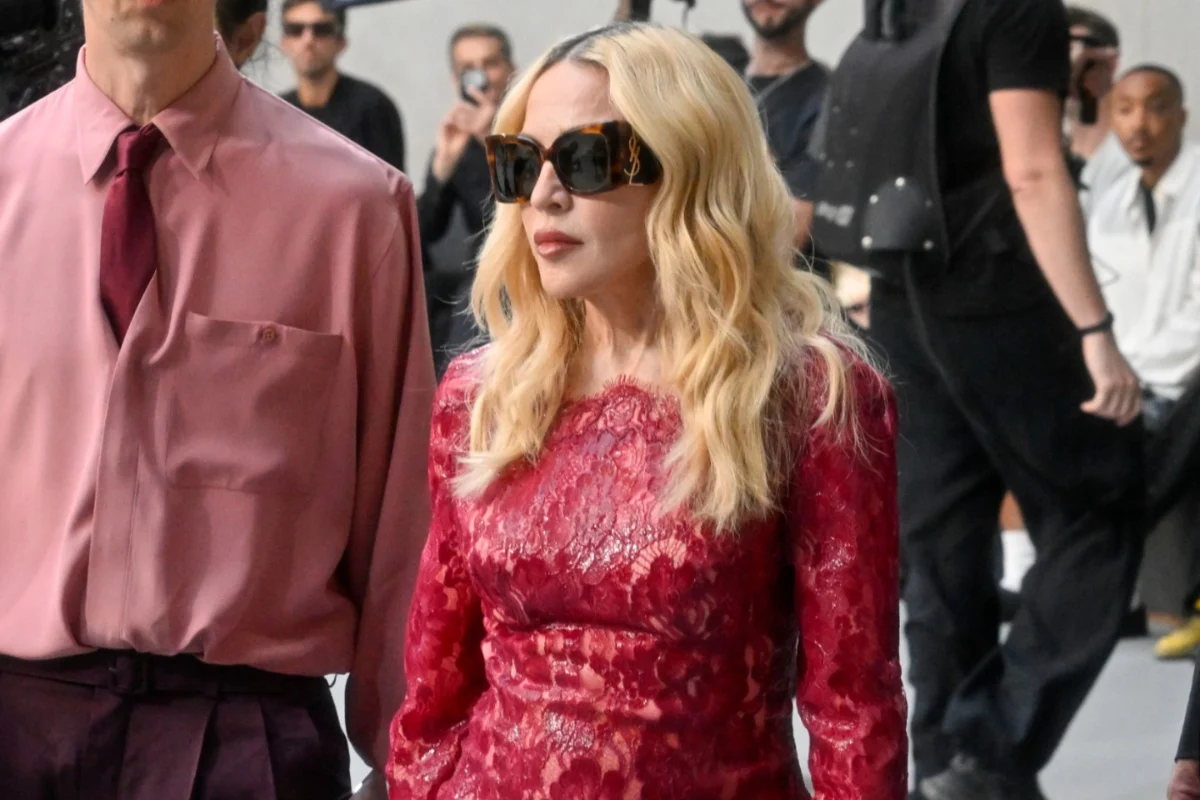
In a cultural landscape increasingly dominated by generative AI, algorithmic curation, and the relentless pursuit of viral metrics, the Queen of Pop has drawn a line in the sand. Madonna, an artist whose four-decade career has been defined by constant evolution and the subversion of technological norms, has launched a scathing critique of artificial intelligence, branding it the antithesis of the human creative spirit.
In a candid, wide-ranging interview with Vogue Italia, the music icon argued that the modern music industry’s obsession with data-driven engagement is effectively stifling the “pure” artistic process that once defined the golden era of creative collaboration.
The Core Critique: Art vs. Algorithm
For Madonna, the shift from collaborative, human-centric creation to machine-assisted output represents a dangerous erosion of artistic integrity. Her contention is rooted in the idea that art is inherently a high-risk, human endeavor—a trait she believes is fundamentally incompatible with the predictive nature of AI.
"Algorithms and artificial intelligence are the opposite of taking risks, and to me, that is the opposite of making art," Madonna stated during the interview. She reflected on the industry of yesteryear, where creators—painters, musicians, dancers, and visionaries—would congregate in physical spaces to exchange ideas, free from the pressure of market analytics.
"Once you were around painters and musicians and dancers and artists in one place and working from a very pure place for each other," she noted. "I value that experience a lot. Nowadays, you don’t do that anymore. Now to have a record deal, you think about how many followers you have."
This frustration is not merely philosophical; it is woven into her latest work. In her track "Bring Your Love," Madonna explicitly rejects the modern fixation on digital validation: "Don’t try to distract me with numbers." For the artist, the pursuit of streaming records and chart positions has become a "distraction" that pulls creators away from the authentic, vulnerable place where true art is born.
A Chronology of Resistance: From the Dance Floor to the Digital Age
To understand Madonna’s current stance, one must look at her trajectory as a pioneer of both musical and visual technology. Since the early 1980s, she has used technology to push boundaries, but she has consistently warned against becoming a slave to it.
- The 1980s/90s – The Technological Embrace: During the height of her MTV-era dominance, Madonna utilized cutting-edge production techniques and groundbreaking music videos to redefine the pop star’s identity. She was an early adopter of digital synthesis, yet she maintained a firm grip on the "human" element of performance.
- The 2010s – The Social Media Shift: As platforms like Instagram and Twitter transformed the industry, Madonna participated but remained skeptical. She frequently utilized these platforms for political activism and fan connection, but rarely allowed the "follower count" to dictate her musical direction.
- 2026 – The Current Stand: Her recent appearance at the Tribeca Film Festival for the premiere of Confessions II – The Film served as a tipping point. During a Q&A, she made headlines for chiding fans for their constant need to document reality rather than experience it, famously urging the audience to "put your fucking phones down and connect."
This trajectory highlights a consistent theme: Madonna views technology as a tool for expression, but she views the dependence on technology as a cage for the human psyche.
The Modern Industry: By the Numbers
The tension Madonna describes is backed by significant shifts in how the music industry operates. The "data-first" approach is no longer an anomaly; it is the standard operating procedure for major labels.
According to industry reports, A&R (Artists and Repertoire) representatives now lean heavily on social media metrics, TikTok virality, and streaming "pre-saves" to determine which artists to sign. The "discovery" process is increasingly outsourced to algorithms that prioritize content that keeps users on a platform for the longest duration, rather than content that provides the most profound emotional impact.
- Algorithmic Bias: AI-generated music is currently flooding streaming services at an unprecedented rate. Platforms are struggling to categorize this content, leading to a saturation of "background" music that mimics human patterns without the intent of human experience.
- The Engagement Trap: Artists are now expected to be content creators, spending more time on short-form video production than on songwriting. This "persistent need" to document, as Madonna calls it, creates a feedback loop where the artist’s persona becomes a product of consumer data rather than personal evolution.
Official Responses and Industry Perspectives
While Madonna’s comments have resonated with traditionalists and fellow legacy artists, the tech sector and some contemporary pop producers offer a different perspective. Proponents of AI in music argue that these tools act as an "equalizer," allowing creators without massive budgets to produce high-fidelity soundscapes that were previously inaccessible.
However, the consensus among traditional songwriters is increasingly aligning with Madonna’s view. During recent discussions on the ethics of generative AI, several high-profile songwriters have echoed her sentiment, stating that "art is about the glitch, the mistake, and the irrational choice"—things that an algorithm is specifically designed to eliminate in favor of "perfection."
Madonna’s stance also aligns with the broader labor movement in the entertainment industry. The 2023 WGA and SAG-AFTRA strikes prominently featured the existential threat of AI as a primary grievance. The industry, it seems, is currently embroiled in a battle to define whether the future of entertainment belongs to the creative human, or the data-optimized machine.
Implications: The Future of Artistic Authenticity
What does this mean for the future of pop music? If Madonna’s prediction holds true, the industry may see a significant "analog renaissance."
1. The Value of Scarcity
As AI-generated content becomes ubiquitous and cheap, the "human" element—the story, the struggle, and the live, unedited performance—will likely become a premium commodity. Madonna’s method of "disappearing" to fuel her imagination may become a blueprint for future artists seeking to reclaim their mental health and creative clarity.
2. The Nature of "Stillness"
Madonna emphasized the need to step away from digital distractions to connect with "nature, my children, and my horses." This emphasis on stillness is a direct challenge to the "hustle culture" that permeates the modern music industry. It suggests that the future of creativity may require a deliberate "digital detox," where artists intentionally disconnect from the grid to preserve their internal voice.
3. The New Creative Contract
The implications for record deals are also significant. If established stars continue to push back against the "numbers game," we may see a shift toward independent labels or artist-led collectives that prioritize the "pure place" of creation over the "follower count."
Conclusion: A Call to Reconnect
Madonna’s critique is more than just a complaint about the state of the music industry; it is a profound observation on the state of the human condition. In an age where we are constantly prompted to document our lives, optimize our output, and feed the machines that govern our discovery, the act of "disappearing" has become a radical form of defiance.
By choosing to prioritize her imagination over the algorithm, Madonna remains an outlier—a position she has occupied throughout her entire career. Whether the industry follows her lead or continues to sink into the seductive efficiency of AI remains to be seen. However, as the lines between creator and code blur, her message remains clear: If we lose the ability to create from a place of stillness, humanity, and risk, we are no longer making art—we are simply generating noise.
In the final analysis, Madonna’s warning serves as a reminder that while machines can emulate the form of music, they cannot replicate the soul behind it. As she continues to evolve, the "Queen of Pop" proves that the most provocative thing an artist can do in 2026 is to simply be human.