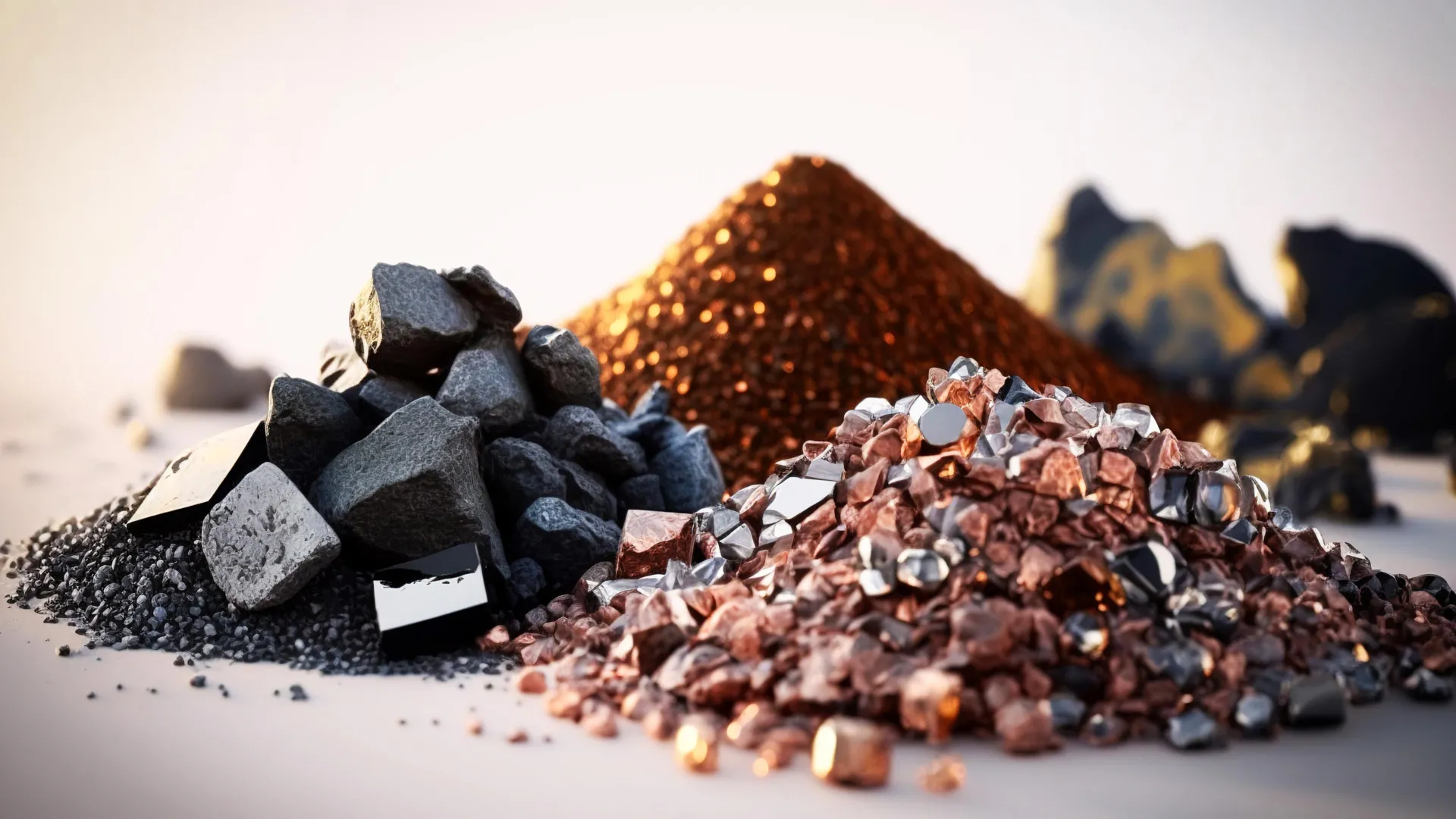
In the race to achieve a carbon-neutral global economy, the bottleneck is not a lack of ambition, but a shortage of the very materials required to build the transition. From the wind turbines spinning in the North Sea to the electric vehicles (EVs) cruising through Stockholm, the modern green economy relies heavily on high-performance permanent magnets. These magnets, typically composed of rare earth elements (REE), are the beating hearts of clean energy technology. However, the current supply chain for these materials is fraught with geopolitical fragility and significant environmental degradation.
Now, Swedish researchers are launching an ambitious initiative to redefine the industry. By leveraging domestic mineral deposits and a new, resource-efficient approach to material science, Sweden aims to decouple the green transition from its dependence on unstable international markets and environmentally harmful production methods.
The Geopolitical Fragility of the Green Transition
The global market for rare earth magnets is currently defined by a near-total Chinese monopoly. This centralization of production—and the resulting market volatility—has become a flashpoint in international trade relations. Martin Sahlberg, Professor of Materials Chemistry at Uppsala University and a lead researcher in the "Sustainable Materials and Material Flows" project, notes that the vulnerability of this supply chain is not merely theoretical.
"It’s a geopolitical problem," Sahlberg asserts. "In the last year, with trade wars and tariffs, we’ve seen China halt exports of rare earth elements as a lever in diplomatic disputes. We can also point to former US President Donald Trump’s interest in Greenland or the Ukraine-United States Mineral Resources Agreement as clear evidence that access to these elements is now a central pillar of national security."
The reliance on a single source creates a precarious situation for European manufacturers who are attempting to scale up their production of EVs and renewable energy infrastructure. When a nation’s climate goals are held hostage by the trade policies of a foreign power, the transition to sustainability becomes fundamentally insecure.
The Environmental Cost of the "Rare" Earth
Despite their name, rare earth elements are not particularly scarce in the Earth’s crust. The term "rare" is a misnomer derived from the difficulty of finding them in concentrations high enough to make traditional extraction economically viable. However, the "dirty" reality of their current extraction process is the true barrier to a sustainable future.
The separation and purification of these elements often involve the use of highly toxic chemicals. Furthermore, because rare earth deposits are frequently found alongside radioactive substances like thorium and uranium, the mining process carries significant ecological and public health risks.
"It’s rather a dirty business today," Sahlberg says, highlighting the stark contrast between the "clean" end-product—a wind turbine or an electric car—and the "dirty" origins of the magnets that drive them. To achieve a truly sustainable transition, the production process itself must be cleaned up, a task that requires a radical departure from current industrial standards.
A New Strategy: Tailoring Magnets to the Rock
The current industrial paradigm forces nature to conform to human design. Manufacturers identify a "perfect" chemical formula for a magnet and then scour the globe to find specific ores that can be processed to match that formula, often discarding vast amounts of "useless" material in the process.
Swedish researchers are proposing a complete reversal of this logic. Rather than forcing local minerals to fit an existing, rigid formula, the team at Uppsala University is working to design magnets whose chemical composition mirrors the materials naturally present in Sweden’s geological deposits.
The "What’s in Your Fridge" Methodology
To illustrate this, Sahlberg uses a simple culinary analogy. "It’s a bit like the TV show What’s in Your Fridge," he explains. "Historically, we have mined for a specific metal—iron, copper, or perhaps gold—and discarded everything else. We are taking a broader approach here to find out what elements are in the deposits and in what proportions. We are making an inventory of ‘what’s in the fridge’ so that we can use all these elements in the most efficient way possible."
By analyzing the full mixture of elements within a deposit, the research team aims to minimize waste and reduce the energy-intensive purification steps that typically plague the industry. They are effectively creating new "magnet recipes" that utilize the unique mineral signatures of Swedish sites like Kiruna, Bergslagen, and Norra Kärr.
Chronology of a Research Initiative
The Swedish project is not a sudden reaction to current events, but the result of a multi-year, interdisciplinary strategy:
- Foundation Phase: Researchers began by mapping the mineral potential of Sweden’s major mining districts, moving beyond single-metal extraction models to understand the complexity of the mineral flows.
- Scientific Design Phase: Materials physicists and engineers began modeling the magnetic properties of various alloy combinations that could be derived from these specific, locally sourced elements.
- Pilot Integration: Current efforts are focused on bridging the gap between basic laboratory research and industrial-scale manufacturing, evaluating how these new "recipes" perform under real-world conditions.
- Long-term Outlook: The initiative is designed as a long-term, multi-disciplinary effort that will span several years, aiming to build a sustainable, circular industrial ecosystem from the ground up.
Supporting Data: Why Sweden?
Sweden is uniquely positioned to lead this shift for three primary reasons:
- Geological Wealth: Sweden’s deposits in Kiruna, Bergslagen, and the Norra Kärr area are internationally significant. The geological potential for REE extraction is high enough to support a domestic industry.
- Energy Infrastructure: The extraction and processing of minerals is an energy-intensive process. Sweden possesses a distinct advantage in its access to relatively cheap, low-carbon energy, primarily through its robust hydroelectric and nuclear power grid. This allows for a much lower "carbon footprint per magnet" compared to coal-reliant producers.
- Water Access: Industrial mineral processing requires significant water usage. Sweden’s abundant water resources provide a logistical advantage that many other mining-heavy nations lack.
Implications for the Global Green Economy
The success of this research could have profound implications for the global market. If Sweden can successfully demonstrate a model of "circular mineral extraction"—where the composition of the magnet is determined by the natural composition of the ore—it could revolutionize the economics of mining.
The Shift Toward Circularity
This approach aligns with the principles of a circular economy. By extracting the full range of elements from a deposit and tailoring the final product to those elements, the industry moves away from a "take-make-waste" model toward a more efficient, resource-conscious framework. This not only reduces the environmental impact of mining but also significantly lowers the cost of production by reducing the need for aggressive, chemical-heavy refining.
Application-Inspired Basic Research
Sahlberg emphasizes that while the work is grounded in basic, fundamental science, its trajectory is inextricably linked to immediate technological needs. "What we are doing is basic research but in an area that is technologically incredibly important," he says. The collaboration between geologists, materials physicists, and engineers represents a new form of "application-inspired" research, where scientific inquiry is guided by the urgent need to solve real-world sustainability challenges.
Conclusion: A Blueprint for the Future
As the world pivots toward electrification, the demand for high-performance magnets will only increase. The path forward cannot rely on the "dirty" and geopolitically volatile models of the past. By turning inward and looking at the specific mineral assets within its own borders, Sweden is charting a path that prioritizes environmental integrity and technological sovereignty.
The research being conducted at Uppsala University serves as more than just a scientific project; it is a blueprint for how industrialized nations can secure their green future. By understanding "what is in the fridge," Sweden is not just digging for rocks—it is building the foundations of a cleaner, more stable, and truly sustainable global magnet industry. Whether this approach can be scaled to meet the massive global demand remains to be seen, but the initial findings suggest that the solution to our technological dependencies may have been beneath our feet all along.