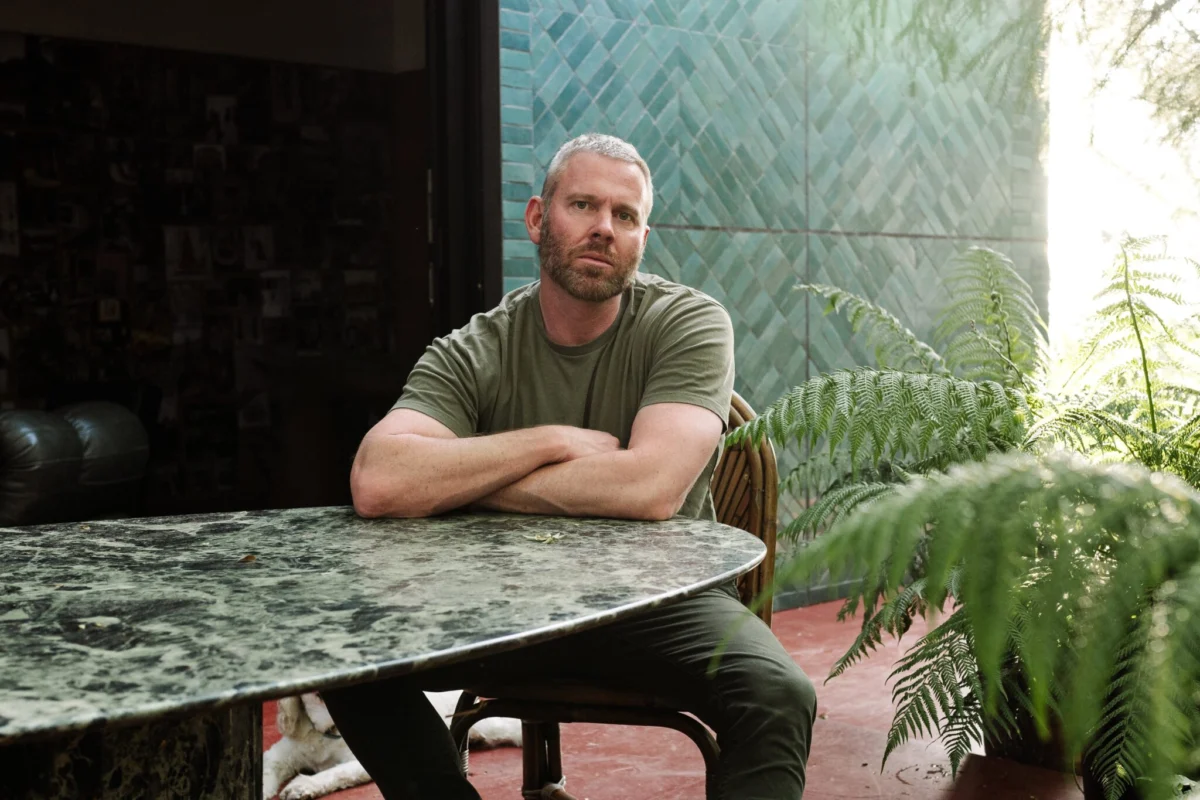
In the sun-drenched hills of Highland Park, Los Angeles, Richard Christiansen—the creative force behind the lifestyle brand Flamingo Estate—has turned the traditional celebrity endorsement model on its head. By eschewing standard advertising in favor of hyper-local, agricultural-based collaborations, Christiansen has built a brand that feels less like a corporate enterprise and more like a high-end, garden-centric commune. From bee-filled rooftops to artisanal pickle jars, the Flamingo Estate ethos is rooted in the earth, a philosophy that has captivated Hollywood’s elite and transformed the landscape of modern luxury.
The Unexpected Call: A "Holy Shit" Moment
The story of one of Flamingo Estate’s most successful ventures began in the quiet confines of its administrative offices. Richard Christiansen recalls the day he received an unexpected phone call from Brandon Lee, son of Pamela Anderson.
"He said, ‘Would you like to do something with my mom? She’s a big gardener,’" Christiansen recounts. Because Lee and his mother do not share a surname, the initial pitch was shrouded in ambiguity. "I didn’t know who he was talking about, so I was like, ‘OK, who’s your mom?’ He said, ‘Pamela Anderson.’ I was like, ‘Holy shit!’"
This interaction characterizes the organic, often serendipitous nature of the Flamingo Estate ecosystem. What followed was not a standard contract negotiation or a sterile marketing strategy, but a creative exchange that would eventually lead to a $500,000 charitable windfall for the California Wildlife Center.
Chronology of a Lifestyle Brand
To understand the success of Flamingo Estate, one must look at the trajectory of Christiansen’s work. Originally an Australian who grew up on a working bee farm, Christiansen brought his deep-seated appreciation for agriculture to Los Angeles.

The Honey Foundations
Long before the buzz surrounding celebrity pickles, Flamingo Estate made its mark through its signature honey collaborations. These were not mere branding exercises; they were deeply personalized, site-specific projects. Christiansen’s method is rigorous and artisanal: he takes his own hives to the homes of his partners, ensuring the product is literally "of" their land.
- The Julianne Moore Partnership: Harvested from her private garden in Montauk, the honey produced with Moore is described by Christiansen as having a depth and complexity akin to a fine, dark whisky.
- The LeBron James Collaboration: Demonstrating the brand’s reach, Flamingo Estate successfully installed hives on the roof of LeBron James’s estate, proving that even the most urbanized celebrity homes could harbor a thriving, productive apiary.
- The Ed Ruscha Project: In a nod to the artistic community, the brand placed hives directly within the legendary artist’s studio, bridging the gap between fine art and organic production.
These partnerships share a strict internal policy: the celebrities involved do not receive payment. Instead, the revenue from these limited-edition lines is funneled directly into non-profit organizations, effectively positioning the brand as a philanthropic powerhouse disguised as a luxury lifestyle label.
The Pickle Pivot: Redefining the Product
When Pamela Anderson arrived at the Flamingo Estate offices, Christiansen was prepared to offer his standard "honey pitch." He expected her to embrace the proven model that had succeeded with the likes of Julianne Moore and LeBron James.
Anderson, however, had other plans. With characteristic straightforwardness, she told him, "I want to do pickles with you. It’s my aunt’s recipe."
This moment of creative redirection highlights the core of the Flamingo Estate brand identity: the collaboration is only as good as the authentic connection the celebrity has to the product. The resulting $38 jars of pickles became a runaway success, demonstrating that the consumer’s appetite for authentic, "heirloom-adjacent" luxury is insatiable.

"Pleasure Principles": A Peek Into the Mind
As Christiansen moves into the next phase of his career, he is documenting his philosophy in a new 408-page tome titled Pleasure Principles: An Almanac from the Garden. The book serves as a physical manifestation of his creative process—an eclectic mix of recipes, DIY garden projects, and philosophical musings on everything from the cinematic history of the moon to the sociological impact of celebrity-owned restaurants in Los Angeles.
When asked about his process, Christiansen credits his lack of a car and his reliance on bicycle travel. "I ride my bicycle everywhere," he explains. "When I’m on my bike, I dictate into my phone. That’s maybe why everything’s short, these short little stories." This "dictated-while-cycling" style gives the book a raw, stream-of-consciousness quality that reflects the agility of his brand.
The Hollywood Expansion: Practical Magic 2
The brand is currently branching into the world of film merchandising—a significant evolution for a company that started with bees and soil. Flamingo Estate is partnering with the upcoming sequel Practical Magic 2.
This is not a traditional product placement deal. Christiansen has curated an entire gift box inspired by the film, and Flamingo Estate goods, such as their signature Green Goddess candles and estate-pressed olive oil, are featured prominently within the movie’s production design. By integrating the brand into the narrative fabric of the film, Christiansen is setting a new precedent for how physical goods can interact with cinematic storytelling.
The One That Got Away: A Missed Opportunity
Despite the brand’s meteoric rise, Christiansen remains candid about the opportunities that didn’t materialize. Reflecting on the passing of Dolly Parton, he reveals a near-collaboration that would have likely been a cultural touchstone.

"We were going to do a coffee with Dolly called ‘8 to 6’ instead of ‘9 to 5,’" he shares. "We had some lovely conversations about it, and then it didn’t end up happening because we were too young at that point, and our distribution probably couldn’t handle the weight of her reach."
For Christiansen, this serves as a lesson in timing and scale. While the "8 to 6" coffee never reached the shelves, the regret is tempered by the understanding that a brand’s infrastructure must match the magnitude of its collaborators.
Implications for the Future of Lifestyle Branding
The success of Flamingo Estate signals a shift in consumer behavior. Modern buyers, particularly the demographic that frequents luxury lifestyle boutiques, are increasingly skeptical of mass-produced celebrity endorsements. They are, however, drawn to projects that feel intimate, charitable, and geographically rooted.
By maintaining a "no-pay" policy for celebrities and donating proceeds to non-profits, Christiansen has cultivated a "halo effect" around his products. The celebrity partner is not selling their likeness; they are lending their influence to a cause, and the consumer is buying into that virtuous cycle.
As Flamingo Estate continues to expand into publishing, film, and beyond, the core challenge will be maintaining this level of authenticity. The brand has proven that even in an age of digital saturation, there is still a powerful, tangible market for high-quality goods that have a story to tell—and a garden to grow in. Whether it is through a jar of pickles or a page in an almanac, Richard Christiansen’s "pleasure principles" suggest that the future of luxury is not in the boardroom, but in the backyard.