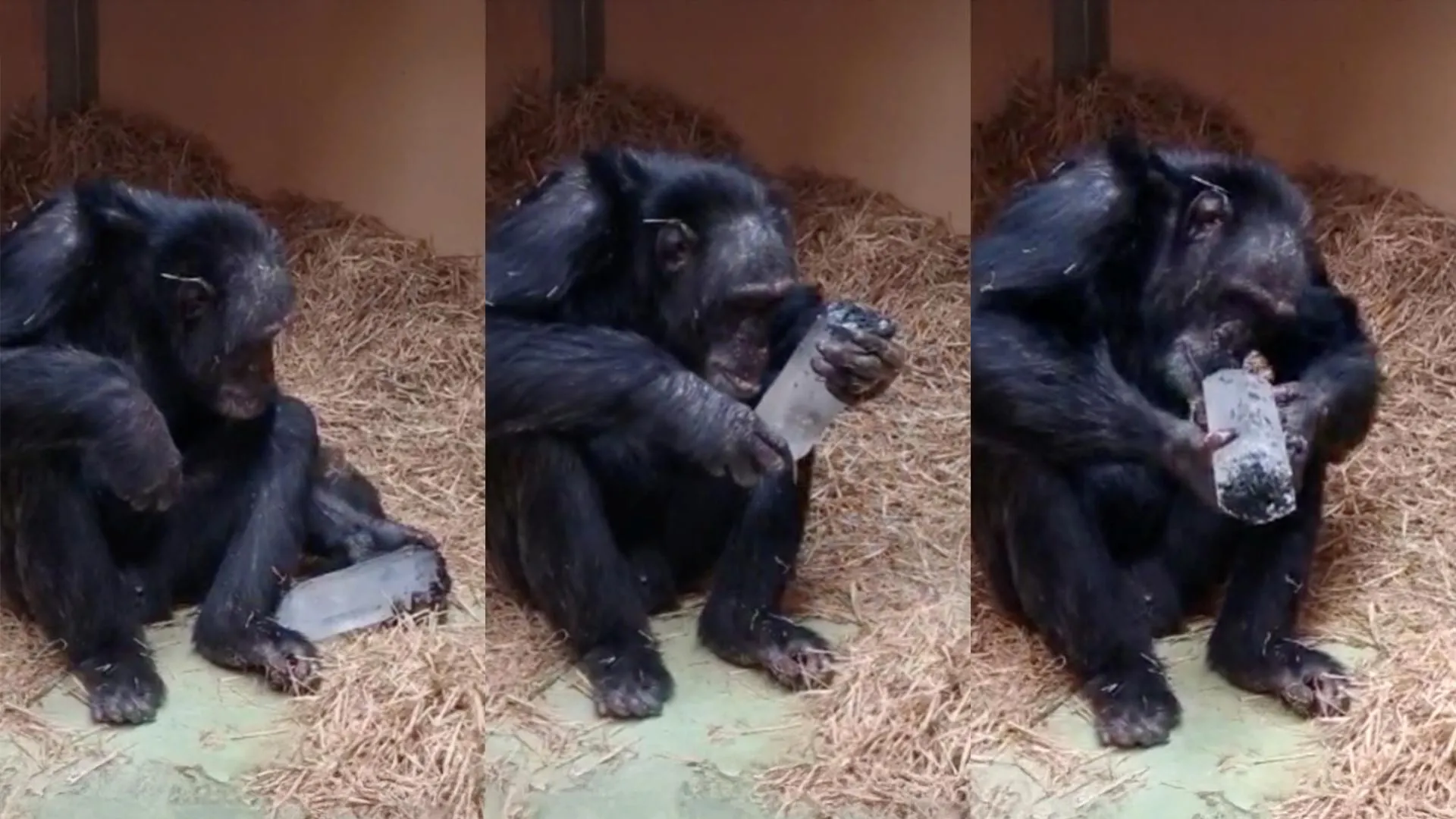
For nearly a million years, the archaeological record has whispered a peculiar secret. At sites where early Homo remains have been unearthed, researchers have repeatedly discovered collections of crystals—mineral specimens that served no functional purpose. They were not knapped into sharp-edged tools, they were not fashioned into weapons for hunting, and they showed no signs of being strung as jewelry. Yet, these ancient hominins, living as far back as 780,000 years ago, went to the effort of gathering, transporting, and keeping these stones.
For decades, the presence of these non-utilitarian objects has perplexed paleoanthropologists. Why would a species governed by the brutal exigencies of survival—finding food, avoiding predators, and seeking shelter—devote energy to collecting "useless" rocks? A groundbreaking study recently published in the journal Frontiers in Psychology may have finally provided a window into this ancient mystery, suggesting that the human impulse to collect crystals may be rooted in an aesthetic sensitivity that predates the emergence of Homo sapiens itself.
The Evolutionary Tapestry of Aesthetics
To unravel the mystery, a team of researchers led by Professor Juan Manuel García-Ruiz of the Donostia International Physics Center in San Sebastián, Spain, turned their gaze toward our closest living relatives: the chimpanzees (Pan troglodytes).
Humans and chimpanzees shared a common ancestor roughly six to seven million years ago. Despite the vast biological and cultural chasm that has opened between the two species since that divergence, they remain genetic and behavioral mirrors in many respects. The central hypothesis of the study was provocative: If chimpanzees, like their ancient hominin cousins, demonstrate a spontaneous, non-utilitarian attraction to crystals, it would imply that the "aesthetic sense" is not a uniquely modern human invention, but rather a deep-seated evolutionary trait embedded in the primate lineage.
Experimental Chronology: The Rainfer Foundation Study
The research team conducted their experiments at the Rainfer Foundation, a primate sanctuary in Spain, focusing on two groups of "enculturated" chimpanzees—apes that have had significant, long-term exposure to human environments.
Phase One: The Monolith Test
The researchers began by presenting the chimpanzees with a stark choice: a large, striking quartz crystal (dubbed "the monolith") placed alongside an ordinary rock of identical size and weight. The result was instantaneous. While both objects initially piqued the curiosity of the apes, the ordinary rock was quickly discarded. The crystal, however, became the object of intense fascination.
Observations showed that the chimpanzees engaged in complex tactile and visual inspection. They did not merely touch the stones; they rotated them, tilted them against the light, and examined them from multiple angles. One chimpanzee, Yvan, displayed a behavior that would be immediately recognizable to any modern human collector: he picked up the crystal and retreated with it to the safety of his dormitory, effectively claiming it as his own.
Phase Two: The Discrimination Task
To determine if this was merely a fleeting reaction to a "big, shiny thing," the researchers escalated the complexity. They mixed various quartz crystals into a pile of 20 mundane, rounded pebbles. The chimpanzees identified and selected the crystals within seconds, consistently ignoring the common stones. Even when the team introduced pyrite and calcite—minerals with vastly different shapes, colors, and properties than quartz—the apes identified them as belonging to the same "category" of desirable objects.
"The chimpanzees began to study the crystals’ transparency with extreme curiosity, holding them up to eye level and looking through them," Professor García-Ruiz noted.
The most striking behavior occurred with a chimpanzee named Sandy. She was observed transporting both pebbles and crystals to a wooden platform, where she meticulously sorted them. She grouped the three distinct types of crystals—each differing in transparency, symmetry, and luster—separately from the pile of pebbles. Because chimpanzees typically do not carry objects in their mouths unless they are of significant value, the researchers suspect that Sandy viewed the crystals as "possessions."
Supporting Data: The Fading of Novelty
One of the key psychological markers of human curiosity is the "habituation effect"—the tendency for interest in an object to wane once the novelty wears off. The research team found that the chimpanzees followed this exact psychological trajectory. Their curiosity was at its peak during the initial encounter, gradually tapering off as they became accustomed to the presence of the stones.
Interestingly, the value the apes placed on these items was confirmed by the "currency" required to retrieve them. When the time came to end the session, the chimpanzees were unwilling to part with their finds; caretakers had to offer bananas and yogurt as trades to successfully reclaim the crystals. This transaction implies a level of psychological attachment that transcends simple curiosity, hinting at a proto-value system.
Official Responses and Researcher Insights
Professor García-Ruiz, an Ikerbasque Research Professor and expert in crystallography, emphasized that the study highlights the diversity of primate personalities. "There are Don Quixotes and Sanchos: idealists and pragmatists," he remarked. "Some may find the transparency of crystals fascinating, while others are interested in their smell and whether they’re edible."
The researchers acknowledged a significant limitation: the study focused on "enculturated" chimpanzees. Because these apes have lived in close proximity to humans, they are exposed to artificial environments and non-natural objects. To fully validate the theory that this behavior is innate, the team suggests that future research must be conducted on wild chimpanzee populations to see if the same crystal-seeking behaviors manifest without human influence.
Implications: The Origins of the Human Worldview
Why are crystals so uniquely attractive to primates? The answer may lie in the stark contrast between the crystalline structure and the natural environment.
In the wild, the landscape is dominated by organic, fractal, and chaotic shapes: the branching of trees, the winding of rivers, the curvature of mountains, and the billowing of clouds. Crystals, conversely, are the only naturally occurring polyhedral solids. With their perfectly flat surfaces, sharp angles, and geometric precision, they represent a radical departure from the visual "noise" of the natural world.
For an early hominin navigating a complex environment, the appearance of a crystal would have been a cognitive "glitch"—a visual anomaly that demanded attention. This attraction to geometric regularity may be the fundamental ancestor of human aesthetic appreciation.
The "Crystal in the Mind"
The implications of this study are profound. If our fascination with the orderly, the transparent, and the geometric is rooted in a six-million-year-old primate trait, then our modern obsession with gemstones, architecture, and even mathematics may have deeper roots than we once assumed.
As Professor García-Ruiz concluded, "Our work helps explain our fascination with crystals and contributes to the understanding of the evolutionary roots of aesthetics and worldview. We now know that we’ve had crystals in our minds for at least six million years."
The next time a visitor to a museum pauses before a collection of quartz, or a hiker stops to pick up a particularly clear stone from a creek bed, they are participating in a ritual that began long before the invention of language. It is a quiet, persistent, and uniquely primate bridge connecting our primitive ancestors to our modern, contemplative selves. The stones were never tools; they were the first mirrors in which our ancestors began to perceive the difference between the mundane and the magnificent.