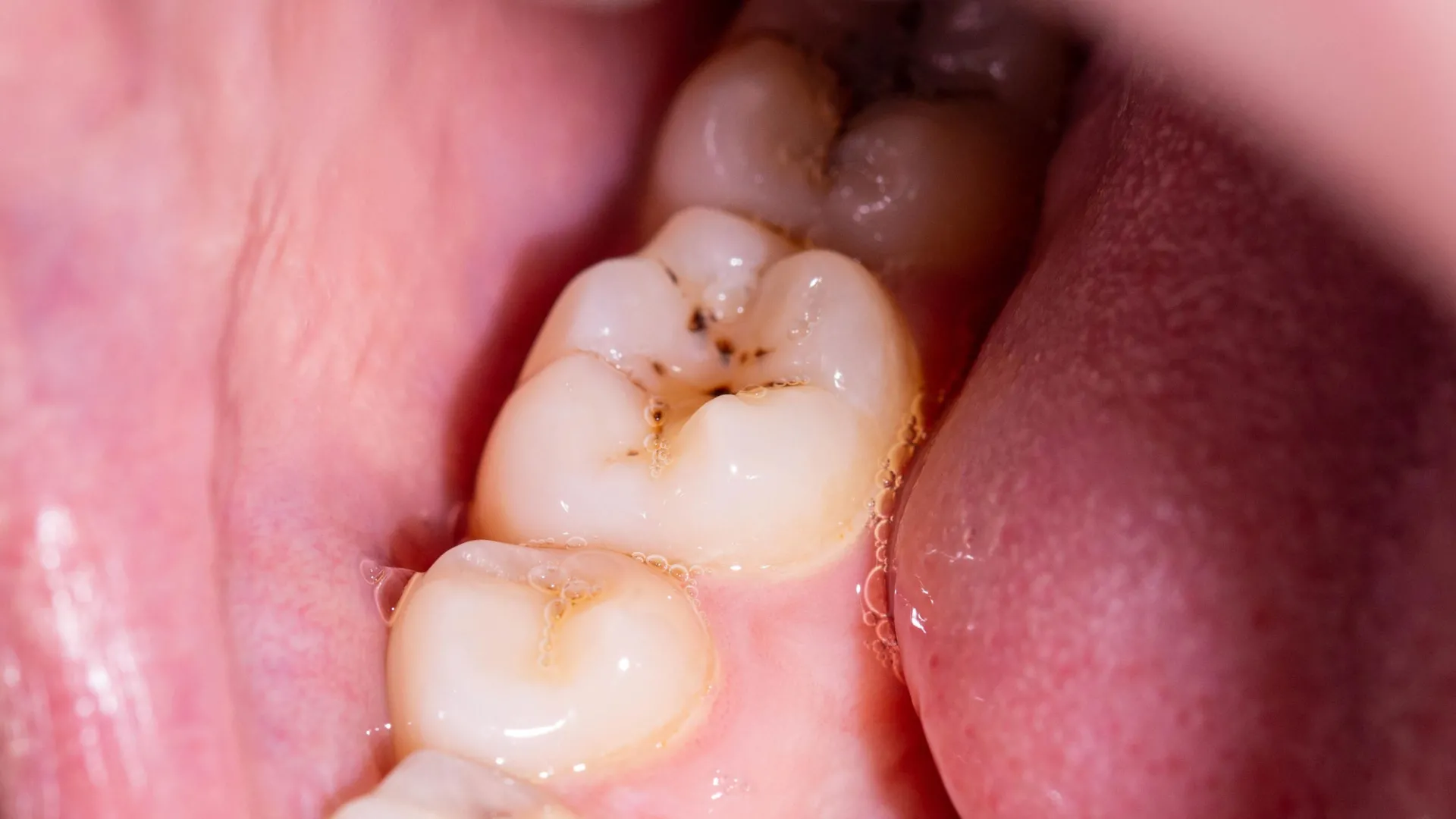
In a breakthrough that promises to redefine modern dentistry, researchers at the University of Nottingham have unveiled a pioneering dental gel capable of performing what was once considered biologically impossible: the restoration of human tooth enamel. By mimicking the natural biological processes that construct our teeth during infancy, this new material offers a transformative solution to the global crisis of dental decay and tooth sensitivity, moving the field of dentistry from a model of “drilling and filling” to one of true biological regeneration.
Main Facts: A Paradigm Shift in Dental Care
The human tooth is a marvel of biological engineering. Enamel, the outermost layer, is the hardest substance in the human body, designed to withstand the immense pressures of mastication and the constant chemical assault of acidic foods and beverages. However, enamel suffers from a critical, permanent flaw: it contains no living cells. Unlike skin or bone, once enamel is lost to decay or erosion, it cannot naturally regenerate.
The newly developed gel, described in a study published in Nature Communications, bypasses this limitation. Rather than merely hardening existing enamel—the primary function of current fluoride-based treatments—this synthetic protein-based gel acts as a scaffolding agent. Once applied to the surface of a tooth, the gel penetrates micro-cracks and pores, creating a durable framework. It then recruits calcium and phosphate ions naturally present in human saliva to facilitate a process known as "epitaxial mineralization."
In this process, the material guides the growth of new mineral crystals that align perfectly with the tooth’s original crystalline structure. This ensures that the regenerated tissue is not a superficial patch, but a seamless, integrated extension of the tooth itself.
Chronology: From Lab Bench to Clinical Horizon
The journey toward this innovation began in the University of Nottingham’s School of Pharmacy and the Department of Chemical and Environmental Engineering. Recognizing that current dental products were largely palliative—designed to strengthen or protect rather than rebuild—the interdisciplinary team sought to unlock the secrets of amelogenesis, the biological process that creates enamel.
Phase 1: Biomimetic Design
The researchers spent years identifying the specific proteins responsible for the controlled crystallization of enamel during childhood development. By synthesizing a gel that replicates the function of these natural proteins, the team created a medium that could operate in the complex, fluid-filled environment of the human mouth.
Phase 2: Material Testing
The team subjected their synthetic mineral layers to rigorous mechanical stress tests. Using simulated environments that mimicked the harsh realities of the human oral cavity—including the mechanical wear of aggressive tooth brushing, the pressure of daily chewing, and the erosive cycles caused by acidic diets—the researchers sought to determine if the regenerated enamel was merely a aesthetic layer or a structural component.
Phase 3: Commercialization and Scaling
Following the successful validation of the material’s durability, the research team transitioned into the commercialization phase. They established a spin-off company, Mintech-Bio, to navigate the complexities of regulatory approval and mass production. As of late 2023 and early 2024, the team is working toward a clinical launch, with the aim of introducing the first consumer-ready products by 2025.
Supporting Data: Why Enamel Loss Matters
The urgency of this innovation is underscored by the staggering prevalence of dental disease. According to global health metrics, dental conditions affect nearly 50% of the world’s population. The implications of poor oral health extend far beyond the dentist’s chair; research has increasingly linked untreated dental infections and chronic inflammation to systemic health issues, including diabetes, cardiovascular disease, and adverse pregnancy outcomes.
The Problem of Dentine Sensitivity
A significant portion of the global population suffers from dentine hypersensitivity. Dentine is the sensitive, porous layer of the tooth located beneath the enamel. When enamel wears away or gums recede, the microscopic tubules within the dentine become exposed. These tubules act as conduits, carrying sensations of heat, cold, and pressure directly to the tooth’s nerves.
Current treatments for this condition—typically desensitizing toothpastes or resin-based varnishes—often provide temporary relief by blocking these tubules. The Nottingham gel, however, offers a permanent solution: it grows an enamel-like mineral layer over the exposed dentine, effectively sealing the tubules at the source and restoring the tooth’s natural protective barrier.
Mechanical Integrity
The data collected during the study highlights that the regenerated enamel is not brittle. The "epitaxial mineralization" ensures that the new crystals are anchored to the existing tissue, allowing the tooth to maintain its natural mechanical properties. In tests, the regenerated surface displayed the same resistance to "thermal and chemical insults" as healthy, native enamel, marking a significant improvement over existing composite resin fillings, which are prone to chipping or debonding over time.
Official Responses: Perspectives from the Research Team
The lead researchers involved in the project have expressed optimism regarding the potential for this technology to change the standard of care in dental clinics worldwide.
Dr. Abshar Hasan, the lead author of the study and a Postdoctoral Fellow, emphasized the robustness of the innovation: "Dental enamel has a unique structure… When our material is applied to demineralized or eroded enamel, or exposed dentine, the material promotes the growth of crystals in an integrated and organized manner. We have tested the mechanical properties… and found that the regenerated enamel behaves just like healthy enamel."
Professor Alvaro Mata, who spearheaded the project as the Chair in Biomedical Engineering & Biomaterials, highlighted the accessibility of the technology. "We are very excited because the technology has been designed with the clinician and patient in mind," said Professor Mata. "It is safe, can be easily and rapidly applied, and it is scalable. The technology is versatile, which opens the opportunity to be translated into multiple types of products."
Mata noted that the versatility of the gel is key to its future success. Because it can be formulated into various delivery systems, it could potentially be used in professional clinical applications, over-the-counter desensitizing kits, or even as a bonding agent to increase the longevity of traditional restorative dental materials like crowns and fillings.
Implications: The Future of Dental Medicine
The implications of this breakthrough are profound. For the patient, it represents a shift away from invasive, expensive procedures toward regenerative, preventative medicine. For the dental industry, it represents the potential for a complete overhaul of how practitioners treat tooth wear.
A Scalable Solution
One of the most critical aspects of the Nottingham research is the focus on scalability. While many "miracle" dental materials fail to transition from the lab to the clinic due to the high cost of production or the complexity of the application, this gel is designed to be used in a manner similar to existing fluoride varnishes. This suggests that the barrier to entry for dentists will be low, allowing for rapid adoption across diverse healthcare systems.
Beyond Aesthetics
While the aesthetic benefits of regrowing enamel are clear, the functional impact is the true goal. By restoring the structural integrity of the tooth, the gel could prevent the need for more invasive treatments such as root canals, crowns, or extractions. If a tooth can be "repaired" at the first sign of erosion or demineralization, the patient avoids the long-term cycle of damage and expensive, complex dental work.
Toward a New Standard of Care
As Mintech-Bio prepares for its first product launch, the dental community is watching with keen interest. If the results seen in the Nature Communications study hold true in real-world clinical trials, the medical community may soon have the tools to effectively "cure" enamel erosion. By enabling the body to repair itself using its own biological resources, the researchers at the University of Nottingham have provided a blueprint for the next century of dentistry—a future where the smile is not just maintained, but truly restored.
With the first product slated for development within the coming year, the goal is clear: to ensure that the pain, cost, and physical degradation associated with tooth decay become relics of the past. For millions of people struggling with tooth sensitivity and the slow loss of their teeth, this gel represents the most promising development in modern dental science.