By Editorial Staff
The Himalayan region, a landscape defined by its majestic peaks and serene river valleys, has been transformed into a theater of unimaginable grief and destruction. Following a catastrophic glacial collapse that triggered a tsunami-like deluge of ice, rock, and slurry, the death toll continues to climb, casting a pall of sorrow over Nepal and Tibet. As authorities scramble to recover victims and account for the missing, the disaster stands as a stark reminder of the volatile and increasingly dangerous nature of high-altitude environments in a changing climate.
The Scale of the Tragedy: Main Facts
As of Monday, the confirmed death toll in Nepal has reached 903, with an additional 16 confirmed deaths reported by Chinese authorities in Tibet. The human cost, however, is likely much higher; nearly 4,250 people remain unaccounted for across the border regions, including a significant number of international workers and local villagers.
The disaster, which struck last Wednesday, was not a traditional flood. It was a high-velocity, high-density slurry of pulverized rock, ice, and debris that swept through valleys with the force of a tsunami, obliterating everything in its path. Entire villages have been erased, and critical infrastructure, particularly hydroelectric power plants that form the backbone of Nepal’s energy sector, has been decimated. The disaster agency in Nepal confirmed that 933 workers from these plants are among the missing, marking one of the largest industrial losses of life in the country’s recent history.
Chronology of the Disaster
The events unfolded with terrifying speed, leaving little time for warning or evacuation.
- Wednesday, Pre-Dawn: A catastrophic failure of bedrock beneath a Himalayan glacier occurred at high altitude. The massive structural failure, which registered as a magnitude 5.2 seismic event, sent a wall of ice and rock cascading into the valleys below.
- Wednesday, Mid-Morning: The debris flow hit the Upper Trishuli-1 hydroelectric site and surrounding settlements. Workers reported a deafening roar as the turbine halls were instantly submerged in liquid mud and rubble.
- Thursday–Friday: Initial rescue efforts were hampered by impassable roads and destroyed bridges. The international community began mobilizing support as the sheer scale of the missing persons list became apparent.
- Saturday: Rescuers reached the Trishuli 3A site, where they discovered evidence of survivors trapped in tunnels. The focus shifted to drilling operations to provide oxygen and potential extraction routes.
- Sunday: Persistent heavy rains complicated recovery efforts. Excavation sites were repeatedly flooded, forcing temporary suspensions of search missions.
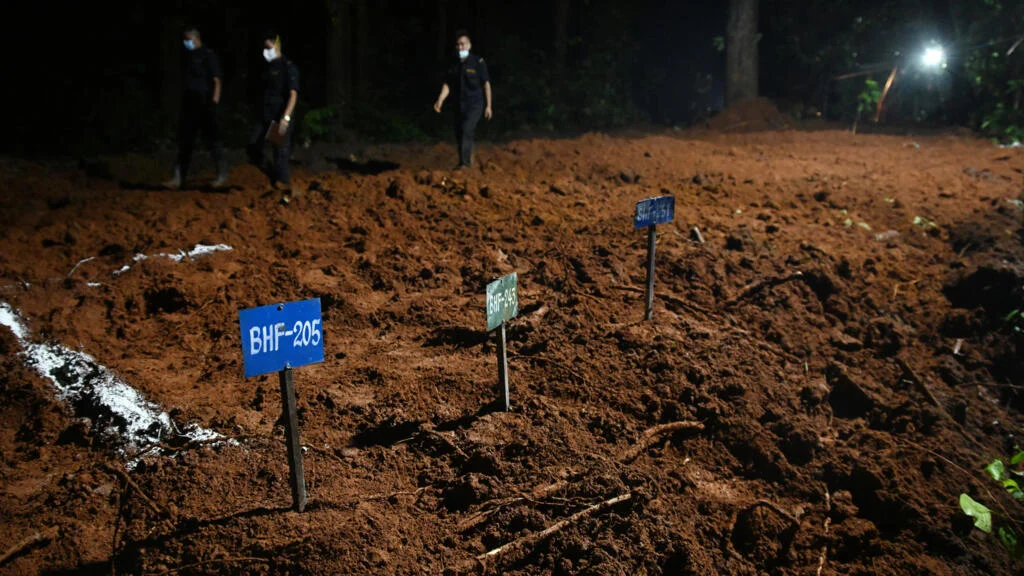
- Monday: As the scale of the tragedy became undeniable, authorities in Nepal began the heart-wrenching process of burying the unidentified dead, as morgues reached capacity and lacked the refrigeration required to hold the remains.
Supporting Data and the Mechanics of the Deluge
The sheer geological force behind this event has baffled experts. Satellite imagery analyzed by geologists confirmed that the primary trigger was not rainfall, but a bedrock failure that collapsed under the weight of the glacier. This "glacial avalanche" effectively dammed local rivers, creating secondary hazards as makeshift lakes formed behind walls of mud and debris.
Data from the disaster management agencies highlights the international scope of the crisis. Among the 4,247 missing in Nepal, 592 are foreign nationals, underscoring the regional importance of these Himalayan work sites. In Tibet, Chinese media reported that of the 546 missing, 261 were foreigners, including a significant contingent of Nepali migrant workers. The flow of the debris was so powerful that reports have surfaced of bodies and wreckage being swept downstream as far as the Indian border, suggesting the environmental impact will stretch across three nations.
The Human Toll: Stories from the Frontline
The emotional weight of the crisis is most visible at the makeshift identification centers. In Kathmandu, families gather around LED screens, scanning images of the deceased—a process that has proven traumatic for many.
Surendra Dowluri, a 33-year-old worker from India’s Andhra Pradesh state, remains one of the few voices to recount the horror. After spending four days trapped near the Upper Trishuli-1 site, he described the sensory overload of the event. "We heard a very loud sound… and saw that the turbine floor was submerged with slush," he told reporters. Dowluri, who helped pull five of his colleagues to safety before one succumbed to his injuries, spoke of the frantic scramble to higher ground as the torrent consumed the plant’s infrastructure.

For others, the uncertainty is a slow, agonizing torture. Shobha Adhikary, searching for a childhood friend, expressed the grim reality of the identification process: "It looks like him, for sure," she whispered, holding a photograph of a smiling man against the digital images projected on the wall. For those whose loved ones remain missing, the hope of rescue is fading, replaced by the desperate desire for closure.
Official Responses and Recovery Challenges
The Nepali army, under the coordination of Brigadier General Raja Ram Basnet, has ramped up its efforts, deploying specialized engineers to tunnel through debris. However, the mission is fraught with "a mountain of challenges," as rescue teams call them.
"We are working in search and rescue of the stranded people from hills, settlements, and river areas," Basnet stated. Despite the use of heavy machinery and drilling equipment to reach those trapped in tunnels, the unpredictable weather remains a constant antagonist. Sudden downpours are refilling excavation pits with silt, forcing rescuers to start over repeatedly.
The humanitarian response is equally strained. With no large-scale refrigeration facilities available in the hardest-hit regions, the decision to proceed with burials before full identification has been made. To ensure that families might one day have justice or closure, DNA samples are being meticulously collected from each body before interment. This procedure is a grim necessity, reflecting the failure of infrastructure to cope with the sheer volume of casualties.
Implications: A New Era of Climate Risk?
While the immediate focus is on rescue and recovery, the disaster has ignited a fierce debate regarding the safety of human development in the Himalayas. The region is experiencing rapid glacial retreat, which makes the mountain slopes inherently unstable.
Environmental scientists have long warned that the combination of permafrost degradation and increased seismic activity in the Himalayas creates a high risk for such "cascading disasters." The construction of massive hydroelectric projects—designed to provide green energy to the region—is now being questioned for its proximity to these unstable, high-altitude glacial basins.
The formation of new, unstable lakes held back by loose debris is currently the most significant concern for disaster responders. If these natural dams breach, they could trigger a second, potentially even larger, wave of destruction. As the region begins the long process of mourning and rebuilding, it must also confront a sobering reality: the geography of the Himalayas is changing, and the current models for infrastructure safety and emergency response are woefully insufficient for the new, volatile reality of the 21st century.
As the burial ceremonies commence on Monday, the silence of the survivors is punctuated by the roar of the rivers—a constant, haunting reminder of the day the mountains moved and changed the lives of thousands forever.