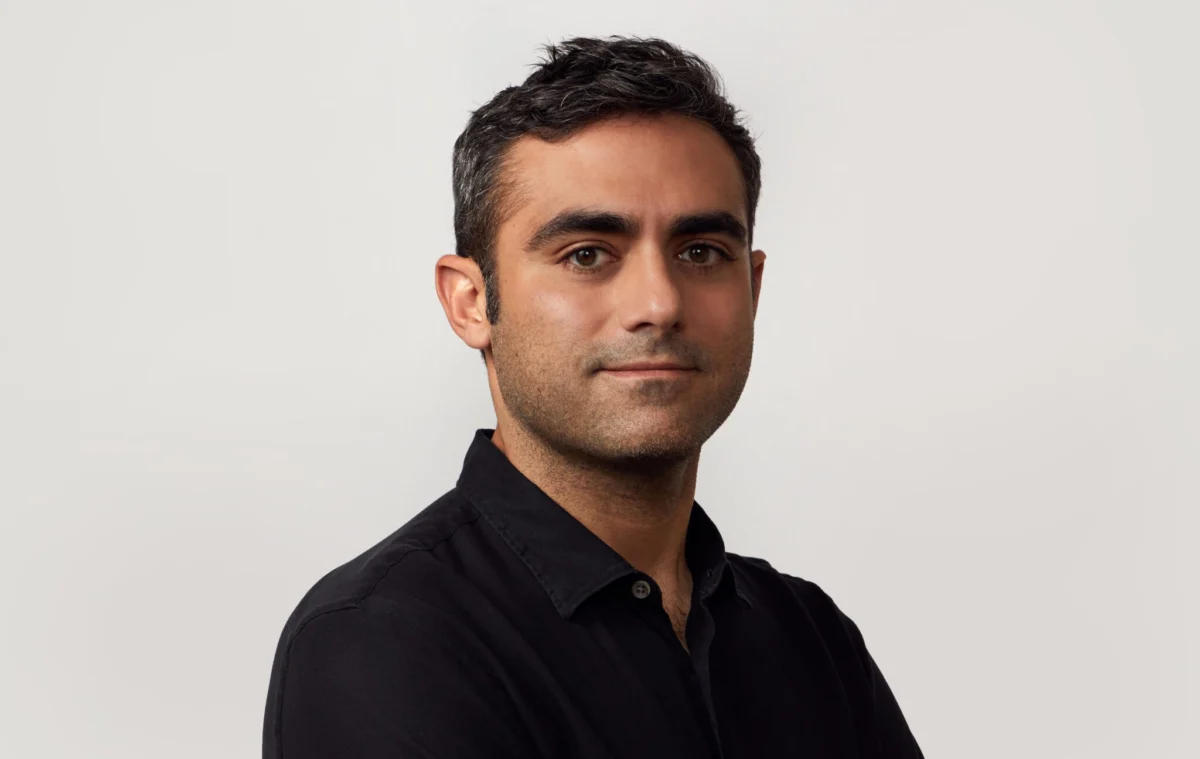
Michael Polansky is a man of striking, deliberate contradictions. To the public, he is the bespectacled, unassuming partner to global pop icon Lady Gaga (Stefani Germanotta), a fixture in the high-octane world of international tours and red-carpet premieres. To the scientific community—or at least the burgeoning circle of innovators beginning to take notice—he is the CEO and co-founder of Outer Biosciences, a stealth-mode startup that is quietly rewriting the rules of dermatological research and biological testing.
Sitting at a sun-drenched patio in Mill Valley, California, Polansky carries the air of an academic rather than a Silicon Valley titan. Yet, beneath this quiet demeanor lies the engine of a company that has achieved what many deemed impossible: keeping living human tissue viable outside the body for over a month. As he steps out from years of self-imposed silence, Polansky is ready to pull back the curtain on a technology that could fundamentally alter the landscape of cosmetics and pharmaceutical testing.
A Career Defined by Strategic Pivots
Polansky’s journey to the cutting edge of biology was neither linear nor planned. A product of Minnesota, he honed his analytical rigor at Harvard, graduating in 2006 with a degree in applied mathematics and computer science. His early professional years were spent in the rarified, high-stakes environment of Bridgewater Associates. While he describes his three-year tenure at the hedge fund as a "unique" and valuable experience, he admits it lacked the spark of personal passion.
The catalyst for his move to the West Coast was as serendipitous as it was life-changing. Through a chance encounter at a wedding, he was introduced to the orbit of Sean Parker, the former Facebook president and tech luminary. The two "hit it off immediately," and Polansky transitioned from the financial world to the venture capital ecosystem, serving as a principal at Founders Fund. It was there, working alongside titans like Peter Thiel, that Polansky began to cultivate his talent for organizational management and complex problem-solving.
When Parker departed to establish his own family office, Polansky joined him, eventually steering Parker’s business, investment, and philanthropic interests. His tenure as executive director of the Parker Institute for Cancer Immunotherapy proved to be his "accidental" introduction to the life sciences, a field he notes was considered "very fringe" at the time. This period of his life, however, was fundamentally reshaped by the COVID-19 pandemic and his deepening relationship with Germanotta, marking a pivot toward the venture he leads today.
The Partnership: A Symphony of Business and Life
The intersection of Polansky’s professional life and his personal relationship with Lady Gaga is perhaps the most scrutinized aspect of his career, yet he characterizes it as a "full partnership." Their collaboration extends far beyond the domestic sphere. During Germanotta’s most recent world tour, Polansky was instrumental in managing a complex, multi-continent logistical operation. He describes the experience as managing "a 200-person startup that travels around the world every day."
This collaborative spirit carries over into their business ventures. Germanotta’s cosmetics brand, Haus Labs, is a testament to this shared vision; rather than merely licensing her name, the couple helped build the brand from the ground up, with a team of roughly 70 employees in El Segundo, California. The synergy is tangible: Outer Biosciences’ chief scientist, Kyung-Jin Jang, serves on the scientific advisory board for Haus Labs, and the two companies have engaged in joint research projects.
"People really haven’t gotten to know a certain side of her publicly," Polansky says of his partner. "She’s such a brilliant businessperson."
From Cancer Immunotherapy to "Tissue in a Dish"
Outer Biosciences, founded in 2022 alongside CTO Chris Hinojosa, Chief Business Officer Stanley King, and scientist Kyung-Jin Jang, was born from a fundamental frustration: the glacial pace of innovation in biology compared to the rapid iteration cycles of software. The primary bottleneck, Polansky notes, is the ethical and physical impossibility of running experiments directly on human subjects. Current proxies—animal models and simplistic lab-grown organoids—are often poor predictors of how a complex human organ will respond to a substance.
Outer Biosciences circumvents this by utilizing human skin tissue that would otherwise be discarded during surgical procedures. By partnering with non-profit biobanks and following rigorous institutional review board (IRB) oversight, the company receives tissue within hours of surgery. The innovation lies in the proprietary support system they have developed, which mimics the body’s natural environment.
The 30-Day Threshold
The industry standard for keeping excised skin tissue viable is generally measured in days, limiting testing to acute reactions. Outer Biosciences has extended this window to over a month. By keeping the tissue alive for 30 days, the team can observe complex, slower biological processes—such as collagen remodeling, barrier repair, and pigmentation changes—that are critical for effective dermatological treatments.
"We are watching an injury happen and then watching the biology that follows it over time," Polansky explains, referencing their work on UV-induced skin damage. The system preserves the "day-zero architecture" of the tissue, providing a high-fidelity model that is simply not available in traditional laboratory settings.
Integrating Artificial Intelligence
At the core of the company’s methodology is a closed-loop AI system. Unlike large language models that scrape the internet for existing text, Outer Biosciences is building a "biology internet" from scratch. The AI model predicts which chemical compounds will yield specific beneficial effects on skin. These predictions are tested on the living tissue samples, and the results—success or failure—are fed back into the model to refine future predictions.
This approach has dramatically accelerated their R&D timeline. In the company’s early "brute force" phase, it took 18 months to identify a handful of promising compounds. With the integration of AI, the team is now generating a new candidate roughly every six weeks, with dozens of "hits" logged in their internal database.
Official Responses and Strategic Roadmap
While the scientific community is often wary of disruptive startups, Polansky is measured in his framing. He emphasizes that the value of Outer Biosciences is not just the tissue viability or the AI model, but the integration of both within a closed, self-enforcing system.
Regarding commercialization, the company is following a distinct path. It does not intend to launch its own consumer-facing brand. Instead, it acts as a discovery engine, identifying and validating ingredients that it then licenses to major beauty and pharmaceutical conglomerates. With four of their six current leads nearing commercialization, the business model is proving to be both viable and scalable.
Furthermore, the company is actively engaged in collaborative research, such as working with pharmaceutical partners to understand the biological mechanisms behind the severe skin rashes often caused by cancer drugs.
Future Implications: A New Frontier in Dermatology
As Outer Biosciences moves out of its "stealth" phase, the company faces a landscape that is increasingly interested in microphysiological systems. Competitors like Philadelphia-based Vivodyne have recently secured significant funding, signaling that the race to create high-fidelity human models is heating up.
For Polansky, the competition is secondary to the mission. The company remains lean, with 19 employees based near Cambridge, Massachusetts, and a philosophy that prioritizes data integrity and security—keeping all AI work on-premise rather than in the cloud.
The long-term goal is nothing short of revolutionary: a predictive model so accurate that it allows for the discovery of dermatological breakthroughs without the need for constant, manual physical experimentation. As Polansky looks toward the next phase of the company’s growth, he remains grounded, acknowledging that the real challenge—building out a full-scale product-development team—is only just beginning.
"I think it’s going to be fun," he says, "to have people know that this is what we’ve been doing." In a corner of the world known for its outsize egos and flashy promises, Michael Polansky’s approach—quiet, data-driven, and intensely collaborative—may just be the most disruptive force of all.