The 2026 World Cup has proven to be more than just a global sporting spectacle; it has become the definitive catalyst for the mainstreaming of prediction markets. As the tournament reaches its crescendo, platforms like Kalshi and Polymarket are reporting unprecedented trading volumes that not only shatter previous sports records but also eclipse the historical peaks seen during major geopolitical events.
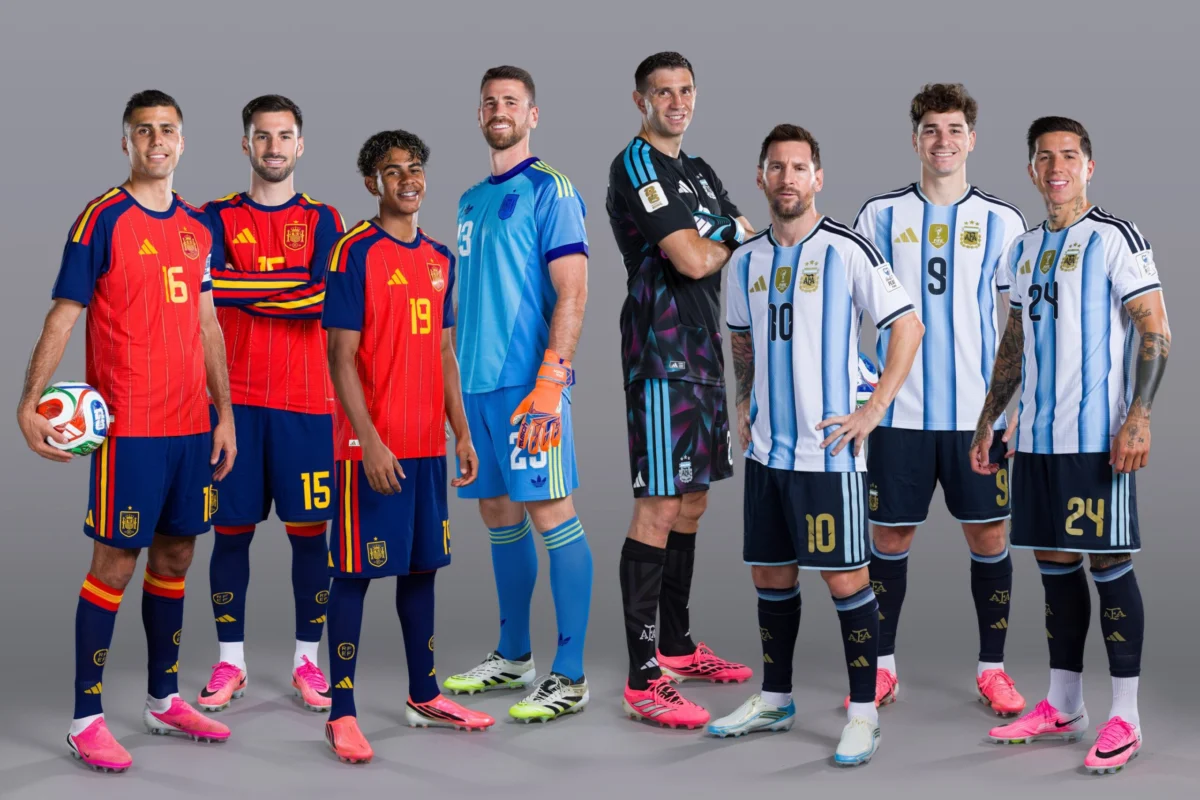
In a shift that signals a fundamental change in how the public engages with live events, the upcoming final between Argentina and Spain has evolved into the single largest market in the history of the industry. With billions of dollars at stake, these platforms are no longer niche playgrounds for crypto-enthusiasts or political junkies—they have become high-stakes financial arenas where global sentiment is priced in real-time.
Main Facts: A Tournament of Unprecedented Scale
The sheer scale of the financial activity surrounding the 2026 World Cup is difficult to overstate. According to the latest data, total trading across World Cup-related contracts has exceeded $25 billion. To put this figure into perspective, the volume dwarfs other "major" sports markets that were previously considered the gold standard of betting activity. The NBA Finals, typically a titan of the industry, saw roughly $2 billion in volume, while the Super Bowl—often cited as the biggest single-day betting event in the United States—generated approximately $1 billion.
The centerpiece of this surge is the Argentina vs. Spain final. On Kalshi, a regulated U.S. exchange, the contract for the outcome of the final surpassed $1.27 billion in trading volume within just forty-eight hours of the market going live. As of mid-day Friday, the "wisdom of the crowd" on Kalshi favored the Spanish side, assigning them a 61% probability of victory over Lionel Messi’s defending champions.
Meanwhile, Polymarket, a decentralized platform that has dominated the global prediction market landscape, reported that its "World Cup Winner" market has generated over $4 billion in cumulative volume since its inception in July 2025. This makes it the largest single market in the platform’s history, even surpassing the highly publicized 2024 U.S. Presidential Election. In June 2026 alone, driven by the heat of the tournament, Polymarket recorded nearly $11 billion in global monthly notional volume.
Chronology: From Launch to the Grand Finale
The journey to these record-breaking figures began nearly a year ago, illustrating the long-tail nature of prediction markets compared to traditional sportsbooks.
- July 2025: Polymarket launches its "World Cup 2026 Winner" market. Unlike traditional betting, which often sees a surge only days before an event, prediction markets allow for continuous trading, letting users hedge their positions as qualifiers progress and team rosters take shape.
- Early June 2026: As the tournament kicks off in North America, monthly volumes begin to skyrocket. The entry of a younger, tech-savvy demographic—already comfortable with fractional trading and mobile-first financial apps—propels Polymarket to an $11 billion monthly handle.
- The Quarterfinals: Markets show high levels of confidence in "blue-chip" teams. Contracts for France (against Morocco) and Spain (against Belgium) see massive liquidity, with bettors correctly identifying favorites with 70%+ probability.
- The Semifinal Shift (Wednesday): Following Argentina’s hard-fought victory over England, Kalshi and Polymarket launch the "Finals" contracts. Within hours, the Argentina-Spain matchup becomes a magnet for liquidity.
- The Final Countdown (Friday): Polymarket reports that over 64,000 unique users have engaged with the match page for the final, suggesting deep liquidity and a narrowing spread between "Yes" and "No" contracts.
Supporting Data: Comparing the Markets
The data reveals a stark contrast between traditional sports betting and the burgeoning prediction market ecosystem. The $25 billion total volume suggests that users are not just placing one-off bets; they are actively "trading" the World Cup.
Market Volume Comparisons
| Event | Total Trading Volume |
|---|---|
| World Cup 2026 (To Date) | $25.0+ Billion |
| 2024 U.S. Presidential Election | $3.6 Billion (approx.) |
| 2026 NBA Finals | $2.0 Billion |
| 2026 Super Bowl | $1.0 Billion |
The depth of liquidity on these platforms is further evidenced by the user engagement metrics. Polymarket’s report of 64,000 active users on a single match page three days before kickoff indicates a level of "active management" rarely seen in sports gambling. In a traditional sportsbook, a bettor places a wager and waits for the result. In a prediction market, traders buy and sell shares in an outcome as the news cycle—injuries, training reports, or weather conditions—evolves, leading to high "notional" volume.
Accuracy Analysis: The Semifinal Anomaly
Despite the massive capital involved, the markets have not been infallible. While earlier rounds saw high accuracy, the semifinals proved to be a "black swan" event for many traders:
- France vs. Spain: Early market pricing gave France a 10% edge. However, the odds flipped dramatically 20 minutes into the match, just before Spain’s first goal.
- Argentina vs. England: Markets initially favored England by a slim margin on Kalshi. The volatility of the match saw odds swing wildly with every possession, eventually settling on Argentina only in the closing stages of the game.
Official Responses: Platforms Weigh In
Platform executives and spokespeople suggest that the World Cup has validated their business models as a legitimate arm of the financial services industry rather than just a sophisticated gambling tool.
In a statement to Fortune, Polymarket emphasized the depth of their liquidity, noting that the 64,000-user engagement figure represents a "maturation of the ecosystem." A spokesperson for the platform stated, "The World Cup Winner market has become a global macro-indicator. We are seeing people use these markets to hedge against emotional disappointment or simply to find the most accurate ‘truth’ of what the world thinks will happen."
Kalshi, which operates under the oversight of U.S. regulators, has framed its growth as a win for financial accessibility. The platform has seen a surge in "micro-positions," where users take small stakes—sometimes just a few dollars—directly from their smartphones. "The World Cup is the ultimate real-world outcome," a Kalshi representative noted. "It demonstrates that the public wants a way to trade on the things they care about, with the same ease and transparency they have when trading stocks or ETFs."
Implications: The Future of Sports and Finance
The explosion of prediction markets during the 2026 World Cup carries significant implications for the future of sports, regulation, and the broader economy.
1. The Disruption of Traditional Sportsbooks
For decades, the sports betting industry was dominated by "the house," where odds were set by bookmakers and bettors played against the institution. Prediction markets shift this dynamic to a peer-to-peer model. The $25 billion volume suggests that the "exchange" model—where the platform simply facilitates trades between users—is becoming the preferred method for high-volume traders and casual fans alike.
2. A New Gauge for Public Sentiment
Economists and data scientists are increasingly looking at these markets as more accurate than traditional polling or expert commentary. Because participants have "skin in the game," the price of a contract is often a more reliable indicator of an outcome than a pundit’s opinion. However, as seen in the semifinals, sports remain uniquely resistant to perfect forecasting due to the inherent randomness of human performance and refereeing decisions.
3. Regulatory Scrutiny and Mainstream Adoption
In the United States, the rise of these platforms has not been without controversy. The CFTC (Commodity Futures Trading Commission) has historically been wary of sports-based contracts, fearing they could compromise the integrity of athletic competitions. However, the sheer volume of the 2026 World Cup may force a regulatory reckoning. If billions of dollars are being traded legally on regulated exchanges like Kalshi, the argument for "protection" may shift toward an argument for "standardization" and "taxation."
4. The Gamification of Global Events
The World Cup has solidified the trend of "event-based trading." We are moving toward a world where every major cultural event—from the Oscars to the release of a new iPhone—has a corresponding liquid market. This "gamification" of information allows individuals to monetize their knowledge or intuition in ways that were previously impossible.
Conclusion
As Argentina and Spain prepare to take the pitch on Sunday, the eyes of the world will be on the scoreboard, but the smart money will be on the screens. Whether Spain maintains its 61% favorite status or Messi provides one final miracle to reward his backers, the true winner of the 2026 World Cup is already clear: the prediction market. What was once an experimental corner of the internet has, in the span of a single tournament, transformed into a multi-billion-dollar pillar of modern finance.