After more than a decade of aggressive lobbying, multimillion-dollar advocacy campaigns, and a series of legal setbacks that threatened to dismantle the foundation of collegiate athletics, the NCAA and its most powerful conferences have finally achieved their legislative "holy grail."
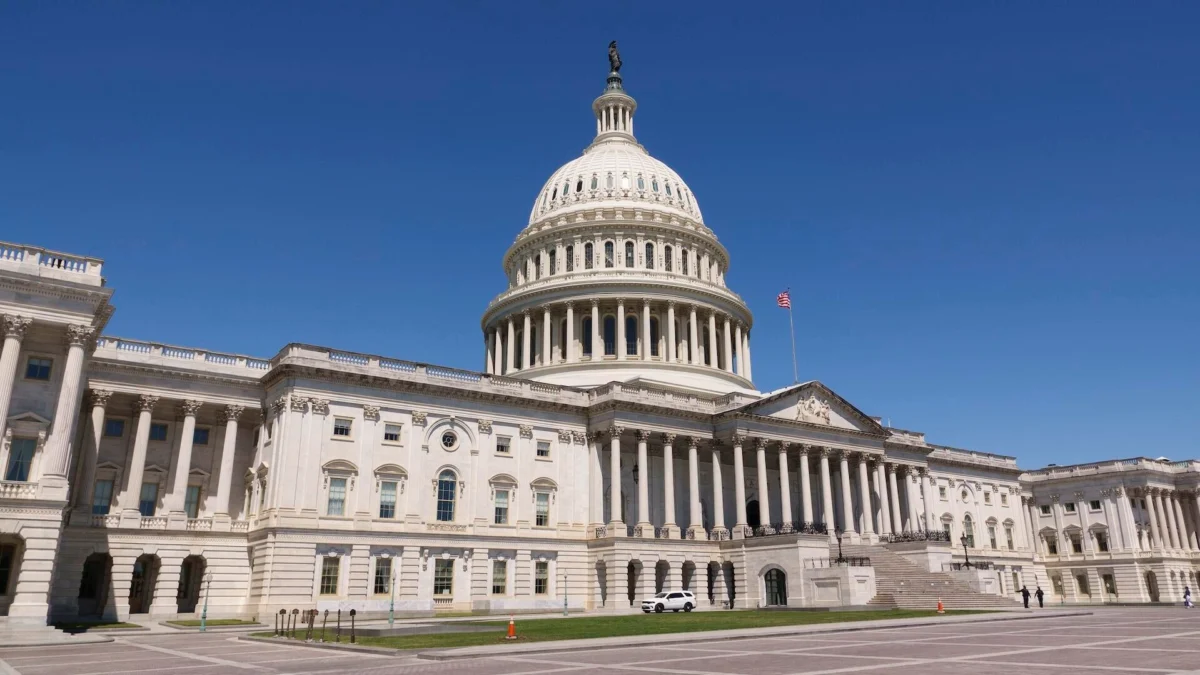
Late Monday night, in a landmark session that stretched across nearly six hours of debate and rigorous amendment consideration, the U.S. Senate passed the Protect College Sports Act (PCSA) by a 77-22 vote. This historic achievement marks the first time either chamber of Congress has approved sweeping federal legislation designed to codify the governance of college athletics. The bill, a bipartisan effort spearheaded by Sens. Ted Cruz (R-Texas) and Maria Cantwell (D-Wash.), now moves to the House of Representatives, where it faces a precarious path against a backdrop of looming midterm elections and a crowded legislative calendar.
The Legislative Blueprint: What the Bill Changes
The Protect College Sports Act is designed to bring order to what many stakeholders describe as the "chaos" currently plaguing the collegiate landscape. By embedding NCAA rules into federal law, the legislation provides the industry with a coveted limited antitrust exemption—a shield that has been sorely lacking since the Supreme Court’s unanimous 2021 ruling in NCAA v. Alston.
Under the proposed statute, the NCAA gains the legal authority to enforce eligibility and transfer regulations without the constant threat of judicial intervention. Furthermore, the bill formally codifies the House v. NCAA settlement, transitioning schools into a formal direct-payment model for their athletes.
Key provisions include:
- Revenue Sharing: Schools may distribute funds to athletes via three primary channels: a $21.6 million revenue-sharing cap, a $22.5 million "retention fund" to combat the volatility of the transfer portal, and a $5 million reserve specifically earmarked for women’s and Olympic sports.
- Transfer and Eligibility: Athletes are permitted to transfer once without sitting out a season, while the NCAA’s five-year eligibility clock is officially codified into federal law.
- Agent Regulation: A new national database will track athlete representation, with agent fees strictly capped at 5% to prevent the exploitation of young athletes by unscrupulous actors.
- Institutional Stability: The bill prohibits the formation of a "super league" and mandates that schools maintain minimum sport offerings and roster sizes to protect non-revenue sports.
A Chronology of the Legislative Struggle
The road to Monday’s vote was paved with over 40 failed legislative attempts since 2020. The urgency for federal intervention reached a fever pitch in July 2021, when the NCAA lifted its ban on Name, Image, and Likeness (NIL) compensation following the Alston decision. As states began passing a patchwork of conflicting NIL laws, the collegiate landscape devolved into what administrators characterized as an "unbalanced playing field."
The legislative process has been marked by repeated collapses. The House’s SCORE Act, once viewed as the most viable path to reform, failed twice—most recently in May, when it was pulled from the floor following fierce opposition from the Congressional Black Caucus. Even the Protect College Sports Act faced months of stagnation, as major power conferences like the Big Ten and the SEC demanded last-minute concessions regarding conference realignment and revenue caps before throwing their support behind the measure.
Financial Stakes and the "Arms Race"
The fiscal implications of the PCSA are staggering. If enacted, schools could be on the hook for up to $50 million annually per institution—more than double the current expenditure under existing settlement frameworks. Sen. Eric Schmitt (R-Mo.), a key co-sponsor, defended the figures as a reflection of the current market reality.
However, the "retention fund" is not a blank check. It comes with stringent strings attached: schools that fail to meet specific academic benchmarks and graduation rates will lose access to these funds. Proponents, including Sen. Cantwell, argue that this is a necessary step to curb the "arms race" that has siphoned institutional resources away from academics and toward athletic facilities and coaching salaries.
The Divided Chamber: Official Responses
The Senate floor was the site of intense philosophical division. Sen. Ted Cruz framed the bill as a victory for tradition. "This bill puts an end to the chaos plaguing college athletics," Cruz stated during his floor remarks. "It protects NIL opportunities… it creates clear, enforceable rules… and it prevents the most powerful and wealthy conferences from breaking away to form a super league."
Conversely, the opposition was equally vocal, led by Sen. Chris Murphy (D-Conn.) and Sen. Cory Booker (D-N.J.). Murphy characterized the NCAA’s structure as an "illegal system" and argued that the bill effectively legitimizes collusion. "Congress isn’t going to come in here and micromanage your relationship with the athletes," Murphy said. "If you want rules that apply across the industry, then do what every other industry does, which is have a dialogue with the workers."
Sen. Booker, a former Stanford football player, delivered an impassioned plea to his colleagues to reject the bill, citing the lack of athlete input and the failure to address fundamental health and safety standards. He highlighted the $900 million allocation for Historically Black Colleges and Universities (HBCUs) as a "hollow gesture" that fails to provide the systemic support necessary for these institutions.
National advocacy groups, including the NAACP, the AFL-CIO, and the College Football Players Association (CFBPA), have condemned the bill, arguing that it was drafted in a vacuum, ignoring the voices of the very athletes it claims to protect.
The Path Ahead: A "Lame-Duck" Reality
Despite the Senate’s decisive vote, the bill’s future is far from guaranteed. With the Nov. 3 midterm elections approaching, the House of Representatives is not scheduled to return until Nov. 9. Sources in Washington suggest that a vote during a "lame-duck" session is far from certain, as the House Republican majority is slim and the legislative calendar is already crowded with critical government funding deadlines—specifically the expiration of funding on Dec. 11.
Adding to the uncertainty are the demands from House Republicans for further amendments, including an explicit prohibition on classifying college athletes as employees and potential caps on the number of international players. Any changes made by the House would force the bill back to the Senate, creating a "time-is-the-enemy" scenario where the legislation could die on January 3 when the current Congress concludes its term.
Implications for the Future of Amateurism
The passage of the PCSA represents a definitive, albeit controversial, pivot point for American sports. By attempting to force the industry into a centralized, regulated framework, Congress is effectively choosing to protect the collegiate model from the potential "professionalization" that would come with collective bargaining or full employee status for athletes.
While the NCAA and power conferences are counting on this legislation to provide legal certainty, the reality remains that the industry is still preparing for a "Plan B." Several conferences have been developing self-governance models since May to act as a fail-safe should the bill fail to clear the House before the new year.
Whether the Protect College Sports Act becomes the law of the land or joins the graveyard of dozens of failed sports bills, one thing is clear: the era of unregulated, court-driven evolution in college sports is drawing to a close. The coming weeks will determine whether the collegiate model is stabilized by federal statute or if the industry must continue to navigate the turbulent, litigious waters of the post-Alston world alone.