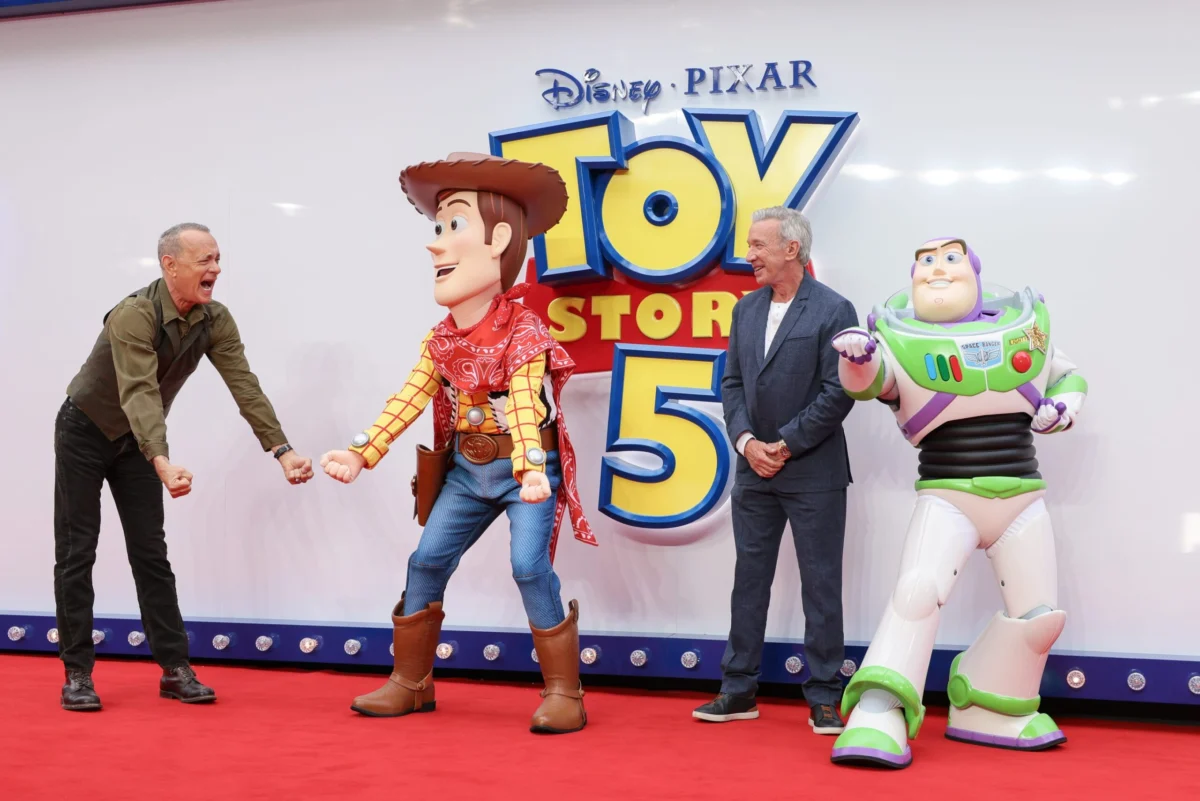
The cinematic landscape of 2026 has found its definitive anchor. In a weekend that reaffirmed the enduring power of legacy franchises while highlighting the volatile nature of original sci-fi and revisionist indies, Disney and Pixar’s Toy Story 5 has not only exceeded expectations but has rewritten the record books for animated features.
With a staggering $160 million domestic opening, the fifth installment of the beloved series has proven that Woody, Buzz, and the rest of the gang still have a firm grip on the hearts—and wallets—of moviegoers. This record-breaking performance comes at a critical juncture for the film industry, serving as the cornerstone of a summer season that is currently tracking to be the most successful since the pre-pandemic heights of 2019.
Main Facts: A Landmark Opening for the Toy Box
According to studio estimates released on Sunday, Toy Story 5 debuted to $160 million in ticket sales across North American theaters. This figure marks the highest opening weekend of the year and sets a new franchise record, comfortably eclipsing the $120 million debut of Toy Story 4 in 2019.
The film’s dominance was not restricted to domestic shores. Internationally, the sequel raked in $152 million, bringing its total global haul to $312 million for the three-day weekend. For The Walt Disney Co., this represents a massive win for one of its most lucrative intellectual properties. Prior to this weekend’s release, the Toy Story franchise had already grossed over $3 billion globally, a figure that is supplemented by billions more in consumer products and merchandising.
While the financial stakes were high—the film carried a production budget of $250 million, excluding a massive global marketing campaign—the early returns suggest a highly profitable trajectory. Audiences awarded the film a coveted “A” CinemaScore, indicating strong word-of-mouth that should provide the “legs” necessary to sustain ticket sales throughout the summer.
Chronology: From Spielberg’s Sci-Fi to Pixar’s Takeover
The box office narrative of the past fort-night has been a study in contrast. Just one week ago, the industry was celebrating the arrival of Steven Spielberg’s original sci-fi thriller, Disclosure Day. Starring Emily Blunt, Josh O’Connor, and Colman Domingo, the $115 million Universal Pictures production was hailed as a return to the “high-concept” adult thriller.
However, the arrival of Toy Story 5 significantly impacted Spielberg’s momentum. In its second weekend, Disclosure Day slipped to second place, earning $17 million. This represents a 61% drop from its opening frame—a steeper decline than Universal executives had hoped for. While the film has amassed a respectable $160.4 million globally in two weeks, its struggle to maintain a hold in the face of animated competition highlights the difficulty original, non-franchise stories face in the current market.
By Saturday morning, it was clear that the weekend belonged to Pixar. Theaters reported sold-out screenings for Toy Story 5, driven by a combination of nostalgic Millennials and a new generation of children. As the weekend progressed, the secondary stories of the box office began to emerge: the continued, miraculous run of the microbudget horror film Obsession and the disappointing arrival of A24’s revisionist The Death of Robin Hood.
Supporting Data: Winners, Losers, and the Horror Phenomenon
The data from this weekend reveals a bifurcated market where high-budget spectacles and low-budget genre films are thriving, while mid-budget "prestige" action is struggling.
The Heavyweights
- Toy Story 5 (Disney/Pixar): $160M Domestic / $312M Global. Budget: $250M. This is the second-largest animated opening in history, trailing only Incredibles 2 ($182.7M).
- Disclosure Day (Universal): $17M Weekend / $160.4M Global Total. Budget: $115M. Despite the Spielberg pedigree, it is fighting to remain the primary choice for adult audiences.
The Horror "Obsession"
Perhaps the most remarkable data point in the current market is Obsession. Produced for less than $1 million by 26-year-old filmmaker Curry Barker, the film added $14.2 million in its sixth weekend. Its domestic total now stands at $215.8 million, with a global total of $333.3 million. Its ability to nearly match its opening weekend figures six weeks into its run is a statistical anomaly that suggests a cultural phenomenon on par with The Blair Witch Project.
The Indie Struggle
Conversely, A24’s The Death of Robin Hood failed to hit the mark. Despite starring Hugh Jackman and being directed by Michael Sarnoski, the film earned only $2.6 million from 1,762 screens. With a budget of $20 million and a "C+" CinemaScore, the film is unlikely to recover. Neon’s Leviticus, a $3.5 million horror-drama about conversion therapy, fared slightly better in terms of ROI, earning $2.7 million from a smaller theater count (1,076), bolstered by strong critical reviews.
Official Responses: Creative Vision and Market Analysis
The success of Toy Story 5 is being credited to a "back-to-basics" approach by Pixar, led by veteran director Andrew Stanton. Stanton, the creative force behind Finding Nemo and WALL-E, took the helm to steer the franchise into a new era.
"We knew that if we were going back to the toy box, it had to be for a reason that felt modern yet timeless," a studio representative noted during a Saturday press briefing. The plot, which sees the classic toys sidelined by a new tablet device given to Bonnie, resonates with contemporary parental anxieties regarding screen time.
The film also benefited from a strategic cultural crossover. The inclusion of a new song by Taylor Swift, titled "I Knew It, I Knew You," provided a significant boost in social media engagement and pre-sale tickets.
From a market perspective, Paul Dergarabedian, the head of marketplace trends for Rentrak, suggests that the industry is witnessing a "new blueprint" for success.
“To me, this is a hybrid summer and this could be the new blueprint for how you build the perfect summer box-office beast,” says Dergarabedian. “You throw in a mix of very eclectic films and not just the usual suspects—the big franchise films, the known brands—but also films like Backrooms and Obsession and original films like Disclosure Day.”
Dergarabedian pointed out that total summer ticket sales are up 15% from 2025 and are currently trailing the record-setting 2019 summer by only 1.9%. This suggests that the "theatrical experience" has fully decoupled from the post-pandemic recovery phase and entered a new era of growth.
Implications: The Future of the "Hybrid" Box Office
The implications of this weekend’s results are twofold. First, for Pixar and Disney, the success of Toy Story 5 validates the controversial decision to continue a series that many felt had reached a natural conclusion with the third or fourth films. It proves that "brand equity" remains the safest harbor in a volatile economy. As long as the quality remains high—as evidenced by the "A" CinemaScore—audiences are willing to return to familiar characters indefinitely.
Second, the disparity between the success of Obsession and the failure of The Death of Robin Hood suggests that audiences are becoming increasingly discerning regarding "revisionist" storytelling. Moviegoers seem to crave either the absolute comfort of a known franchise or the raw, visceral novelty of low-budget horror. Mid-budget films that attempt to "deconstruct" legends (like Robin Hood) are finding it harder to locate an audience in a crowded market.
Furthermore, the "Taylor Swift effect" on the Toy Story soundtrack suggests that the synergy between the music industry and cinema is becoming an essential marketing tool for tentpole releases.
As the industry moves into July, all eyes will be on whether Toy Story 5 can maintain its momentum and if original films like Disclosure Day can find a second wind. For now, the "toys" are back in town, and they are carrying the weight of the Hollywood economy on their plastic shoulders.
Weekend Box Office Estimates (Domestic):
- Toy Story 5 – $160 Million
- Disclosure Day – $17 Million
- Obsession – $14.2 Million
- Backrooms – $7.3 Million
- Scary Movie – $6.7 Million
- Masters of the Universe – $5.6 Million
- Star Wars: The Mandalorian and Grogu – $3.9 Million
- Leviticus – $2.7 Million
- The Death of Robin Hood – $2.6 Million
- Michael – $2.2 Million