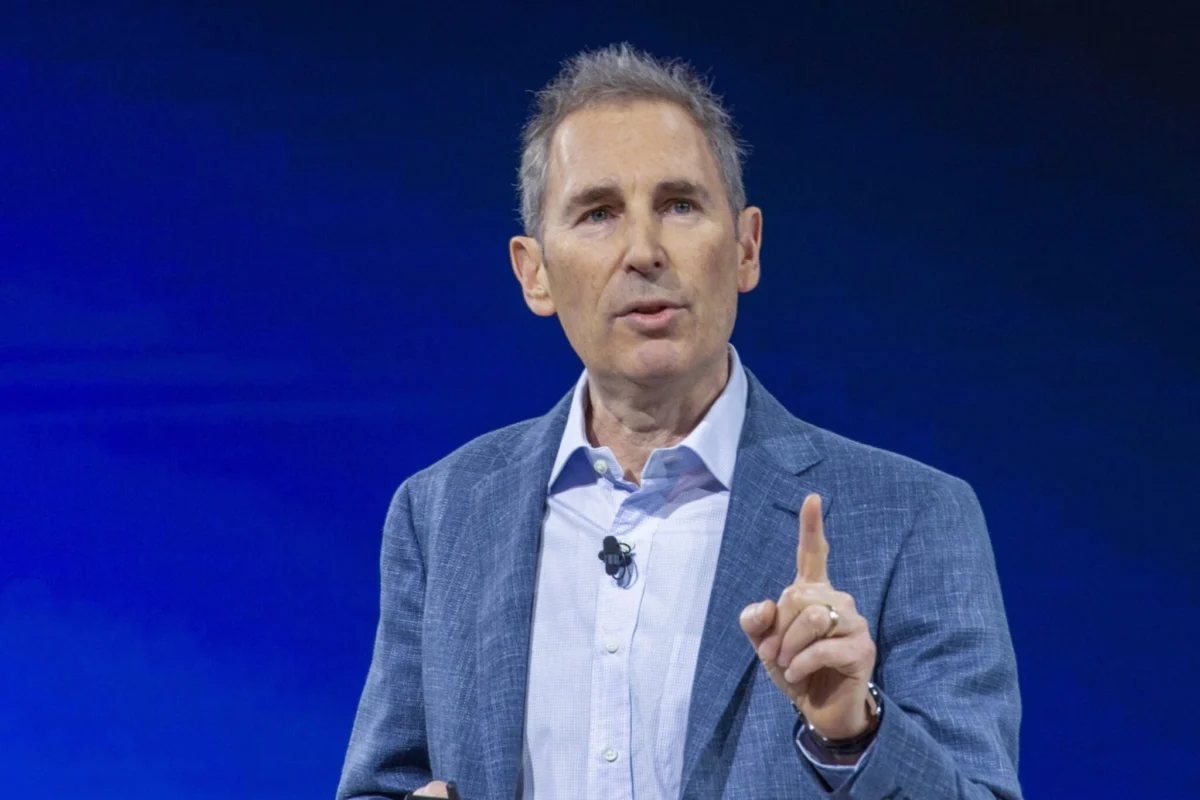
As the Chief Executive Officer of Amazon, a global behemoth valued at approximately $2.6 trillion, Andy Jassy spends his days navigating the complexities of cloud computing, logistics, and the aggressive integration of Artificial Intelligence (AI). However, for the 58-year-old executive, the AI revolution is not merely a boardroom agenda or a line item on a quarterly earnings report. It is a dinner-table conversation.
With two Gen Z children—aged 22 and 25—currently navigating the early stages of their careers and education, Jassy views the rise of generative AI through a dual lens: as a titan of industry and as a father. His recent insights, shared during an in-depth interview on The a16z Show, provide a nuanced roadmap for the next generation of workers. Jassy’s message is clear: while AI is an inescapable force that will redefine every professional experience, it cannot—and should not—replace the fundamental human pillars of critical thinking, judgment, and ingenuity.
Main Facts: The Inevitability of the AI Shift
Andy Jassy’s primary thesis for young professionals is built on the premise of radical acceptance. In his view, the era of debating whether AI will be "good" or "bad" for the workforce is over; the technology is already here, and its integration is inevitable.
"The advice I would give somebody young, and I gave my kids, was you can’t run away from it and you can’t wish it away," Jassy remarked. He emphasized that AI would be "incredibly impactful" in every facet of work, offering a level of leverage for invention that was previously unimaginable.
Key takeaways from Jassy’s recent public discourse include:
- Universal Application: AI mastery is no longer restricted to software developers or data scientists. Jassy notes that even his non-developer children have used AI to build applications, signaling a shift toward a "low-code" or "no-code" future where technical barriers to entry are lower.
- The "Advanced Starting Spot": Jassy argues that AI’s greatest immediate value lies in its ability to eliminate "grunt work"—the tedious research, note-taking, and preliminary data synthesis that historically consumed the bulk of a junior employee’s time.
- The Detection of Artificiality: Despite the efficiency of AI, Jassy warns that AI-generated content, particularly in writing, often lacks a cohesive "soul" or logical flow, making it easily detectable by experienced leaders.
- The Premium on Judgment: As AI commoditizes information gathering, the value of human judgment, experimentation, and the ability to connect disparate dots into a coherent business strategy will skyrocket.
Chronology: From the Bezos Era to the AI Frontier
To understand Jassy’s perspective, one must look at the trajectory of his career and the evolution of the company he now leads.
The Foundation (1997–2020)
Andy Jassy joined Amazon in 1997, a time when the company was primarily an online bookseller. An alumnus of Harvard Business School, Jassy’s early years were defined by the traditional rigors of MBA life: manual research, exhaustive reading, and the meticulous synthesis of data without the aid of modern digital tools. This "old school" foundation informs his current belief that while AI can skip the "grunt work," the mental discipline developed during that work remains vital.
The Transition (2021)
In July 2021, Jassy succeeded Jeff Bezos as CEO of Amazon. He inherited a company that was already a leader in machine learning (powering Alexa and Amazon’s recommendation engines) but was on the cusp of the generative AI explosion. Jassy’s leadership has since focused on pivoting Amazon’s massive infrastructure toward supporting the next generation of AI startups through Amazon Web Services (AWS).
The AI Explosion (2023–Present)
Over the last 18 months, the release of Large Language Models (LLMs) has fundamentally altered the corporate landscape. In 2023, Jassy led Amazon to the No. 1 spot on the Fortune 500 list, all while overseeing a massive internal shift toward AI integration across retail, AWS, and advertising. His recent appearance on The a16z Show (April 2024) serves as a synthesis of these experiences, aimed at guiding the next generation through a transition as significant as the dawn of the internet.
Supporting Data: The Economic and Institutional Context
The weight of Jassy’s advice is backed by the sheer scale of the organization he oversees and the economic reality of the current market.
Amazon’s Market Position
Under Jassy’s tenure, Amazon has maintained its dominance, with a market capitalization hovering around $2.6 trillion. The company’s success is increasingly tied to its AI capabilities. AWS, the cloud division Jassy built from the ground up, is the backbone for much of the world’s AI development, providing the compute power necessary for companies like Anthropic and others to train their models.
Leadership and Compensation
Jassy’s own professional standing adds gravity to his mentorship. In 2023, he earned a base salary of $365,000, part of a compensation package that reflects his role as one of the world’s most influential executives. His ability to navigate Amazon through post-pandemic economic shifts and the AI arms race has solidified his reputation as a pragmatic, forward-thinking leader.
The "Skills Gap" Data
Industry reports mirror Jassy’s concerns. According to the World Economic Forum’s Future of Jobs Report, analytical thinking and creative thinking remain the most important skills for workers in 2024. While AI can process data faster than any human, the "judgment" Jassy speaks of aligns with the growing demand for "soft skills" in high-tech environments.
Official Responses and Industry Alignment
While Amazon officially declined a request for further comment following the Fortune report on Jassy’s interview, the CEO’s sentiments are echoed by other top-tier leaders within the Amazon ecosystem and the broader tech world.
The AWS Perspective
Matt Garman, the CEO of Amazon Web Services (AWS), has similarly stressed the need for adaptability. In a 2023 interview with CNBC, Garman noted that the nature of coding and technical work is changing. "You’re going to want to be creative," Garman stated. "You’re going to want to be [good at] critical thinking. And you’re going to want to be flexible." This suggests a unified front at Amazon: the "how" of work is being automated, making the "why" more important than ever.
The Entrepreneurial View
Daniel Lubetzky, the billionaire founder of KIND Snacks and a recurring guest on Shark Tank, recently shared advice that complements Jassy’s. Speaking to Fortune, Lubetzky urged Gen Z to "get off TikTok" and engage with history and philosophy to sharpen their critical thinking.
"AI is real, but it doesn’t have the creativity that humans have," Lubetzky said. He encouraged young people to "double-click and triple-click" on sources and assumptions. This philosophy of deep inquiry is the exact "human ingenuity" that Jassy argues will prevent AI-generated work from feeling "not quite right."
Implications: The Future of Entry-Level Work and Education
Jassy’s insights carry profound implications for how the next generation will be educated and hired.
1. The Death of the "Note-Taker" Role
Traditionally, entry-level roles in finance, law, and consulting involved a period of "paying one’s dues" through manual research and data entry. Jassy suggests that AI "eliminates all that." This means the learning curve for junior employees will become steeper; they will be expected to provide high-level analysis and strategic input much earlier in their careers because the "grunt work" is already done.
2. The Rise of the "Generalist Creator"
Jassy’s anecdote about his children—non-developers building apps—points to a future where "idea people" can execute technical projects without needing a computer science degree. This democratizes innovation but also increases competition. Success will depend on who has the best ideas and the best judgment to refine them, rather than who has the most specialized technical training.
3. The "Uncanny Valley" of Professional Writing
Jassy’s warning that AI writing is "easy to spot" serves as a cautionary tale for students and young professionals. If a report or a memo "doesn’t quite fit together," it signals a lack of critical thought. In a world saturated with AI content, the ability to write with nuance, voice, and airtight logic will become a high-value differentiator.
4. Educational Reform
If AI provides the "advanced starting spot" in business school and beyond, educational institutions must shift their focus from rote memorization and basic synthesis to "critical reasoning." Jassy’s Harvard experience—where people who didn’t do the reading were easily exposed—will evolve. In the future, the "reading" will be done by AI; the "class discussion" will be where the real value is proven.
Conclusion: Embracing the Tool, Preserving the Mind
Andy Jassy’s advice to Gen Z is a blend of technological optimism and classical intellectualism. By urging his children and the wider workforce to "use it as a focal point of how you operate," he acknowledges that AI is the new electricity—a fundamental utility.
However, his warning against the erosion of human judgment serves as a vital check on the hype. For the $2.6 trillion company he leads, and for the young people entering the workforce, the goal is not to be replaced by the machine, but to use the machine to reach a higher plane of human invention. As Jassy suggests, the future belongs to those who use AI to handle the mundane, so they can focus their minds on the extraordinary.