By Investigative Desk
The shadow of the 1986 disaster, which for decades has remained a controlled, albeit toxic, memory, has returned to the forefront of global concern. United Nations Development Programme (UNDP) Administrator Alexander De Croo issued a stark, urgent warning this week, asserting that the persistent Russian drone incursions over the Chernobyl Nuclear Power Station represent a reckless gamble with the lives of millions. As the war in Ukraine enters a brutal, protracted phase, the safety protocols governing one of the most radioactive sites on Earth are being pushed to their breaking point.
The Imminent Threat: A New Frontline
During a high-stakes visit to the Chernobyl site to inspect damage sustained from recent drone strikes, De Croo was unequivocal regarding the gravity of the situation. "Whether it was a deliberate attack or an accident, this is something which is unacceptable," he stated. "Making sure that drones are not flying above that site is one way of avoiding that things like this could happen."
The administrator’s assessment reflects a growing alarm within the international community that the frontline of the conflict is no longer confined to the traditional battlefields of the Donbas or the southern plains. Instead, the war has metastasized into an all-encompassing threat where critical nuclear infrastructure is increasingly viewed as a theater of operation. De Croo emphasized that the sheer intensity of these strikes signals a shift in strategy, noting that the "front line is everywhere."
Chronology: From Meltdown to Modern Menace
To understand the terror surrounding the current activity at Chernobyl, one must look back at the historical context that makes the site uniquely vulnerable.
- April 26, 1986: The Chernobyl Nuclear Power Plant experiences a catastrophic explosion at Reactor No. 4 during a botched safety test. The resulting fire releases massive plumes of radioactive isotopes into the atmosphere, leading to a Level 7 nuclear event—the highest on the International Nuclear and Radiological Event Scale (INES).
- 1986–1990: A frantic, state-led containment effort—the "Liquidator" program—is launched to mitigate radiation, resulting in the construction of the initial "Sarcophagus" to bury the reactor.
- 1991–2005: Long-term health studies confirm a massive spike in pediatric thyroid cancer cases across Ukraine and Belarus, directly attributed to the iodine-131 released during the disaster.
- February 2022: Russian forces occupy the Chernobyl Exclusion Zone in the early days of the full-scale invasion, raising global alarm over potential radiation leaks due to heavy military traffic stirring up radioactive dust.
- July 2026: The UN Human Rights Monitoring Mission in Ukraine reports the highest monthly civilian casualty count since the invasion began, as indiscriminate drone and missile strikes target energy infrastructure nationwide.
- September 2026: UNDP Administrator Alexander De Croo issues a formal warning following confirmed drone strikes near the Chernobyl facility, characterizing the site as a focal point of international security risks.
Supporting Data: The Human and Economic Toll
The threat to Chernobyl does not exist in a vacuum; it is part of a broader, systemic assault on Ukrainian civilian infrastructure. The UNDP is currently engaged in a massive effort to stabilize the power grid for 6.6 million Ukrainians, yet De Croo admits that current aid is a drop in the bucket compared to the sheer scale of the destruction.
The economic implications are staggering. The UNDP estimates that the cost of repairing damage to civilian infrastructure in Ukraine has already reached $600 billion USD. This figure continues to climb as Russian strikes target power plants, water treatment facilities, and distribution grids.
The humanitarian cost is equally grim. The UN Human Rights Monitoring Mission recently documented 437 civilian deaths in July 2026 alone—a grim milestone that highlights the efficacy of the Kremlin’s "total war" strategy. Furthermore, historical data from the IAEA provides a sobering baseline for what "nuclear negligence" looks like:
- 31 deaths: The immediate casualties of the 1986 explosion.
- 4,000 projected deaths: The IAEA’s long-term estimate of cancer-related mortality linked to the radiation exposure of the initial disaster.
- 5,000+ cases: Documented thyroid cancers in children under 14 years old in the immediate aftermath, a legacy that continues to impact generations.
Official Responses and International Humanitarian Law
De Croo’s visit to the site was intended to serve as a rallying cry for the international community to enforce the basic tenets of humanitarian law. "Even in war, there are rules to be followed," he reminded the press. The UNDP has consistently argued that the protection of civilian infrastructure is non-negotiable, yet the Russian military’s pattern of behavior suggests a calculated disregard for these international norms.
Human Rights Watch (HRW) has echoed these concerns, recently issuing scathing critiques of Russia’s use of indiscriminate cluster munitions in densely populated areas like Kyiv. The combination of cluster munition usage and the targeting of energy sites suggests a deliberate attempt to break the civilian will by dismantling the infrastructure required for human survival during the harsh Ukrainian winter.
The IAEA, while cautious in its diplomatic rhetoric, has repeatedly called for the establishment of a "nuclear safety and security protection zone" around Chernobyl and the Zaporizhzhia Nuclear Power Plant. However, the lack of an enforcement mechanism remains the primary obstacle to actualizing these protections.
Implications: A Winter of Discontent
As Ukraine heads into what is widely expected to be its most difficult winter of the war, the intersection of military aggression and nuclear vulnerability poses an existential threat to the region.
1. The Risk of Secondary Contamination
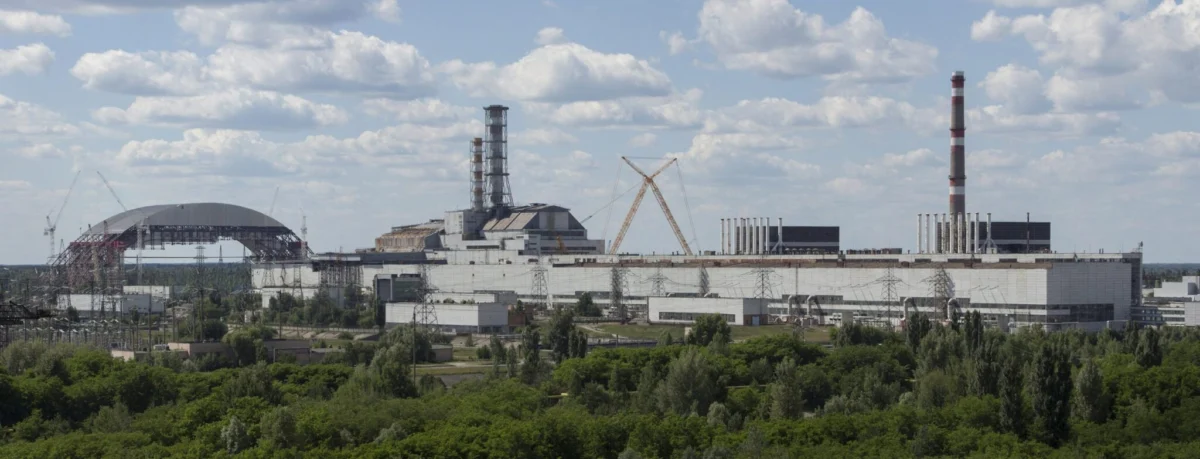
Military strikes near the Exclusion Zone are not merely a violation of territorial integrity; they risk disturbing the radioactive soil and waste repositories that have been managed under strict containment protocols for four decades. A strike that compromises the New Safe Confinement (NSC) structure—the massive arch designed to shield the world from the ruins of Reactor 4—could lead to a secondary release of radioactive particles.
2. The Erosion of Nuclear Taboos
The persistent normalization of violence near nuclear sites risks shattering the long-standing global taboo against weaponizing nuclear infrastructure. If the international community fails to curb drone activity over Chernobyl, it sets a dangerous precedent for every other nuclear-reliant nation, suggesting that nuclear facilities are legitimate targets in a conflict.
3. The Humanitarian Burden
The UNDP’s assertion that "restoring infrastructure is not waiting for the end of the war" highlights a desperate reality. With $600 billion in damage and a population struggling to survive, the redirection of resources from civilian recovery to basic security measures is unsustainable. The conflict has become a war of attrition, not just against the Ukrainian military, but against the very foundations of modern life in the country.
Conclusion: A Call for Urgent Action
The warnings issued by Alexander De Croo are not merely bureaucratic concerns; they are an emergency siren for the international community. The potential for a "Level 7" repeat—or a localized nuclear incident—is no longer a theoretical abstraction but a recurring risk facilitated by current military tactics.
As the global community watches, the message from the UNDP is clear: the rules of war must be reasserted, and the skies over Chernobyl must be secured. Failure to do so does not merely abandon Ukraine to a freezing, volatile winter; it gambles with the radiological safety of the entire European continent. The cost of inaction, measured in billions of dollars and countless human lives, is a price the world can ill afford to pay.