The landscape of travel photography has undergone a seismic shift over the last decade. From the cumbersome, heavy camera rigs of the early 2000s to the sleek, sub-250-gram drones that dominate modern travel vlogs, the goal has remained consistent: capturing the impossible perspective. However, for most creators, the "drone experience" has historically been marred by the technical anxiety of piloting, gimbal calibration, and the dreaded "missing the shot" syndrome.
Enter the Antigravity A1, a device that isn’t just another drone—it is a fundamental rethinking of how we document our journeys. Released in late 2025, the A1 effectively renders the traditional mechanical gimbal obsolete for a massive segment of the creator market. By replacing a single forward-facing camera with a dual-lens 360-degree capture system, the A1 promises a "fly now, frame later" experience. It is less about piloting a machine and more about directing a virtual camera in a pre-recorded digital environment.
Main Facts: The Technology Behind the Lens
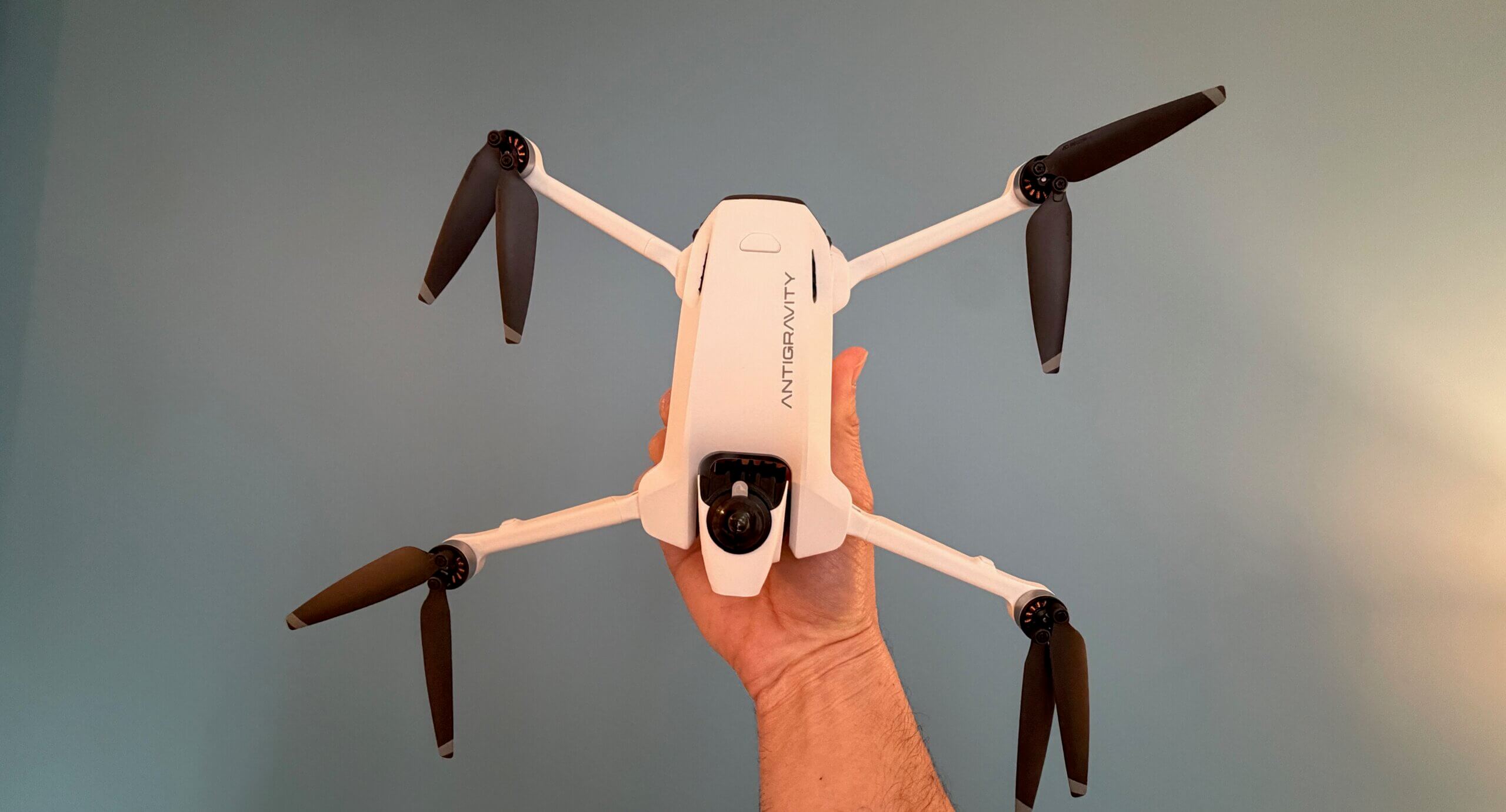
At the heart of the Antigravity A1’s appeal is its unique optical configuration. Unlike standard drones that rely on a single lens pointed forward—requiring the pilot to constantly adjust the yaw and pitch to keep a subject in frame—the A1 utilizes two ultra-wide-angle lenses. Positioned on the top and bottom of the central fuselage, each lens captures a 200-degree field of view. When processed, these images overlap to create a seamless, 360-degree sphere of data.
This design yields two significant technical advantages. First, the drone itself is digitally "erased" from the final footage, creating the uncanny illusion of a camera floating untethered in mid-air. Second, the 1/1.28-inch CMOS sensors provide a performance jump over existing 360-degree action cameras. While traditional "Pro" drones may boast larger 1-inch sensors, the A1’s sensors are optimized for high dynamic range and low-light performance, ensuring that shadow detail—often crushed in the high-contrast lighting of a midday beach or mountain pass—is preserved.
Furthermore, Antigravity has navigated the regulatory minefield with surgical precision. By engineering the A1 to weigh exactly 249 grams with its standard battery, the company has ensured that the device sits just under the critical 250-gram threshold. In most jurisdictions, this allows users to avoid the registration requirements and stringent commercial flight restrictions that hamper larger drones, making it an essential companion for the globetrotting nomad.
A Chronology of the A1’s Development
The journey of the A1 began in early 2024, when the Antigravity engineering team identified a disconnect between the capability of high-end cinema drones and the needs of solo travelers. The "traditional" workflow—launching a drone, navigating to a subject, framing, filming, and potentially having to repeat the process—was deemed inefficient.
- Q1 2024: R&D phase begins, focusing on lightweight, carbon-fiber-reinforced polymer structures to ensure structural integrity while maintaining the 249-gram target.
- Q3 2024: Prototype testing reveals that standard flight controllers are too cumbersome for 360-degree cinematography. The decision is made to prioritize a single-handed motion controller.
- Q2 2025: Beta testing concludes with a group of professional travel creators, who emphasize the need for "FlowState" stabilization to handle high-altitude winds.
- Late 2025: Global launch. The drone hits the market with the "Antigravity Studio" app, which introduces the industry-standard "Auto-Frame" AI technology.
Supporting Data: Flight Dynamics and Performance
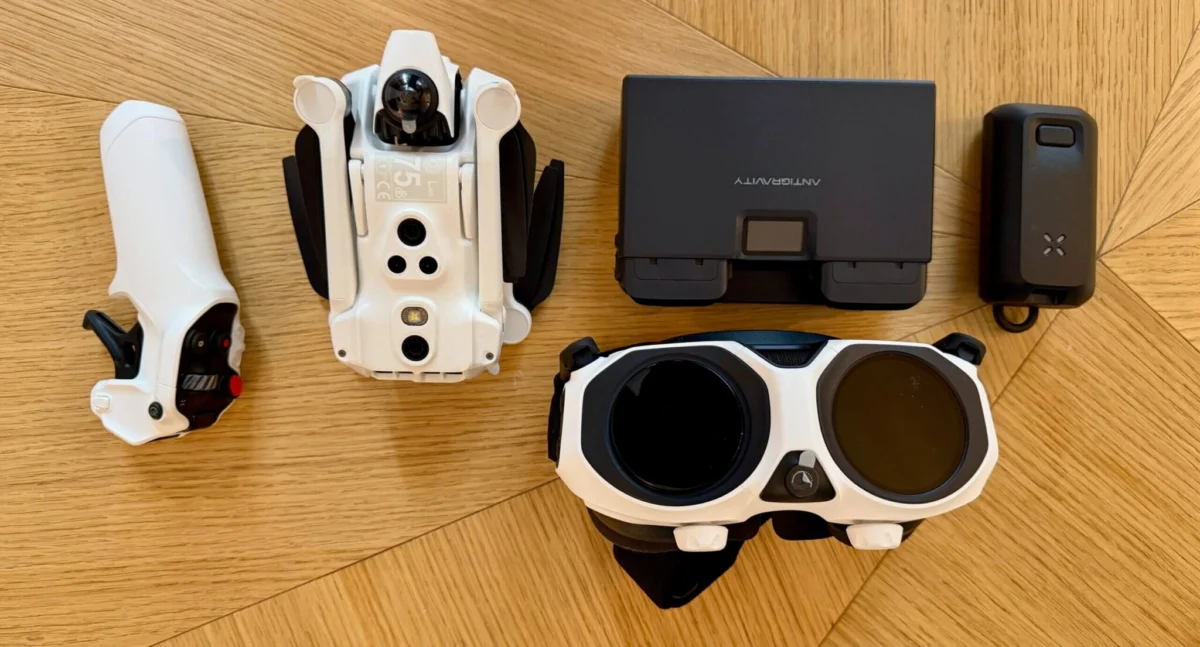
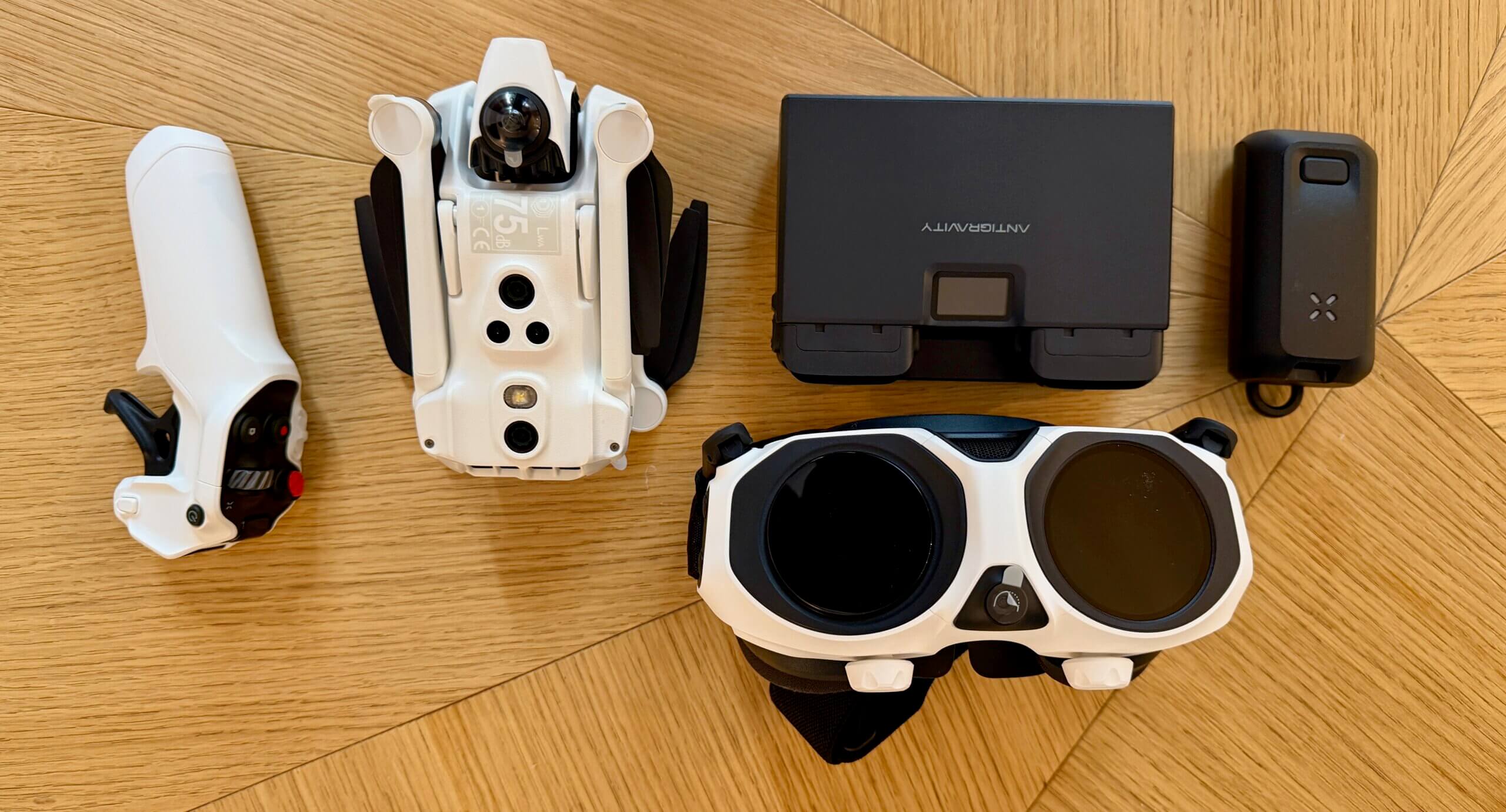
The flight experience of the A1 is designed for accessibility without sacrificing creative depth. The motion controller, which uses simple wrist-tilting and trigger-pulling mechanics, allows novices to perform complex maneuvers within minutes of unboxing.
Regarding battery life, the A1 operates within the constraints of modern lithium-ion technology. The standard Intelligent Flight Battery offers a theoretical 24 minutes of flight time, translating to roughly 19–20 minutes of real-world use. While this may seem brief, the "work per minute" ratio is exponentially higher than a traditional drone. Because the A1 records everything in every direction, a single flight yields the same amount of usable angles as three or four flights with a conventional camera.
For those requiring longer endurance, the "Pro Battery" extends flight time to 39 minutes, though this pushes the weight over the 250-gram regulatory limit, a trade-off that serious professionals may choose to make. The drone is categorized as a "cinewhoop" flyer—predictable, stable, and capable of reaching speeds of 36 mph, making it ideal for tracking moving subjects like bicycles or automobiles.
Official Responses and Industry Reception
Industry analysts have noted that the Antigravity A1 has effectively forced a pivot among competitors. When asked about the shift toward 360-degree drone tech, an Antigravity spokesperson noted, "Our goal wasn’t to build a faster drone; our goal was to build a better storyteller. By giving the creator the ability to reframe their footage after the fact, we’ve removed the biggest barrier to entry: the fear of failing to get the shot."
Early reviews from photography outlets have praised the "Turtle Mode," which allows the drone to flip itself over using its rotors if it crashes, as a significant innovation for long-distance hikers or travelers who might otherwise lose their gear in inaccessible terrain.
Implications for Future Filmmaking
The implications of the A1’s technology extend far beyond hobbyist travel. By moving toward a "capture everything" model, the barrier between professional cinematography and amateur content creation is narrowing.
The Virtual Camera Crew
The most significant software advancement is the "Antigravity Studio" app. It allows users to download footage wirelessly at speeds up to 80MB/s and reframe video using their smartphone’s gyroscope. The AI-driven "Auto-Frame" feature is a game-changer; it identifies human subjects, keeps them centered, and automatically suggests camera cuts. This effectively provides a solo creator with a virtual camera crew that never gets tired, never makes framing mistakes, and never misses the "golden hour" light.
Bridging the VR Gap
The inclusion of Vision Goggles, which feature dual 4K micro-OLED displays at a 120Hz refresh rate, suggests a move toward more immersive content. Because the drone records the full sphere, wearing the goggles allows the pilot to experience true head-tracking. When the user looks down, they see the ground passing beneath them; when they turn their head, they see the horizon. This sense of spatial awareness is unmatched by fixed-camera systems and points toward a future where travel content is consumed not on a flat screen, but in a fully immersive VR environment.
Conclusion: Is the A1 Right for You?
The Antigravity A1 is not without its limitations. The lenses are inherently more delicate than those on traditional, shrouded cameras, and the image quality, while impressive for its size, still falls short of the massive sensors found on dedicated cinema drones like the DJI Inspire series. However, these are minor concessions for the level of creative liberation the device provides.
The A1 bridges the gap between the rigid, calculated cinematography of the past and the fluid, unpredictable nature of modern travel. For the creator who is tired of the repetitive, static "drone shots" that have become synonymous with travel social media, the Antigravity A1 is more than a gadget—it is an essential evolution in the storytelling toolkit. By removing the technical burden of framing, it allows the creator to focus on what actually matters: the narrative. As we move into 2026 and beyond, the question is no longer "what can my drone see," but "what story will I choose to tell from the sphere of data I’ve captured?"