By International News Desk
Updated: July 12, 2026 – 07:50 GMT
The fragile stability of the Middle East has fractured further following a week of violent maritime skirmishes and retaliatory airstrikes. As of July 12, 2026, the Strait of Hormuz—the world’s most critical maritime chokepoint for global energy supplies—has effectively become a combat zone. Shipping traffic through the narrow waterway has plummeted to historic lows following a series of direct confrontations between United States naval forces and the Iranian Revolutionary Guard Corps (IRGC).
The latest cycle of violence was triggered on July 8, when a commercial container ship was set ablaze by Iranian fire, prompting a swift and forceful response from the U.S. military. As both nations trade strikes, regional neighbors, including the United Arab Emirates (UAE) and Qatar, have reported the interception of projectiles within their sovereign airspace, raising the specter of a broader regional conflagration.
Main Facts: The Catalyst of the Current Crisis
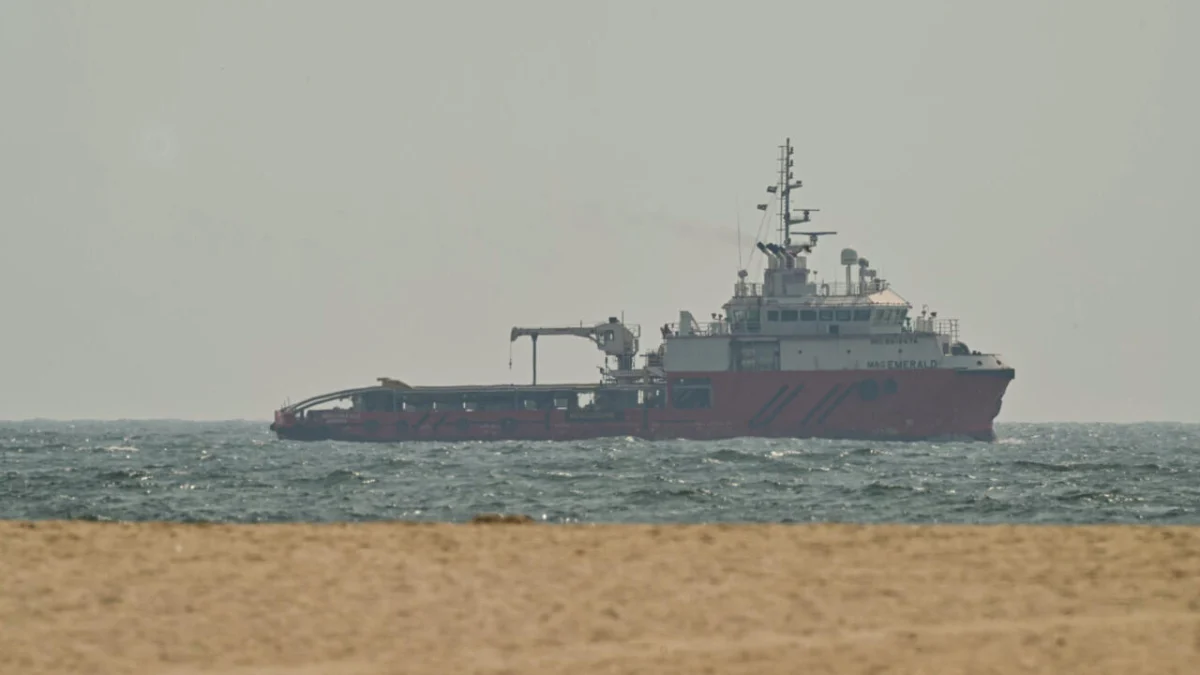
The current escalation represents a total collapse of the tenuous de-escalation efforts that had been in place for the preceding months. On Sunday, July 5, Iranian forces launched a targeted assault on a commercial container vessel navigating the Persian Gulf. The resulting fire caused significant damage to the ship and forced the crew to abandon the vessel, drawing an immediate red line from Washington.
By July 8, the U.S. military had mobilized, launching retaliatory strikes against what the Pentagon described as "launch sites and command-and-control hubs" utilized by the IRGC. The intensity of these strikes has effectively militarized the Strait of Hormuz, forcing commercial shipping lines to divert or suspend operations entirely. The UN-backed Omani route, previously considered a safer corridor for vessels transiting the region, has seen traffic drop by over 60% in the last 48 hours, according to maritime analytics firms.
Chronology of Escalation: July 5–July 12, 2026
The rapid deterioration of security in the Gulf can be tracked through a series of rapid, high-stakes events that have left global markets reeling:
- July 5: A commercial container ship is struck by Iranian weaponry, resulting in a major fire. The incident is condemned globally as an act of state-sponsored piracy.
- July 7: The United States announces the deployment of additional naval assets to the region, signaling a shift from defensive posturing to offensive deterrence.
- July 8: Washington launches targeted airstrikes against Iranian coastal batteries. Tehran responds by issuing a formal warning that the entirety of the Persian Gulf is now a "restricted zone."
- July 9: Reports emerge of strikes targeting infrastructure in Kuwait and Bahrain, fueling fears that the conflict is expanding beyond the maritime domain.
- July 10: Satellite imagery confirms a near-total cessation of traffic through the Omani maritime corridor.
- July 11: The UAE and Qatar defense ministries confirm the interception of incoming Iranian-origin fire, marking the first time the conflict has directly spilled over into the defensive perimeters of these neutral Gulf states.
- July 12: Global oil prices surge to record highs as insurance premiums for vessels entering the Gulf become prohibitive.
Supporting Data: The Economic Toll of Maritime Insecurity
The Strait of Hormuz is the world’s most important oil chokepoint, with approximately 21 million barrels of oil—the equivalent of about 21% of global petroleum liquids consumption—passing through it daily.
According to data compiled by the International Maritime Organization (IMO), the current blockade has resulted in:
- Shipping Volume: A 75% reduction in daily tanker transits compared to the July 2025 average.
- Insurance Costs: War-risk insurance premiums for vessels entering the Persian Gulf have spiked by 450% in the last 72 hours.
- Commodity Impact: Brent Crude futures have climbed above $135 per barrel, as energy markets brace for a prolonged period of supply chain disruption.
- Logistical Bottlenecks: Major global logistics providers have issued force majeure notices for cargo bound for ports in the upper Gulf, citing the inability to guarantee the safety of crew or vessel.
Official Responses: A Divided International Community
The international community is struggling to form a unified response to the violence, with regional and global powers caught between the necessity of trade security and the desire to avoid a full-scale war.
The United States Position
The White House has maintained that the strikes are "proportionate and necessary" to defend the freedom of navigation. Secretary of Defense Lloyd Austin emphasized in a press briefing that the U.S. remains committed to protecting the global economy from "state-sponsored threats" in international waters. Washington has also called upon its NATO allies to increase their presence in the region to bolster a "multinational maritime security coalition."

The Iranian Perspective
Tehran’s Foreign Ministry has characterized the U.S. strikes as an "unprovoked act of aggression" and a violation of Iranian sovereignty. Iranian state media has warned that any further U.S. movement in the region will be met with "unprecedented defensive maneuvers," hinting at the activation of advanced subsurface drone technology and anti-ship ballistic missiles.
Regional Stance: The UAE and Qatar
The defense ministries of the UAE and Qatar have issued rare, joint statements calling for immediate restraint. Having confirmed the interception of Iranian-origin projectiles, both nations are in a precarious position. While they remain long-term security partners of the West, they are also attempting to maintain diplomatic channels with Tehran to prevent the conflict from destroying their own domestic infrastructure.
Implications: A World on the Brink
The implications of this conflict extend far beyond the immediate geography of the Strait of Hormuz.
1. The Energy Crisis
If the Strait remains closed or restricted for an extended period, the world faces an immediate energy crisis. While many nations have built strategic petroleum reserves, a sustained interruption would drain these supplies within weeks, leading to massive inflationary pressure on everything from food to manufacturing.
2. Geopolitical Realignment
The crisis is forcing nations that have traditionally maintained a policy of "non-alignment" to choose sides. China, which relies heavily on energy imports from the Gulf, has called for a diplomatic solution, yet its failure to condemn the Iranian strikes has drawn sharp criticism from Western capitals. This suggests a deepening divide in the global order, with the Gulf serving as the new fault line between competing superpowers.
3. The Future of Maritime Law
The events of July 2026 may permanently alter the way international maritime law is enforced. The failure of existing diplomatic frameworks to prevent the targeting of commercial vessels suggests that, moving forward, the world may see a move toward "armed escort" models for all commercial trade in sensitive waters, effectively ending the era of open-sea freedom that has defined global commerce since the end of the Cold War.
4. Risk of Escalation
The most terrifying prospect remains the possibility of a "miscalculation." With U.S. and Iranian forces operating in such close proximity, an error in judgment by a local commander could trigger a chain reaction that draws the entire region into a conflict that no party is fully prepared to contain.
As the world watches the Strait of Hormuz, the focus remains on the UN Security Council, which is expected to convene an emergency session later today. Whether diplomacy can prevail over the current momentum of kinetic warfare remains the defining question of this crisis.
This is a developing story. Follow our live blog for real-time updates as the situation in the Persian Gulf evolves.