Main Facts: A Nation at a Crossroads
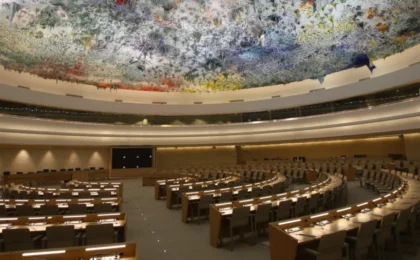
The United Nations Commission on Human Rights in South Sudan (OHCHR) has issued a sobering assessment of the country’s current stability, warning that a toxic cocktail of unchecked violence, systemic impunity, and institutional paralysis is actively dismantling the foundations of a nascent democratic transition. As the country grapples with its complex post-civil war reality, the Commission’s latest report highlights that the protection of civilians has become secondary to the political survival of elites.
At the core of the crisis is the phenomenon of impunity. For years, the Commission has meticulously documented widespread human rights abuses—including summary executions, sexual violence, and the systematic displacement of vulnerable populations—yet the perpetrators remain largely shielded from justice. Commissioner Carlos Castresana Fernández, in a stark address to the international community, noted that the lack of accountability is not merely an incidental feature of the conflict; it is the engine that drives it.
"When violations go unpunished and public resources are diverted without consequence, impunity becomes entrenched, and that breeds violence," Fernández stated. The Commission argues that without functioning, independent justice institutions and a transparent mechanism for managing the country’s vast national resources, South Sudan’s cycle of violence is structurally destined to repeat itself.
Chronology: The Evolution of a Persistent Conflict
The current instability in South Sudan cannot be viewed in isolation; it is the culmination of decades of fractured governance and unresolved grievances.
- 2011: South Sudan gains independence from Sudan, initially sparking hope for a stable, resource-rich state.
- 2013: A political fallout between President Salva Kiir and Vice President Riek Machar triggers a devastating civil war, split largely along ethnic lines between the Dinka and Nuer groups.
- 2018: The Revitalized Agreement on the Resolution of the Conflict in the Republic of South Sudan (R-ARCSS) is signed, aimed at ending the civil war and forming a transitional government.
- 2023–2024: Despite the agreement, the transition remains stalled. Reports from the UN and NGOs consistently point to an increase in state-sponsored violence and the mobilization of ethnic militias to maintain control over specific territories.
- 2026 (Current Period): The UN Commission reports that the security situation has deteriorated significantly. With the approach of long-delayed national elections, political elites have increasingly utilized militias to consolidate power, leading to a surge in inter-communal violence that has reached a critical threshold.
Supporting Data: The Anatomy of Violence
South Sudan’s conflict landscape is uniquely layered. While international observers often focus on the central government’s friction with opposition forces, the daily reality for the average citizen is defined by three distinct but overlapping forms of violence.
The Inter-Communal Dimension
South Sudan is home to 64 distinct ethnic groups. While the Dinka and Nuer dominate the political and military discourse, the struggle for survival is often fought on the ground over the most basic of resources: water, cattle, and grazing land. In the absence of a strong state presence to mediate disputes, these competition-based disagreements frequently escalate into brutal cycles of revenge killings, child abductions, and mass cattle raids.
The Outsourcing of Conflict
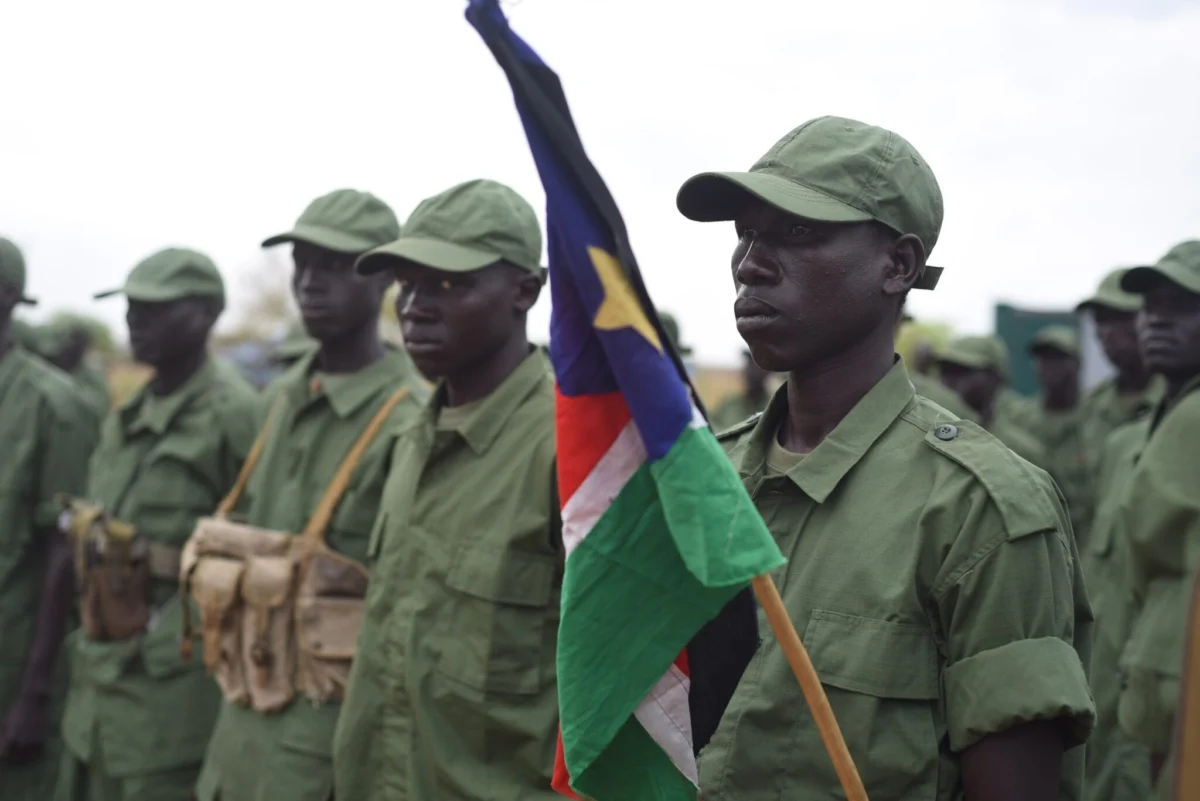
Perhaps the most alarming trend identified by the Commission is the deliberate "outsourcing" of violence. Political and military elites have been documented mobilizing non-state armed groups—such as the Nuer White Army and the Agwelek Militia (comprised of Shilluk fighters)—to execute attacks that the state does not wish to be directly associated with.
Research from the German Institute for International and Security Affairs highlights that this strategy serves a dual purpose: it allows elites to maintain plausible deniability while simultaneously fueling factionalism. By empowering these militias, the central government has inadvertently created a "shadow security sector" that answers only to tribal or political patrons, rather than to the rule of law.
The Humanitarian Toll
The human cost of this strategic instability is immense. The UN reports indicate that forced displacement is at an all-time high, with millions of citizens living in IDP (Internally Displaced Persons) camps or fleeing across borders. The infrastructure for humanitarian aid is under severe strain, with local populations suffering from extreme food insecurity and a near-total lack of primary healthcare services. The targeting of women and children, often used as a weapon of war to demoralize rival factions, remains a persistent and harrowing reality.
Official Responses: The Call for Accountability
The international community and human rights bodies are pushing for an urgent shift in strategy. The OHCHR has urged the transitional government to move beyond rhetorical commitments and prioritize concrete judicial reforms.
The UN Mandate
The UN Commission emphasizes that the Geneva Conventions of 1949 remain the legal benchmark for the conflict. Article 31, which explicitly prohibits physical or moral coercion against protected persons (civilians), is frequently violated by both state and non-state actors. The Commission is calling on the transitional government to:
- Strengthen Judicial Institutions: Establishing independent courts that are shielded from political interference.
- Ensure Inclusive Participation: Opening the political space to allow for civil society and grassroots organizations to participate in the democratic process without fear of reprisal.
- Resource Transparency: Adopting strict oversight mechanisms for the country’s oil and mineral wealth, which the Commission identified as a major driver of corruption.
Regional and International Partners
Regional bodies and international donors have been cautioned that providing aid without demanding accountability is merely subsidizing the status quo. The Commission argues that international support must be strictly conditional on the implementation of transparency measures and the cessation of support for armed militias.
Implications: The Fragility of the Democratic Transition
The implications of the Commission’s warning are profound. As South Sudan approaches a potential election cycle, the risk of a total collapse in security is high.
If the government continues to rely on the mobilization of ethnic militias and the suppression of dissent, the democratic transition will likely become a facade for continued autocratic rule. The "cycle of violence" is not merely an unfortunate byproduct of the country’s history; it is a calculated mechanism used by some to preserve the status quo.
For the international community, the challenge is to determine how to support a transition that is, by all accounts, fundamentally broken. Without a genuine commitment to justice—specifically the prosecution of those responsible for grave human rights abuses—the prospect of sustainable peace remains elusive.
The path forward, as suggested by Commissioner Fernández, requires more than just political will. It requires a fundamental decoupling of the state from the interests of armed factions. Until the government proves it can protect its own citizens rather than exploit their divisions, the future of South Sudan will continue to hang in a precarious, violent balance. The international community’s role is to ensure that the demand for accountability is not just a footnote in a report, but the guiding principle of all future engagement with Juba.