By International Affairs Desk
In a stark and unified rebuke of the current security climate in the Middle East, a coalition of more than 100 international humanitarian and human rights organizations, led by Amnesty International, issued a scathing statement on Friday. The coalition declared that the Gaza ceasefire agreement, brokered in late 2025, has become a diplomatic fiction—an arrangement that exists "in name only" while failing to provide any tangible respite for the civilian population trapped within the territory.
As the region braces for another harsh winter, the humanitarian situation in Gaza has reached what observers describe as a catastrophic nadir. Despite formal pledges to halt hostilities, the "killing and deprivation" of civilians persist, prompting a renewed demand for international accountability and an end to the normalization of violence.
The Fragility of the 2025 Peace Framework
The ceasefire agreement, which took effect in October 2025, was the centerpiece of the "Gaza Peace Plan," a high-stakes diplomatic initiative spearheaded by the US Board of Peace under the leadership of President Donald Trump. At the time of its signing, the agreement was hailed as a potential turning point for the long-suffering region.
Article 3 of the peace plan was explicit: it mandated that "all military operations, including aerial and artillery bombardment, will be suspended, and battle lines will remain frozen." However, the intervening year has revealed a widening chasm between the legal text of the agreement and the reality on the ground. Far from a cessation of hostilities, reporting from both international monitors and local sources indicates that bombardments and targeted attacks have not only continued but have, in several key metrics, intensified.
A Chronology of Failure: From Hope to Despair
The trajectory of the last twelve months has been marked by a systematic erosion of the ceasefire’s objectives.
- October 2025: The Gaza Peace Plan is implemented, promising a suspension of all military operations.
- April 2026: The efficacy of the ceasefire is shattered when two Palestinian humanitarian aid workers are killed by Israeli fire while attempting to deliver water to civilians, a violation that sent shockwaves through the international aid community.
- August 2026: A summer surge in violence results in a significant spike in civilian casualties. The United Nations releases reports detailing strikes on active classrooms and school buildings, raising urgent concerns about the safety of children in designated "safe zones."
- September 2026: Gaza’s Government Media Office releases a grim statistical overview, documenting 5,147 distinct Israeli ceasefire violations since the pact’s inception.
Inger Ashing, CEO of Save the Children, captured the gravity of the situation in her recent remarks: "A ceasefire is meaningless if children are still being killed and families are still unable to rebuild their lives. Since the ceasefire was announced, nearly one child has been killed every day."
Supporting Data: The Humanitarian Toll
The human cost of this "meaningless" ceasefire is quantified in staggering numbers. According to the latest estimates, the total death toll since the onset of the conflict has climbed to 74,386 casualties. Perhaps most harrowing is the demographic breakdown of these losses: 20,179 of the deceased are children, a figure that continues to rise even under the terms of the formal peace agreement.
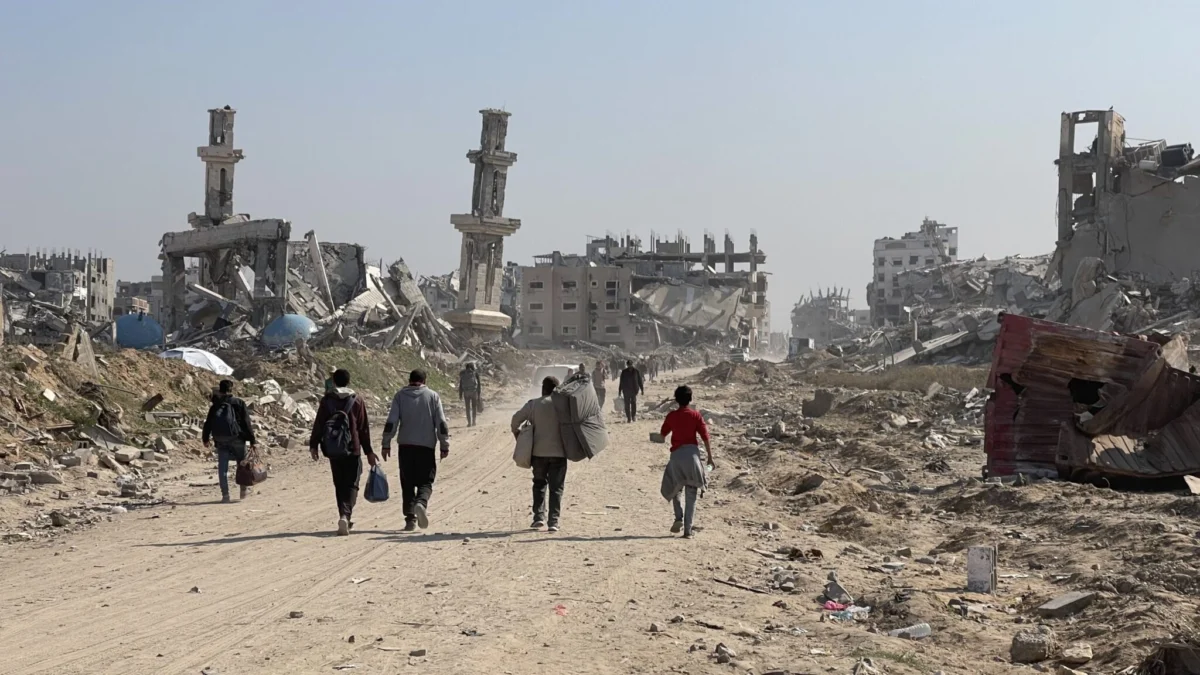
The Norwegian Refugee Council (NRC), a signatory to the joint statement, highlighted the impossible conditions faced by survivors. A full year after the ceasefire was signed, families remain trapped in a cycle of displacement. Many are forced to choose between remaining in structurally compromised, dangerous buildings or living in makeshift tents as temperatures begin to plummet.
The crisis is further exacerbated by the severe restriction of aid. Despite international calls for the unimpeded flow of essential supplies, humanitarian organizations report that medical equipment, food, and fuel are consistently blocked. This deliberate deprivation has left Gaza’s healthcare system, already decimated by years of conflict, effectively unable to respond to the basic needs of the population.
Official Responses and Diplomatic Friction
The international community’s frustration is mirrored in the halls of the United Nations. During a heated Security Council session in August, the discrepancy between the parties’ accounts of the ceasefire was laid bare.
Israel’s representative defended the country’s security posture, arguing that the responsibility for the ceasefire’s failure lies with Hamas. The representative maintained that "the civilians of Gaza are not Israel’s enemy," but asserted that "Hamas’s disarmament must come first" for any genuine peace to take hold. Furthermore, the Israeli government pointed to the entry of "600 aid trucks" as evidence of their commitment to the humanitarian situation, a figure that aid agencies contend is a mere fraction of what is required to avert a total collapse of public order and health.
Amnesty International and its coalition partners have rejected these justifications, arguing that the failure to hold Israel accountable for its "persistent violations" serves to fuel atrocities on a mass scale. They stress that the International Court of Justice (ICJ) has issued binding orders that have been largely ignored, thereby undermining the international rule of law.
Legal Implications and the Shadow of War Crimes
The situation in Gaza remains the subject of intense legal scrutiny. The Fourth Geneva Convention of 1949, which forms the bedrock of international humanitarian law, strictly prohibits targeted attacks on civilians and civilian infrastructure. Under Article 8 of the Rome Statute, such actions constitute grave breaches and are classified as war crimes.
Israel remains embroiled in ongoing proceedings before the International Court of Justice, following a 2023 petition by South Africa alleging violations of the Convention on the Prevention and Punishment of the Crime of Genocide. The current disregard for the ceasefire, coupled with the persistent strikes on schools and essential service sites, has provided fresh ammunition for legal experts who argue that the conduct of the war has moved beyond the scope of military necessity and into the realm of prohibited international conduct.
The Path Ahead: A Call for Enforcement
The joint statement issued by the 100+ organizations serves as a final, desperate appeal to the international community. The signatories emphasize that the "normalization" of life under fire—where schools are targets, aid workers are victims, and children are killed daily—must be rejected.
As winter approaches, the humanitarian agencies warn that the situation will shift from a crisis to a catastrophe. They are calling for an immediate, enforceable, and monitored ceasefire that goes beyond the failed 2025 framework. Without the political will to enforce accountability—through sanctions, diplomatic pressure, or the application of international legal rulings—the cycle of violence in Gaza appears destined to continue, leaving a generation of children to grow up in a landscape defined by rubble, cold, and the echoes of broken promises.
"The persistent failure to hold Israel accountable," the Amnesty International statement concludes, "continues to fuel the atrocity on a mass scale against Palestinians. It is time for the international community to move past rhetoric and demand compliance with binding international law, before the human cost becomes irreversible."