Main Facts: High Court Intervenes to Preserve 2022 Congressional Map
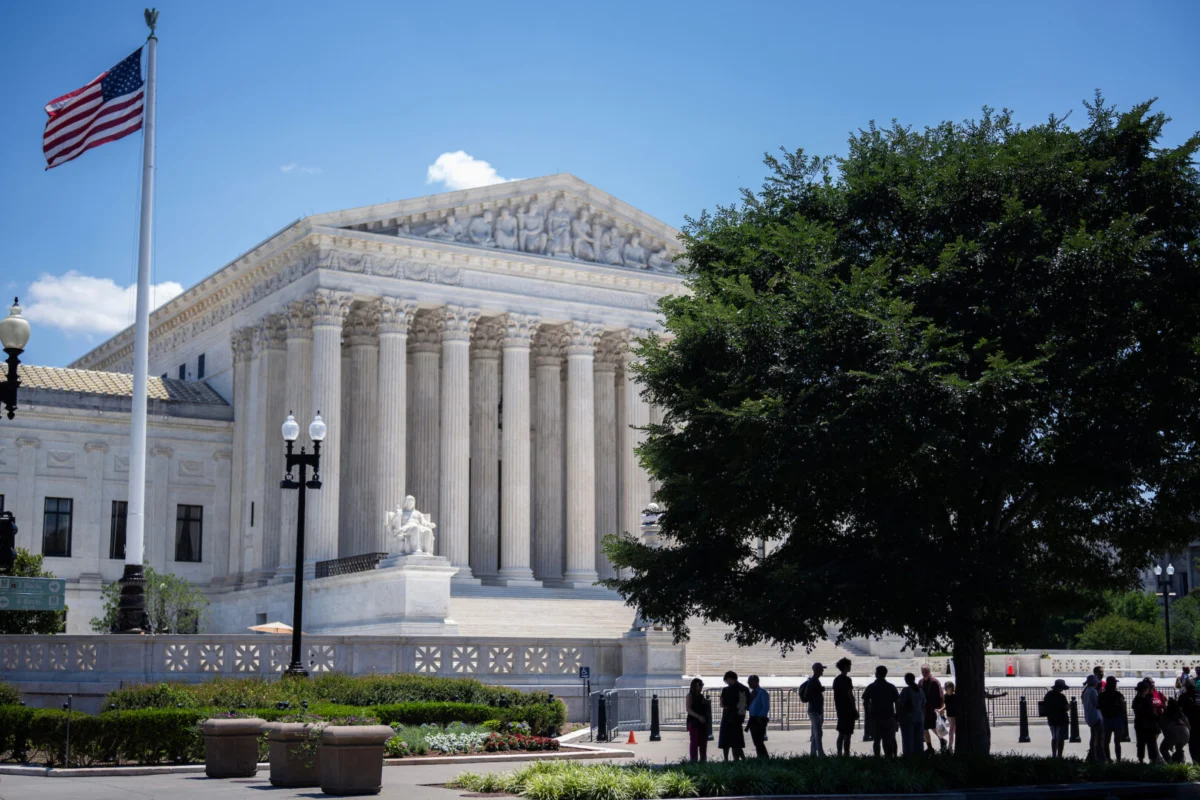
In a high-stakes decision delivered on Friday, the United States Supreme Court effectively halted a last-minute attempt by Missouri Republicans to implement a newly redrawn congressional map designed to flip a Democratic House seat. By issuing an emergency, unsigned order without any noted dissents, the nation’s highest court set aside a lower federal appellate ruling and ordered Missouri to conduct its upcoming general election using the congressional district lines established in 2022.
The ruling directly countermands a decision issued earlier in the week by a three-judge panel of the U.S. Court of Appeals for the 8th Circuit. That appellate ruling had sought to compel the state to use a controversial map enacted by the Republican-led legislature in 2025—a map that Missouri had previously utilized during its August primary elections.
                                  MISSOURI REDISTRICTING LITIGATION TIMELINE

   [2022 Map Enacted] ───► [2025 Map Adopted by GOP] ───► [August Primary Held under 2025 Map]
                                                                     │
   [SCOTUS Orders 2022 Map] ◄─── [8th Circuit Mandates 2025 Map] ◄───┴─── [MO Supreme Court Halts 2025 Map]
In its brief, unsigned opinion, the Supreme Court stressed that altering district boundaries while an election cycle is actively underway creates unacceptable procedural disruptions. The justices highlighted that it remained far from clear whether federal law mandated the adoption of the 2025 boundaries for the general election simply because they were used in the primary.
"At this late date, ordering reversion to the 2025 map in the midst of an ongoing election would usher in electoral chaos," the Supreme Court stated in its order.
In addition to restoring the 2022 map, the Supreme Court explicitly instructed lower federal courts not to issue further orders directing state officials to use the 2025 map for the current election cycle. The decision represents a major victory for voting rights groups and state Democrats, while dealing a sharp set-back to national Republican efforts to expand their majority in the U.S. House of Representatives.
Chronology of the Legal and Legislative Battle
The battle over Missouri’s congressional representation is the culmination of a multi-year political and judicial struggle involving the state legislature, grass-roots petition organizers, state judges, and federal courts.
+---------------------------------------------------------------------------------------------------+
| CHRONOLOGY OF EVENTS                                                                              |
+---------------------------------------------------------------------------------------------------+
| 1. 2022: Original redistricting map enacted following the 2020 U.S. Census.                       |
| 2. 2025: Missouri Legislature adopts a aggressive mid-decade redistricting plan.                 |
| 3. Spring 2025: Grassroots group "People Not Politicians Missouri" launches veto referendum.      |
| 4. August 2026: Missouri holds congressional primary elections under 2025 map boundaries.         |
| 5. Sept 2026: Missouri Supreme Court rules 2025 map invalid for general election due to pending  |
|    referendum; orders return to 2022 map.                                                         |
| 6. Oct 2026 (Early): Federal District Judge Stephen R. Clark rules 2025 map must be used.         |
| 7. Oct 2026 (Mid): 8th Circuit Court of Appeals panel affirms District Court ruling.               |
| 8. Oct 2026 (Late): U.S. Supreme Court grants emergency stay, reinstating 2022 map.              |
+---------------------------------------------------------------------------------------------------+
The Legislative Push and the Citizen Veto
The conflict began when Missouri Republicans, seeking to maximize their advantage amid a broader national movement toward mid-decade partisan redistricting, approved a new congressional map in 2025. The plan aggressively restructured the state’s eight congressional districts to dilute Democratic voting strength in urban centers.
In response, a coalition of civic activists and voting rights advocates operating under the banner "People Not Politicians Missouri" mobilized to block the measure. The group initiated a citizen petition drive aimed at placing a referendum on the statewide ballot, allowing voters to decide whether to veto the 2025 legislative map. Under the Missouri Constitution, when a referendum petition gathers sufficient signatures to qualify for the ballot, the underlying law is suspended pending the outcome of the public vote.
The Primary Election and Divergent Judicial Rulings
Despite the pending referendum petition, state officials proceeded to conduct the August primary elections using the newly drawn 2025 lines. Candidates campaigned and voters cast ballots based on these altered boundary lines.
The legal landscape shifted dramatically in September, when the Missouri Supreme Court delivered a decisive ruling in favor of the petition organizers. The state’s highest court ruled that because the 2025 legislative map was suspended by the ongoing veto referendum process, it could not legally be utilized for the November general election. To comply with the state constitution, the court ordered election administrators to revert to the previously established 2022 map.
Republican lawmakers immediately sought emergency relief from the U.S. Supreme Court to overturn the state court’s decision, but the high court initially declined to intervene.
The Federal Lawsuit and Appellate Escalation
Refusing to accept the state court’s mandate, Republican Representative Bob Onder—along with another GOP congressional candidate and two voters—filed a separate federal lawsuit in the U.S. District Court for the Eastern District of Missouri. They argued that requiring a general election to be held under different district lines than the primary violated federal statutory law and the U.S. Constitution.
  STATE JUDICIAL TRACK                        FEDERAL JUDICIAL TRACK

  MO Supreme Court                            U.S. District Court (Judge Clark)
  - Suspends 2025 map                         - Orders 2025 map usage
  - Mandates 2022 map                         - Cites primary continuity
        │                                           │
        ▼                                           ▼
  SCOTUS Declines Intervention                8th Circuit Court of Appeals
  (First instance)                            - Affirms District Court
                                                    │
                                                    ▼
                                              U.S. SUPREME COURT
                                              - Reverses 8th Circuit
                                              - Reinstates 2022 Map
District Judge Stephen R. Clark agreed with the Republican plaintiffs, ruling that Missouri was constitutionally required to use the 2025 map for the general election because the primary had already been conducted under those boundaries.
Although the U.S. Supreme Court temporarily stayed Judge Clark’s decision and remanded the case for further review, a three-judge panel of the 8th Circuit Court of Appeals issued a final ruling affirming Judge Clark’s analysis. The appellate court held that enforcing the 2022 map after a primary conducted under the 2025 map was fundamentally unconstitutional.
On Tuesday night, "People Not Politicians Missouri" filed an emergency application asking the U.S. Supreme Court to pause the 8th Circuit’s mandate, setting the stage for Friday’s decisive intervention.
Supporting Data and District-Level Impact
The dispute over Missouri’s redistricting maps carries profound electoral consequences, both within the state and for the national balance of power in Washington, D.C.
Electoral Transformation of the 5th Congressional District
The central target of the GOP’s 2025 redistricting map was Missouri’s 5th Congressional District, centered in the Kansas City metropolitan area and currently represented by veteran Democratic Congressman Emanuel Cleaver II.
According to nonpartisan electoral calculations compiled by Inside Elections with Nathan L. Gonzales, the 2025 map dramatically altered the partisan baseline of the district:
+---------------------------------------------------------------------------------------------------+
| PARTISAN LEAN: MISSOURI'S 5TH CONGRESSIONAL DISTRICT                                             |
+---------------------------------------------------------------------------------------------------+
| Map Version               | Partisan Baseline / Presidential Margin                           |
+---------------------------+-----------------------------------------------------------------------+
| 2022 Map (Reinstated)    | Democratic +23 Points (Carried by Kamala Harris in 2024)             |
| 2025 Map (Shelved)       | Republican +18 Points (Carried by Donald Trump in 2024)             |
+---------------------------+-----------------------------------------------------------------------+
| NET PARTISAN SHIFT        | 41-Point Swing toward the Republican Party                            |
+---------------------------------------------------------------------------------------------------+
Under the 2022 boundaries reinstated by the Supreme Court, District 5 remains a safe Democratic stronghold. Under the shelved 2025 map, the district would have shifted by 41 percentage points, virtually guaranteeing a Republican pickup and expanding the GOP’s statewide representation from 6-2 to 7-1.
     2022 MAP (Reinstated)                      2025 MAP (Shelved)
   =========================                  =========================
   GOP Seats:        6 (75%)                  GOP Seats:        7 (87.5%)
   Democratic Seats: 2 (25%)                  Democratic Seats: 1 (12.5%)
Disenfranchisement and Voter Dislocation Data
The legal clashes highlighted severe administrative and constitutional anomalies resulting from switching maps mid-cycle. Figures cited in emergency federal filings by Representative Onder and his co-plaintiffs detailed the extent of the voter displacement caused by mismatched primary and general election maps:
- 1.4 Million Residents Affected: Over 1.4 million Missourians were placed in different congressional districts under the 2022 map compared to the 2025 map used during the primary.
- 250+ Thousand Primary Voters Displaced: More than 250,000 citizens who cast ballots in the August primary voted for candidates who, under the restored 2022 map, no longer reside in or represent the district where those voters will cast general election ballots.
- Statutory Deadline Conflicts: State election authorities confirmed that implementing the 2025 map at this stage would force local clerks to miss statutory federal deadlines for printing and mailing overseas military ballots.
Official Responses and Party Arguments
The Supreme Court’s order capped a fierce exchange of filings between grassroots advocacy groups, state election officials, and Republican candidates.
Statements from Applicants and Advocacy Groups
In its emergency application to the Supreme Court, "People Not Politicians Missouri" argued that the 8th Circuit had improperly overrode state judicial sovereignty and ignored preliminary directives from the nation’s highest court. The group emphasized the sheer administrative turmoil caused by shifting rules:
"The result is chaos on both sides of Election Day: confusion over how to conduct the election now, and uncertainty over the rules governing its results," the application stated.
Following Friday’s ruling, representatives for the organization praised the Supreme Court for respecting the constitutional right of Missouri citizens to challenge legislative overreach through the ballot referendum process.
Arguments from Republican Lawmakers and Plaintiffs
Representative Bob Onder and his fellow plaintiffs argued that forcing a mismatch between primary and general election boundaries fundamentally violates voter intent and constitutional protections governing federal elections. In their Wednesday filing to the Supreme Court, they wrote:
"More than 1.4 million Missourians could not vote for the congressional district nominees who will appear on their November general election ballot, and more than a quarter-million Missourians who voted in the August primary election cast a vote for a congressional district candidate who now cannot represent them."
Onder’s legal team contended that the U.S. Constitution mandates a strict "continuity of constituency," ensuring that voters choose general election nominees from the same candidate pool presented during the primary.
Disclosures from State Election Officials
Missouri election administrators found themselves caught in an untenable operational vise. In official filings submitted to the court, state attorneys admitted that no judicial order could fully smooth over the logistical complications generated by the legislative and legal tug-of-war.
"Yet the honest truth is that — regardless of what this Court does — Missouri will not be able to run an orderly General Election," the state’s filing remarkably conceded.
Despite acknowledging these severe administrative hurdles, state officials noted in court documents that, if forced to choose, they preferred conducting the general election under the 2025 lines to match the August primary—a preference the Supreme Court ultimately rejected due to the timing and risk of widespread voter confusion.
Implications for Federalism and the House Balance of Power
The Supreme Court’s order carries significant ramifications that reach far beyond the borders of Missouri, influencing national partisan strategies, legal precedents regarding late-stage election changes, and the boundary between state and federal court authority.
                                  KEY IMPLICATIONS

  ┌─────────────────────────┐  ┌─────────────────────────┐  ┌─────────────────────────┐
  │  US HOUSE MAJORITY      │  │  PURCELL PRINCIPLE      │  │  FEDERALISM & COURTS   │
  │  - Preserves Dem seat   │  │  - Blocks late court    │  │  - Upholds state supreme│
  │  - Limits GOP upside in │  │    map alterations      │  │    court authority on   │
  │    mid-decade maps      │  │  - Prioritizes stability│  │    state referendum laws│
  └─────────────────────────┘  └─────────────────────────┘  └─────────────────────────┘
The Purcell Principle and Late-Stage Election Restraint
The decision serves as a firm re-application of the Purcell principle—a well-established Supreme Court doctrine holding that federal courts should not alter state election rules and boundaries in the period immediately preceding an election. By ruling that an late modification to district maps would "usher in electoral chaos," the Supreme Court signaled to lower federal courts that administrative stability and voter clarity take precedence over resolving complex constitutional questions on the eve of balloting.
Balance of Power in the U.S. House
With control of the U.S. House of Representatives decided by slim margins, individual congressional seats carry immense national significance.
- Democratic Retention: Reinstating the 2022 map ensures that Representative Emanuel Cleaver II remains heavily favored to retain his seat in Missouri’s 5th District.
- National Impact: The ruling limits the ability of state legislatures to conduct effective mid-decade gerrymanders close to active election cycles, blunting a key strategy deployed by national parties to manufacture pickup opportunities.
Tension Between State Direct Democracy and Federal Courts
The case highlights a growing friction between state-level direct democracy—such as citizen veto referendums—and federal judicial oversight. The Missouri Supreme Court’s insistence on pausing legislative maps subject to public referendums was ultimately respected by the federal high court. This outcome reinforces the power of citizen-led ballot initiatives to check partisan redistricting, establishing a precedent that federal courts cannot easily override state constitutional procedures governing statutory referendums.
As county clerks across Missouri rush to finalize and distribute ballots under the reinstated 2022 map, the ruling closes the door on mid-cycle redistricting in the state for the current election cycle, ensuring that any future redrawing of Missouri’s congressional boundaries will remain deferred until the resolution of the pending voter referendum.