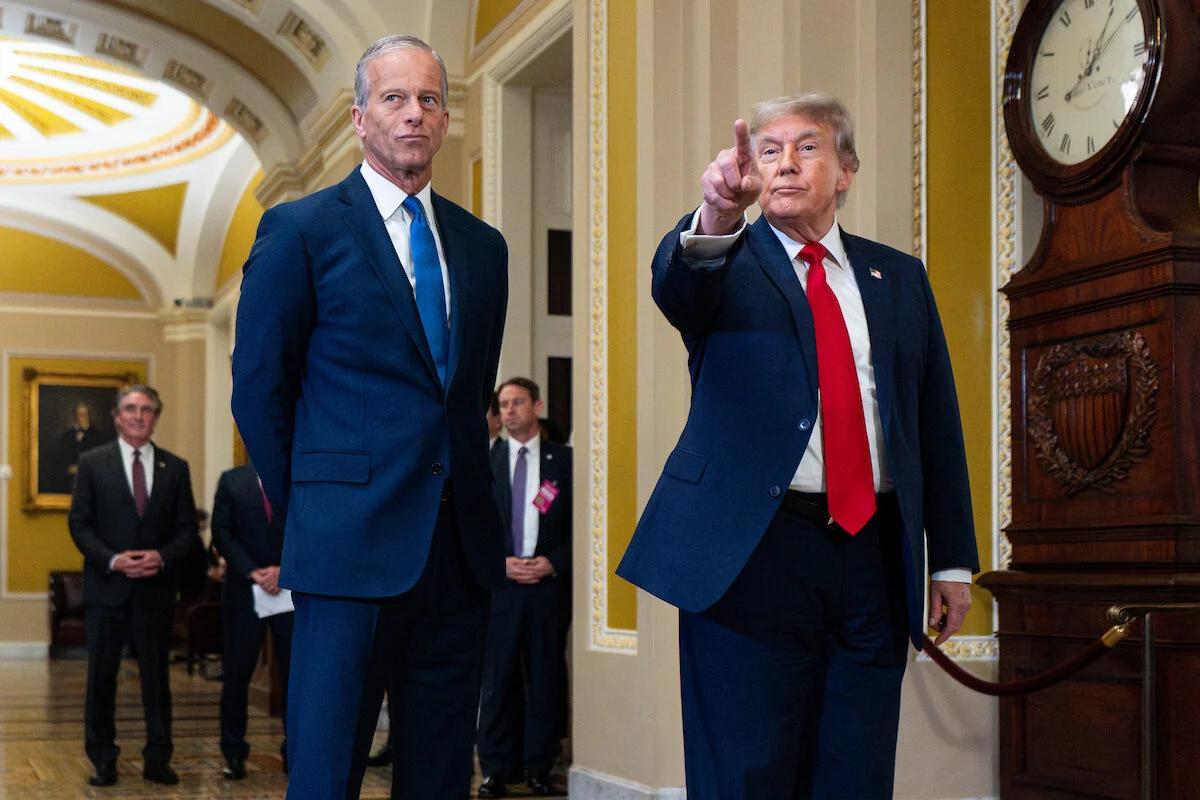
WASHINGTON, D.C. – As the Democratic Party grapples with a burgeoning progressive movement that has seen self-described democratic socialists unseat established incumbents in key primaries, former President Donald Trump has seized upon a potent new campaign weapon: the specter of communism. Facing persistently low approval ratings, particularly on economic issues, Trump has aggressively escalated his rhetoric, painting victorious far-left candidates as "hardcore, godless communists" and warning of an existential threat to the nation.
This renewed "red-baiting" strategy marks a significant rhetorical shift, moving beyond his previous broadsides against "socialism" to directly invoke the more historically charged and alarming term "communism." The pivot comes as a series of primary upsets, particularly in New York and Colorado, have propelled candidates championing distinctly left-leaning platforms into the national spotlight, offering Trump a concrete — albeit exaggerated — target for his alarmist warnings.
The former president’s pronouncements are not merely a tactical maneuver but a declaration of what he frames as a profound ideological battle. Speaking to a conservative audience, Trump asserted that these far-left victories represent "the most serious threat to our country since its existence, in my opinion, 250 years ago — this is a major threat to our country." This extreme characterization positions the internal ideological shifts within the Democratic Party as a peril surpassing even historical conflicts and national tragedies.
Chronology of Escalation: From Primaries to Presidential Warnings
Trump’s latest rhetorical offensive gained significant momentum following a series of surprising Democratic primary results that underscored the growing influence of the party’s progressive wing.
June 2026: New York’s Progressive Wave
The initial catalyst for Trump’s intensified rhetoric emerged from New York City. On a Tuesday in late June, two incumbent House Democrats from New York City suffered unexpected defeats at the hands of challengers who had received backing from New York City Mayor Zohran Mamdani. Mamdani, a prominent figure who openly identifies as a democratic socialist, had successfully campaigned on a far-left, affordability-focused platform in the previous year. He subsequently lent his considerable political capital to a slate of candidates advocating similar policy ideas.
The primary results were stark:
- In New York’s 10th District, Brad Lander, a candidate aligned with Mamdani’s vision, easily defeated Rep. Dan Goldman.
- Rep. Adriano Espaillat, a seasoned incumbent and chair of the Congressional Hispanic Caucus, lost his bid for a sixth term in the state’s 13th District to community organizer Darializa Avila Chevalier.
- A third Mamdani-backed candidate, state Rep. Claire Valdez, secured the party’s 7th District nomination by defeating Brooklyn Borough President Antonio Reynoso, in a race for the seat being vacated by the retiring Rep. Nydia M. Velázquez.
These collective victories for self-described "social democrats" (a term often used interchangeably with "democratic socialists" in this context) immediately provided Trump with fresh ammunition. He quickly began to use these outcomes as a broad brush to paint every Democratic incumbent and nominee as dangerously left-leaning, too radical to represent mainstream American values.
July 2026: Colorado Deepens the Narrative
The narrative was further solidified days later. On a Tuesday in early July, another significant upset occurred in Colorado’s 1st District, where Melat Kiros, another social democrat, successfully unseated 15-term Rep. Diana DeGette in a Democratic primary. This victory, following closely on the heels of the New York results, underscored that the progressive surge was not isolated to a single urban stronghold but represented a broader, emerging trend within the Democratic Party. For Trump, it confirmed his emerging campaign narrative: the Democratic Party was being irrevocably pulled to the far-left.
July 2026: CNN Report and Presidential Condemnation
The former president’s accusations escalated sharply on a Monday in early July, following a report from CNN. The news organization revealed that Darializa Avila Chevalier, one of the victorious New York primary candidates, had previously maintained a social media account containing posts expressing sympathy with communism, Marxism, and historical Soviet figures, notably Vladimir Lenin, a principal architect of Russian communism. Although the account was reportedly deleted, the revelation provided Trump with a seemingly concrete example to bolster his sweeping allegations.
During an Oval Office exchange with reporters, Trump renewed and amplified his "communism" claims. From behind the Resolute Desk, he declared, "I think it’s the biggest threat to our nation there is — maybe since our founding, that includes World War I, World War II, Sept. 11, it includes the Pearl Harbor attack. I think this is the biggest threat to our nation." This statement positioned the alleged infiltration of communist sympathizers into the Democratic Party as a peril of unparalleled magnitude, surpassing even the most devastating events in American history.
Supporting Data and Contextual Analysis
Trump’s renewed focus on "communism" is a multi-pronged strategy designed to address several political objectives, ranging from galvanizing his base to deflecting criticism regarding his own policy weaknesses.
Economic Concerns and the "Free Everything" Narrative
One key aspect of Trump’s new attack lines is economic, coming at a time when public opinion polls consistently show him receiving low marks on economic issues. Critics suggest this tactic aims to shift public discourse away from his administration’s economic performance by creating a more visceral, ideologically charged debate.
Addressing a conservative audience, Trump articulated a stark warning about the economic implications of a left-wing ascendancy: "Anybody who wants a house, don’t worry about it, just pick the house you want. Everybody gets free food. Everything is free from this point forward. Everyone’s going to vote for me. The problem is, after two or three years, the country is a disaster area." He continued, "The country fails — they always do, it always does. It’s so easy to sell that first year, boy, you’re the most popular. … But you’ll start living in squalor. There will be no food. There will be no housing. There will be no military. There will be no law and order. There will be no nothing. You’ll be a third-world inhabitant in every way — and everyone will suffer or die."
This hyperbolic portrayal seeks to connect the policies of democratic socialists — such as universal healthcare, affordable housing, or expanded social safety nets — with the catastrophic failures of historical communist regimes, deliberately blurring the lines between these distinct ideologies. The implication is that any move towards greater government intervention or social welfare programs inevitably leads to economic collapse and societal decay.
The "War on Christians" and Culture Wars Revival
Beyond economic anxieties, Trump’s rhetoric also plays heavily into the country’s ongoing culture wars, specifically rekindling his claims about a "war on Christians." This accusation serves to rally his evangelical and conservative Christian base, framing the progressive movement as an existential threat not just to American economic systems but also to its moral and spiritual foundations.
"They want to restart the war on Christians and churches, and as you saw with the communists elected in New York City recently, the communists are not social democrats," Trump asserted to the Faith & Freedom Coalition. "They want to completely destroy the traditional American way of life. … These ruthless communists will attack all religions, but in particular, Christianity. They always do. They’re after Christianity more than any other religion."
By associating "communism" with godlessness and an alleged animosity towards Christianity, Trump seeks to tap into deeply held religious beliefs and anxieties among a crucial segment of his support. This narrative positions him as the protector of traditional American values against an encroaching, ideologically hostile force. He further generalized, "These are in many ways stupid people, in some ways intellectually probably pretty smart, but they’re people that want to destroy our country. They hate our country, they hate our people, they hate the Democrat Party," accusing top congressional Democrats of failing to resist their party’s leftward drift. "The Democrat Party is in big trouble, because this isn’t stopping with New York," he warned.
Public Opinion on Socialism vs. Communism
While Trump wields "communism" as a broad indictment, public opinion data suggests a nuanced, and for Democrats, challenging landscape. A recent YouGov and The Economist survey revealed that only 8 percent of respondents self-identified as socialist. This low figure underscores the political risk for Democrats in embracing candidates with such labels, as it provides fodder for Republican attacks that resonate with a significant portion of the electorate that remains wary of such ideologies.
However, the distinction between "democratic socialism" and "communism" is critical and often deliberately obscured by Trump’s rhetoric. Democratic socialism, as practiced in many European countries, advocates for social welfare programs, economic democracy, and a mixed economy within a democratic framework, largely preserving private enterprise. Communism, in its historical application, typically involves state ownership of the means of production, a centrally planned economy, and often, an authoritarian political system. Trump’s conflation of these terms is a strategic move to leverage historical fears associated with the Soviet Union and other authoritarian communist states.
Official Responses and Navigating the Tightrope
The intensified Republican rhetoric has elicited varied responses, exposing the internal tensions within the Democratic Party and highlighting the strategic tightrope its leaders must walk.
Republican Unanimity
The Republican Party has largely coalesced behind Trump’s aggressive new line. NRCC spokesman Mike Marinella issued a scathing statement in response to House Minority Leader Hakeem Jeffries’ X post congratulating his fellow New York Democrats on their primary wins. "When the so-called ‘Leader’ of House Democrats is publicly congratulating a literal communist, the mask is off," Marinella declared. "This is the mainstream of today’s Democrat Party." This statement signals a unified Republican effort to define the entire Democratic Party by the most extreme interpretations of its progressive wing, aiming to make these primary victories a liability for the party nationwide.
Democratic Leadership’s Delicate Balance
On Capitol Hill, top House Democrats have found themselves in a delicate position, attempting to acknowledge the primary victors while simultaneously managing the broader electoral implications. The challenge lies in welcoming new members without validating the Republican narrative that the party is veering too far left, particularly in light of the low public identification with "socialist" labels.
Caucus Chair Pete Aguilar of California exemplifies this balancing act. While expressing his anticipation of welcoming the new New York quartet to the caucus, he also made a point to thank the departing incumbents. Crucially, Aguilar emphasized that the Democratic leadership’s path back to securing a House majority lies not through districts electing far-left candidates, but through winning swing districts with more moderate appeals.
"The path to 218 isn’t through those districts that the mayor endorsed. The path to 218 [is] Democrats getting rid of the chaos and the insanity that we see [in] districts like New York-17, where Cait Conley got through her primary, and is going to beat Lawler," Aguilar told reporters, referring to moderate GOP Rep. Mike Lawler. "I mean, that’s what this is about. We understand the interest about these races, but our focus, our agenda is 218. And nothing that the mayor did helps or hurts us getting … to that number."
Aguilar’s comments underscore the internal strategic debate: while the progressive wing energizes a segment of the base, the mainstream Democratic leadership believes the electoral math for a majority requires appealing to a broader, more centrist electorate.
Mamdani’s Unwavering Confidence
In contrast to the cautious tone of national Democratic leadership, New York City Mayor Zohran Mamdani remains confident in the national appeal of democratic socialist ideals. In an interview on ABC’s "This Week" program, Mamdani asserted, "I think a democratic socialist can get elected anywhere across this country for any position. I think we are seeing a hunger that is not just felt by New Yorkers, but frankly by Americans from coast to coast, for a new kind of politics, one that puts working people at the heart of it." His remarks highlight the conviction within the progressive movement that their platform of economic justice and social equity resonates far beyond traditional liberal enclaves.
Trump, however, fundamentally disagrees with Mamdani’s assessment of popular appeal. "Communism is very easy to sell," the former president said dismissively, "It destroys everything."
Implications for the Political Landscape
The convergence of progressive primary victories and Trump’s aggressive "communist" branding carries significant implications for the upcoming electoral cycles and the broader American political discourse.
For Donald Trump and the Republican Party:
Trump’s strategy is a calculated risk. By invoking "communism," he aims to:
- Energize the Base: The Cold War-era rhetoric resonates strongly with older conservatives and those who view "socialism" as a slippery slope to authoritarianism. It provides a clear, visceral enemy.
- Distract from Weaknesses: It shifts the narrative away from his own low approval ratings, particularly on economic management, by creating a larger, ideological battle.
- Brand the Opposition: The goal is to paint the entire Democratic Party, not just its fringes, as dangerously radical, making it easier for Republican candidates to attack even moderate Democrats.
- Exploit Internal Democratic Divisions: The attacks highlight the ideological fault lines within the Democratic Party, potentially making it harder for them to present a united front.
However, the strategy also carries risks. Over-the-top rhetoric can alienate moderate voters who may find the "communist" label disproportionate or alarmist when applied to mainstream Democratic policies. It risks making the Republican Party appear out of touch with contemporary political realities, particularly among younger voters who may not share the same historical anxieties about communism.
For the Democratic Party:
The situation presents a significant challenge for Democrats:
- Messaging Dilemma: How do they embrace their progressive wing, which is increasingly influential, while reassuring centrist voters that the party is not veering into radical territory? They must clearly articulate the distinction between democratic socialism and communism without appearing to disavow their own successful primary candidates.
- Internal Tensions: The debate over strategy – whether to lean into the progressive energy or prioritize swing district electability – will likely intensify. The success of figures like Mamdani in boosting challengers will further empower the left, potentially leading to more primary challenges against incumbents.
- Vulnerability to Broad Strokes: Trump’s strategy aims to make it difficult for any Democrat, regardless of their actual policy positions, to escape the "communist" label, forcing them to spend valuable campaign resources on defense rather than offense.
- Youth Engagement: The appeal of "democratic socialist" ideas to a younger demographic, often less burdened by Cold War historical baggage and more concerned with issues like climate change and economic inequality, means the party cannot simply abandon this wing.
Broader Political Discourse:
This escalation of rhetoric further contributes to the hyper-polarization of American politics. By demonizing opponents with such extreme labels, it erodes the potential for civil discourse and compromise. It frames political differences not as policy debates but as existential threats, making the political arena more akin to a battleground than a forum for democratic deliberation. The blurring of ideological lines, particularly between democratic socialism and communism, risks misinforming the public and fostering distrust in political institutions.
As the general election approaches, the effectiveness of Trump’s "communist" bludgeon will be a critical test of whether historical anxieties can still mobilize voters, or if a new generation of political concerns will redefine the American electorate. For the Democratic Party, the challenge will be to navigate its internal ideological currents while presenting a coherent, electable vision for the nation.