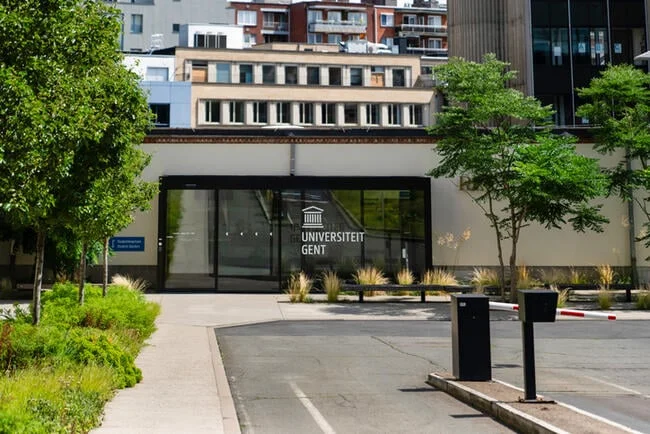
In the insular world of global academia, few controversies have stirred as much debate as the recent suspension of Nathan Cofnas by Ghent University. A postdoctoral researcher known for his controversial work in “race realism,” Cofnas finds himself at the center of a firestorm following his high-profile public accusations of plagiarism against the late Cambridge University professor, Jason Arday.
The incident, which has prompted hundreds of academics to sign an open letter in defense of Cofnas, highlights a deepening rift in modern intellectual discourse: where does the duty of “self-policing” academic misconduct end, and where does institutional protection against harassment and discriminatory rhetoric begin?
The Spark of the Controversy
The immediate catalyst for the current crisis was a series of public allegations made by Nathan Cofnas, who asserted that significant portions of Jason Arday’s Ph.D. thesis were plagiarized. Arday, a prominent scholar and a vocal advocate for racial equity, had been a celebrated figure at Cambridge. Following weeks of intense online scrutiny—much of which was fueled by the allegations leveled by Cofnas—Arday resigned from his post. Tragically, only days later, the professor was found dead in London.
In the wake of this death, Ghent University moved quickly to distance itself from its own postdoctoral researcher. On Friday, August 21, 2026, the university placed Cofnas on a one-week suspension, launching a "preliminary investigation" into his conduct. The university’s stated concerns extend beyond the plagiarism accusations; officials are investigating whether his research interests, specifically those involving "race realism" and the "hereditarian revolution," are compatible with his contractual employment obligations and whether his public behavior created a hostile environment for students and staff.
A Chronology of Escalating Tensions
To understand the severity of the current situation, one must examine the timeline of events that led to this impasse:
- Early August 2026: Nathan Cofnas publishes allegations of plagiarism against Jason Arday, drawing significant traffic and engagement on social media platforms, particularly X (formerly Twitter).
- Mid-August 2026: Arday faces a barrage of online criticism and intense public speculation regarding his academic integrity. Amid this pressure, he resigns from his position at the University of Cambridge.
- August 14, 2026: Reports confirm that Jason Arday has been found dead in London. The academic community expresses widespread shock and mourning.
- August 21, 2026: Ghent University formally suspends Nathan Cofnas. The disciplinary notice explicitly cites the need to review whether his research focus violates the scope of his employment and whether he has fostered a discriminatory environment.
- Late August 2026: An open letter, penned by supporters of academic freedom, begins circulating. By Monday afternoon, the letter garners over 700 signatures from faculty at prestigious institutions worldwide, including MIT, Duke, and UCLA.
Supporting Data: The Academic Defense
The open letter in support of Cofnas serves as a manifesto for a specific faction of the academic community that views the university’s actions as a dangerous precedent. The signatories argue that regardless of the controversial nature of Cofnas’s research, the act of identifying academic misconduct is a foundational responsibility of any scholar.

"An essential component of academic freedom is the ability to scrutinize the scholarship of other academics, regardless of their position or status," the letter asserts. "This must include the freedom to provide evidence of academic misconduct, such as plagiarism and fabrication. The pursuit of truth depends on rigorous self-policing by academics."
The signatories represent a cross-section of the hard sciences and humanities. The participation of researchers from elite institutions like the Massachusetts Institute of Technology and the University of California, Los Angeles, underscores the geographic and intellectual reach of this debate. To these scholars, the investigation into Cofnas is not merely about his behavior—it is about the integrity of the peer-review process and the danger of institutions silencing dissenters in the name of “hostile environment” policies.
Institutional Perspectives and Internal Reviews
Ghent University has remained tight-lipped regarding the specific details of the investigation, refusing to comment beyond the initial disciplinary notice shared on social media by Cofnas himself. However, the document released on Bluesky provides a window into the university’s administrative mindset.
The university is currently weighing two distinct but related issues:
- Contractual Scope: Does the research of a postdoc—specifically one focused on controversial theories of race and intelligence—conflict with the mission and values of the university?
- Conduct and Harassment: Did the intensity and nature of the plagiarism accusations constitute harassment, or contribute to a environment that violates the university’s code of conduct regarding the treatment of colleagues?
Cofnas has been candid about his expectations. Upon announcing his suspension on X, he remarked, "they will almost certainly fire me." This expectation of termination suggests a total breakdown in trust between the researcher and the institution, a state of affairs that often signals the beginning of lengthy, high-stakes litigation.
Implications for the Future of Academia
The case of Nathan Cofnas versus Ghent University serves as a case study for several systemic challenges facing 21st-century universities.

The Weaponization of Social Media
The speed at which the plagiarism allegations spread demonstrates the power—and the danger—of social media as an informal peer-review mechanism. While traditional academic journals have rigorous, slow-moving processes for addressing misconduct, the internet allows for immediate, public, and often inflammatory accusations. When these accusations involve high-profile figures, they can lead to irreparable reputational damage long before a formal institutional inquiry can take place.
The Definition of "Academic Freedom"
Universities are increasingly struggling to define the boundaries of academic freedom. Historically, this freedom protected professors from government interference. Today, the debate has shifted toward the internal governance of the university. Can an institution suppress a researcher whose work is considered offensive by the broader community, even if that research is technically within the bounds of inquiry? The Ghent investigation is testing whether an institution can penalize a scholar for the content of their private research interests when that research is perceived to underpin their public behavior.
The Ethics of "Self-Policing"
The supporters of the open letter argue that plagiarism is a fundamental crime in academia, and that those who uncover it should be protected as whistleblowers. Conversely, critics argue that when "self-policing" is performed by individuals with a history of ideological antagonism toward their targets, the process ceases to be about academic integrity and becomes a tool for harassment. The tension between these two views is unlikely to be resolved by this single case.
Conclusion
The suspension of Nathan Cofnas is a watershed moment for Ghent University and the broader academic world. It forces a reckoning with the heavy burden of academic integrity in an era of digital polarization. As the investigation proceeds, the international community will be watching to see if the university opts to prioritize the protection of institutional culture or the preservation of the traditional—and often uncomfortable—tenets of academic inquiry.
For now, the academic community remains divided. On one side, those who view the university’s actions as an act of political retribution against a non-conformist thinker; on the other, those who believe that the boundaries of civil discourse and professional conduct were irrevocably crossed. Regardless of the outcome, the shadow of Jason Arday’s death will continue to loom over this dispute, ensuring that the debate over plagiarism, race, and the responsibility of the scholar remains at the forefront of the academic agenda for the foreseeable future.