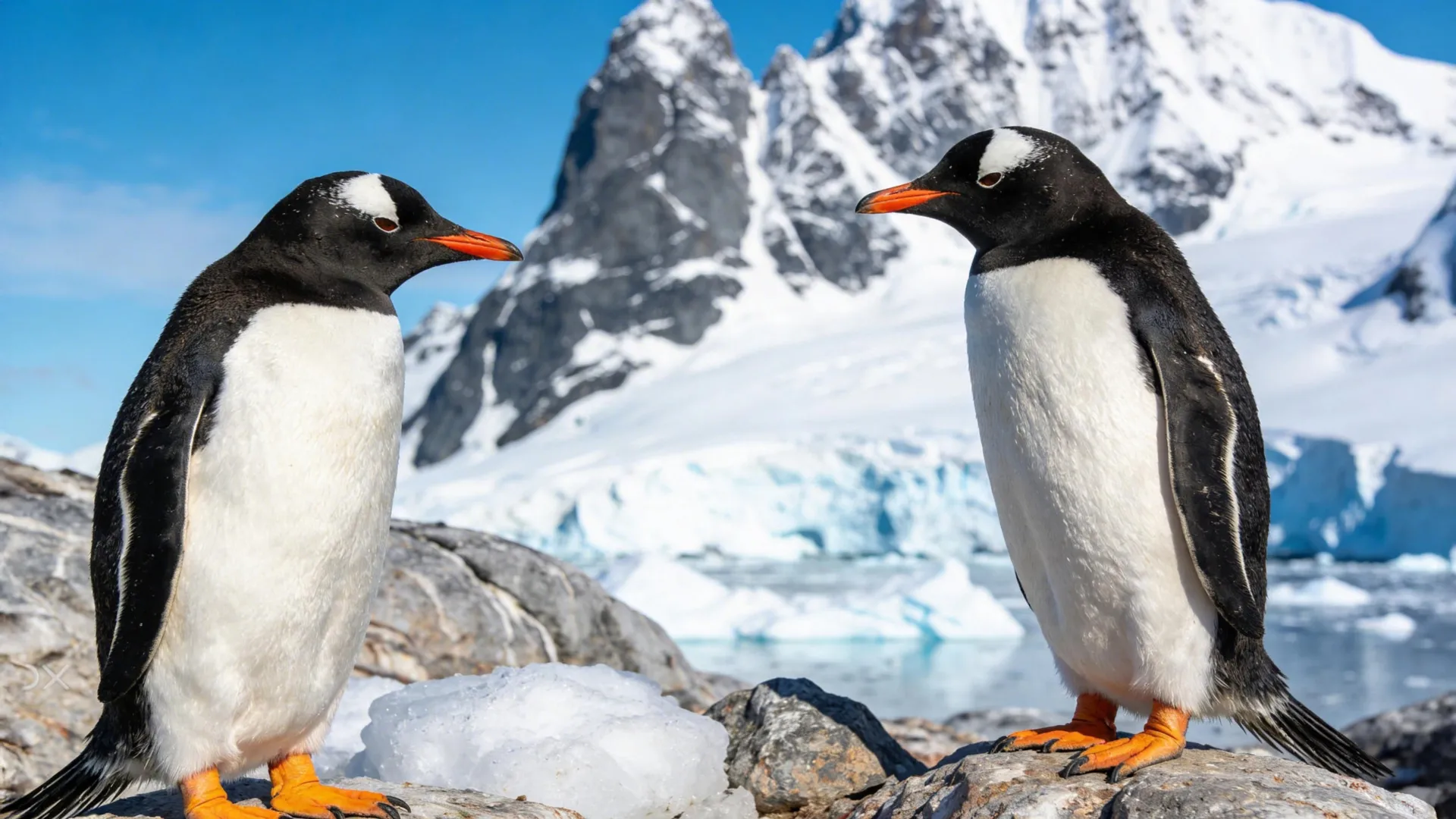
While the four-foot-tall Emperor penguin often dominates the public imagination as the quintessential Antarctic mascot, the reality of the Southern Hemisphere’s avian biodiversity is far more complex and fragmented than previously understood. For over a century, the gentoo penguin (Pygoscelis papua) was categorized by scientists as a single, globally distributed species. However, an exhaustive, multi-year genomic study led by an international team of researchers—including experts from the University of California, Berkeley, and the University of Chile—has shattered this long-held consensus.
Published in the journal Communications Biology, the research reveals that the gentoo penguin is not one species, but four. This landmark discovery marks the first time a new penguin species has been formally identified in more than 100 years. By utilizing whole-genome sequencing across nearly the entire geographic range of the genus, scientists have unveiled a "cryptic" diversity that has been hidden in plain sight, scattered across the desolate, isolated islands of the sub-Antarctic.
A Century of Taxonomic Debate
The classification of the gentoo penguin has been one of the most contentious issues in modern ornithology. For over 100 years, experts debated the nuances of their physical appearance, vocalizations, and breeding behaviors, yet no universal agreement was ever reached. Proposals for subspecies designations ranged wildly, sometimes suggesting as many as six distinct groups.
"There’s probably no species of penguin where the taxonomy has been more debated than the gentoo," said Rauri Bowie, a professor of integrative biology at UC Berkeley and a curator at the Museum of Vertebrate Zoology. "For over a century, it’s been controversial as to how many species or subspecies there are. What this paper does is move past conjecture and address that question using cutting-edge, integrative genomic approaches."
The research team, led by Juliana Vianna of Andrés Bello National University and Elie Poulin of the University of Chile, bypassed the ambiguity of traditional observation by collecting genomic data from 64 penguins across 10 breeding colonies. This massive dataset allowed for the comparison of thousands of single nucleotide polymorphisms (SNPs), effectively creating a genetic map that separated the populations into four distinct evolutionary lineages.
Chronology of Diversification
To understand how these penguins splintered into four species, researchers looked back at the evolutionary history of the genus. Roughly 22 million years ago, the common ancestor of all penguins originated in the waters near Australia and New Zealand. As the Southern Ocean evolved, the development of the Antarctic Circumpolar Current—roughly 12 million years ago—acted as a conveyor belt, facilitating the dispersal of penguins to remote archipelagoes.
The gentoo lineage itself began to diverge roughly 300,000 to 500,000 years ago. Their unique evolutionary path was driven by a combination of geographic isolation and the Antarctic Polar Front. The Polar Front is a massive, turbulent boundary in the Southern Ocean where dramatic shifts in water temperature and salinity create a biological barrier for marine life.
Because gentoos are dietary generalists—consuming whatever is available, including fish, krill, squid, and cuttlefish—they did not need to perform long-distance migrations to find food. This sedentary lifestyle, combined with their habit of returning to the same nesting sites annually, locked individual populations into specific geographic pockets. Over hundreds of thousands of years, these isolated groups adapted to local environmental pressures, eventually reinforcing their differences through natural selection.
Supporting Data: Genomic Adaptation
The study, with primary analysis led by University of Chile graduate student Daly Noll, demonstrates that these four species are not just genetically distinct on paper; their genomes reflect profound physiological adaptations to their specific corners of the globe.
- The Southern Gentoo (Pygoscelis ellsworthi): Inhabiting the Antarctic Peninsula and South Georgia, this species has evolved genes associated with fat storage and heat production, essential for surviving the brutal, sub-zero conditions of the deep south. Intriguingly, they also show genetic adaptations in light perception, likely an evolutionary response to the extreme, shifting daylight patterns and the blinding glare of Antarctic ice.
- The Eastern Gentoo (Pygoscelis taeniata): Found on the Crozet, Marion, and Macquarie Islands, these penguins show enriched genes linked to carbohydrate metabolism and superior diving performance. Their genetic profile supports enhanced oxygen transport and lung development, allowing them to forage longer in waters where prey may be less abundant.
- The Northern Gentoo (Pygoscelis papua): Restricted to the Falkland/Malvinas and Martillo Islands, this lineage displays genomic adaptations related to sustained muscle excitation and heart function, supporting the physical stamina required for their specific hunting patterns.
- The Southeastern Gentoo (Pygoscelis kerguelensis): Formally recognized for the first time by this study, this species inhabits the Kerguelen Islands—often called the "Desolation Islands"—nearly 2,000 miles from the nearest permanently inhabited land. It remains a small, vulnerable population defined by its distinct genetic signature.
Official Responses and Conservation Imperatives
The recognition of these four species carries significant weight for international conservation policy. Juliana Vianna emphasized that while the southern species currently appears robust, the sub-Antarctic populations face an uncertain future.
"It’s very important that conservation institutions in all the different countries involved recognize and take appropriate action to save these three gentoo penguin species," Vianna stated. These islands are governed by a complex patchwork of nations, including Chile, South Africa, France, the Netherlands, Australia, and New Zealand. Coordinating a protection strategy for species that are endemic to specific, isolated islands requires a level of international cooperation that has historically been difficult to achieve.
Bowie noted that the value of this research extends beyond the simple act of naming new species. By building such a comprehensive genomic library, the team has provided a tool that can be used to monitor the health and resilience of penguin populations worldwide. This is particularly relevant as the scientific community races to understand how species might cope with avian influenza and other emerging threats.
Implications: The Climate Change Paradox
The study utilized climate modeling to project the survival of these four species through the year 2050. The results present a stark paradox: while the Southern Gentoo (Pygoscelis ellsworthi) is projected to see its habitat range expand as Antarctica warms, the island-dwelling species face a potential existential crisis.
As temperatures rise, the niche environments on these sub-Antarctic islands may disappear. Unlike land animals that can migrate to higher latitudes, these island-dwelling penguins are "trapped" by their geography. If their specific island habitat becomes unsuitable, there is often no alternative landmass nearby for them to colonize.
"In terms of climate change, island species that have really low population sizes could be compared with the sub-Antarctic gentoo penguins," Vianna warned. "They will find no place to go after a change in their environment. Those islands are very isolated, and these penguins cannot adapt easily to colonize any other region."
This vulnerability is compounded by human activity, including commercial fishing competition, habitat destruction, and the introduction of invasive species like rats and dogs to these remote islands. The transition from managing the gentoo as one "common" species to managing them as four distinct species—three of which are potentially endangered—demands a rapid shift in environmental policy.
Conclusion
The discovery of Pygoscelis kerguelensis and the elevation of three former subspecies to full species status serves as a reminder of how much remains to be learned about the Earth’s biodiversity. It also highlights the transformative power of whole-genome sequencing in conservation. As climate change continues to reshape the Southern Hemisphere, the ability to identify, understand, and protect these unique genetic lineages will be the deciding factor in whether these remarkable birds persist into the next century or fade into the "desolation" of the islands they call home.
The research team, which included biologists from across the globe—spanning Argentina, Brazil, Spain, the United Kingdom, and beyond—has set a new standard for integrative biology. By bridging the gap between historical taxonomy and modern genomic data, they have not only clarified the history of the gentoo penguin but have also provided the essential roadmap required to safeguard their future.