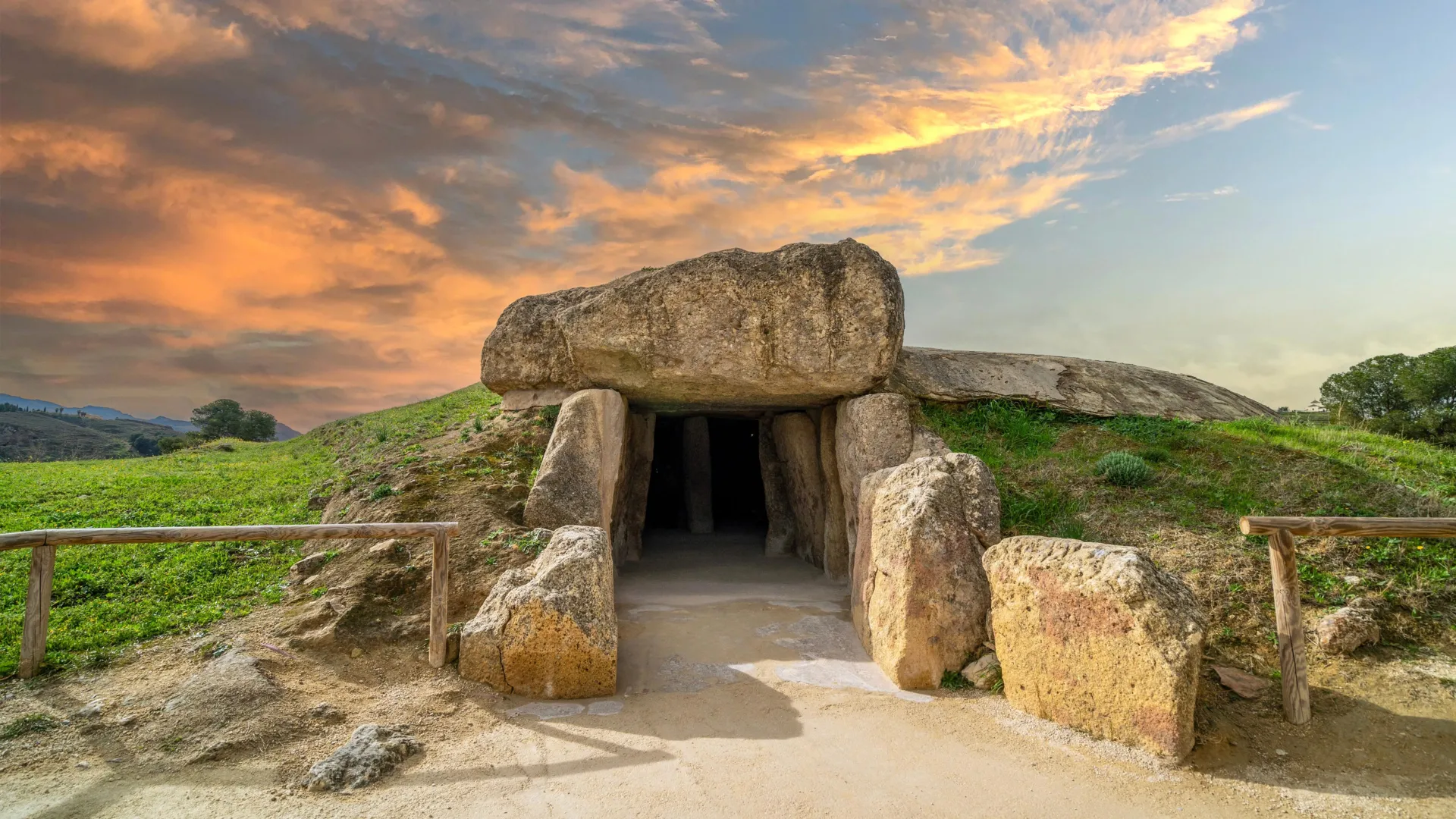
A monumental shift in human history, long whispered through the silent stone architecture of Europe, has finally been given a voice. A groundbreaking genetic study, recently published in the journal Nature Ecology & Evolution, has unveiled a dramatic demographic upheaval that occurred in northern France approximately 5,000 years ago. By analyzing the DNA of 132 individuals interred in a sprawling megalithic tomb near Bury, researchers have documented a near-total population collapse and subsequent replacement, shedding light on one of the most enigmatic chapters of the Stone Age.
The Discovery at Bury: A Tale of Two Eras
The site, a megalithic tomb situated roughly 50 kilometers north of Paris, has long served as a testament to the sophisticated engineering capabilities of Neolithic societies. However, it is the biological history locked within the remains that has provided the most startling revelations. The study, conducted by an international team of researchers, identifies two distinct phases of burial usage separated by a catastrophic demographic void around 3000 BC.
Genetic sequencing of the remains reveals that the individuals interred at the site before and after this period of decline share virtually no ancestral commonality. This "genetic break" indicates that the original inhabitants of the region—who shared deep ancestral ties with early farming populations from northern France and Germany—did not merely evolve or assimilate; they vanished, effectively replaced by migrating groups originating from southern France and the Iberian Peninsula.
Chronology of a Disappearing Civilization
To understand the scope of this transformation, researchers mapped the temporal progression of the site’s usage. The pre-collapse era paints a picture of a settled, intergenerational society. The genetic signatures from these earlier layers reflect communities that prioritized kin-based burials, with multiple generations of extended families resting within the same tomb. This suggests a culture deeply rooted in ancestry, collective land stewardship, and stable social structures.
The transition, occurring around 3000 BC, serves as a dark boundary line in the archaeological record. The "void" suggests that the region experienced a period of extreme instability, where mortality rates soared and birth rates plummeted. When the site was reclaimed for burials following this collapse, the genetic makeup of the population had shifted fundamentally. The newcomers brought with them not only different genetic lineages but also a distinctly different approach to social organization. The egalitarian, family-oriented burial patterns of the past were replaced by highly selective burial rites, increasingly dominated by single male lineages—a hallmark of a more hierarchical, perhaps patriarchal, social order.
Supporting Data: Pathogens and the "Perfect Storm"
The question of what caused such a profound societal collapse has haunted archaeologists for decades. By employing advanced metagenomic techniques, the research team was able to extract and analyze ancient DNA material preserved within the petrous bone of the skull. This high-resolution approach allowed for the identification of specific pathogens circulating within these ancient communities.
The Role of Ancient Disease
The study confirmed the presence of Yersinia pestis, the bacterium notorious for causing the plague, as well as Borrelia recurrentis, the pathogen responsible for louse-borne relapsing fever. While the presence of these pathogens provides a compelling narrative, the researchers urge caution against attributing the entire collapse to a single epidemic.
"We can confirm that plague was present, but the evidence does not support it as the sole cause of the population collapse," noted Martin Sikora, associate professor at the University of Copenhagen and senior author of the study. Instead, the team proposes a "syndemic" model: a combination of disease, environmental degradation, and localized socio-political crises. This "perfect storm" likely weakened the original population to such a degree that they were unable to recover, leaving the landscape vulnerable to the influx of migrant groups from the south.
The Demographic Crisis
Further evidence of this crisis is written in the skeletal record. Archaeologists observed exceptionally high mortality rates among the pre-collapse population, with a disproportionate number of children and young adults failing to survive to maturity. "The demographic pattern is a strong indicator of crisis," explained Laure Salanova, research director at France’s National Centre for Scientific Research (CNRS). This pattern of selective mortality suggests a society under extreme duress, likely struggling to maintain food security or basic sanitation in the face of widespread environmental or systemic collapse.
Official Responses and Scientific Perspective
The international team behind this study—which includes leading experts from the University of Copenhagen and the CNRS—has emphasized the transformative nature of these findings. Frederik Valeur Seersholm, assistant professor at the Globe Institute and lead author, highlights the significance of the genetic divide. "We see a clear genetic break between the two periods," he states. "The earlier group resembles Stone Age farming populations from northern France and Germany, while the later group shows strong genetic links to southern France and the Iberian Peninsula."
The scholarly consensus emerging from this study is that the "Neolithic Package"—the suite of technologies, social structures, and religious beliefs that defined the era—was not as stable as previously believed. The shift in social hierarchy, evidenced by the transition from family-based burials to male-dominated lineage-based burials, suggests that the migration was not merely a movement of people, but a fundamental restructuring of society.
Implications: The End of the Megalithic Age
The implications of the Bury study extend far beyond the borders of northern France. For decades, archaeologists have struggled to explain why the tradition of constructing massive stone monuments—megaliths—began to wane and eventually disappear across Europe around the same period.
A Continental Phenomenon
The findings at Bury provide a key piece of the puzzle. If a population collapse of this magnitude was occurring in northern France, it is highly probable that similar demographic shocks were rippling across northern and western Europe. The study suggests that the builders of the great megalithic monuments were not simply losing interest in their religious or architectural traditions; they were, in many cases, disappearing as a biological and social entity.
"We now see that the end of these monumental constructions coincides with the disappearance of the population that built them," Seersholm noted. This reframes the end of the Megalithic Age from a cultural evolution into a tragic demographic replacement.
Future Directions for Ancient DNA Research
This study marks a milestone in the use of paleogenetics to interpret archaeological sites. By combining genomic data with traditional osteological analysis and environmental modeling, the researchers have managed to reconstruct the lives and deaths of people who lived five millennia ago with unprecedented clarity.
Future research is expected to focus on mapping this "genetic break" across other sites in Europe. If the collapse in northern France was indeed part of a wider continental crisis, the DNA record should eventually reveal a mosaic of similar shifts in neighboring regions. This will allow historians to move away from monolithic theories of European prehistory and toward a more nuanced, dynamic understanding of the Stone Age—a period of history characterized not by static traditions, but by rapid movement, existential crisis, and profound human resilience.
In conclusion, the study of the Bury site serves as a sobering reminder of the fragility of human civilizations. It suggests that even the most established societies, capable of moving multi-ton stones and building monuments that defy time, are susceptible to the converging pressures of disease, environment, and migration. The silent stones of the megalithic tombs, once thought to be symbols of eternal power, now stand as markers of a vanished people—a testament to a time when a sudden, violent transition reshaped the map of Europe forever.