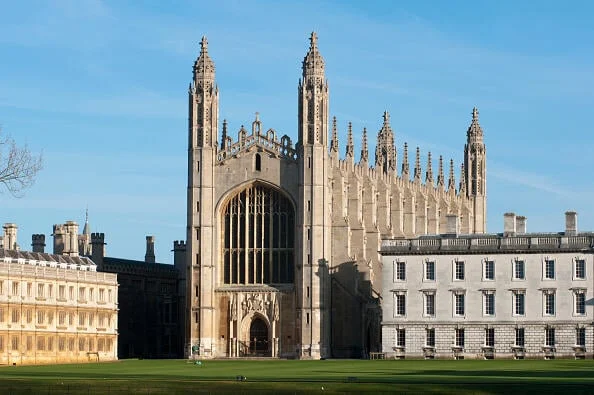
The University of Cambridge, one of the world’s most prestigious academic institutions, finds itself at a critical juncture. Following the resignation of Professor Jason Arday—who made history as the university’s youngest Black professor—the institution has announced a sweeping review of its senior appointment processes. Despite Arday’s departure on August 5, Cambridge officials have confirmed that an internal inquiry into his academic conduct and the circumstances surrounding his hiring will proceed, signaling a commitment to addressing deeper systemic concerns regarding research integrity and institutional due diligence.
The controversy, which has sent shockwaves through the UK’s higher education sector, centers on allegations of plagiarism and questions regarding the legitimacy of Arday’s academic qualifications. As the university faces mounting pressure to ensure transparency, the case has ignited a broader debate about how top-tier institutions vet candidates and maintain the rigor of their research standards.
The Chronology of a High-Profile Appointment and Exit
The trajectory of Jason Arday’s career at Cambridge was meteoric, marked by significant public celebration before descending into a complex web of allegations.
- Early 2023: Jason Arday is appointed as a professor at the University of Cambridge. The appointment is lauded as a milestone for diversity and inclusion, with Arday widely celebrated as the youngest Black person to ever hold a professorship at the university.
- Summer 2026: Scrutiny intensifies following allegations that Arday’s past work contained plagiarized material. Specifically, questions are raised regarding his Ph.D. thesis and various journal papers.
- August 5, 2026: Facing relentless public and institutional pressure, Arday submits his resignation. In his statement, he cites the toll of public scrutiny, though he maintains that while he made "mistakes," he denies charges of intentional academic misconduct.
- August 7, 2026: Cambridge University issues a formal statement confirming that despite the resignation, the investigation into Arday’s "academic qualifications and honorary appointments" will continue.
- Mid-August 2026: The University of Glasgow—where Arday held a position from January 2022 to March 2023—announces its own internal review to understand the facts surrounding his time at their institution.
The Nature of the Allegations
At the heart of the crisis are accusations of academic dishonesty. Critics have pointed to specific passages in Arday’s doctoral thesis and published journal articles, alleging that they were lifted from other sources without appropriate attribution.
Arday has responded to these claims by acknowledging that errors were made during the drafting and publication process. However, he has consistently drawn a distinction between clerical errors or oversight and the intentional act of plagiarism. His defense is bolstered by the fact that Liverpool John Moores University, which awarded him his doctorate, previously conducted an investigation into similar allegations and ultimately dismissed them. Despite this, the current storm at Cambridge—fueled by "new information"—has compelled the university to revisit these claims with greater severity.
Official Responses and Internal Investigations
The University of Cambridge has adopted a posture of accountability, though it faces skepticism from some quarters. In its latest update, the university stated it would "continue to investigate the circumstances around Jason Arday’s appointment and tenure."
Beyond the specific case of Arday, the university has committed to a wider institutional audit. The university’s Research Policy Committee has been tasked with a thorough review of the institution’s existing misconduct-in-research policy. Cambridge has also pledged to fold the findings of the Arday inquiry into a comprehensive review of its broader appointment processes for senior academic roles.

The University of Glasgow, mirroring this concern for reputational management, has similarly initiated an inquiry. A spokesperson noted that the university’s goal is to "understand all the facts and learn lessons for the future," underscoring the interconnected nature of academic appointments where a candidate’s history at one institution informs their selection at another.
Calls for Independent Oversight
As the internal Cambridge investigation proceeds, voices within the academic community have expressed concern that an "in-house" probe may lack the necessary impartiality to restore public trust.
Professor Priyamvada Gopal, a prominent scholar of postcolonial studies at Cambridge, has been a vocal proponent of external involvement. In interviews with the BBC, she argued that the investigation should be conducted by a panel comprising not just senior Cambridge academics, but also scholars from other institutions who can provide a neutral perspective.
There has also been speculation regarding the involvement of the Office for Students (OfS), the English higher education regulator. While some academics have called for the OfS to step in, the regulator has so far declined to comment on the matter, leaving the burden of proof squarely on the shoulders of the university administration. The primary concern among critics is that an internal investigation might prioritize the protection of the institution’s brand over a transparent accounting of potential systemic failures in the vetting process.
Implications for Higher Education
The Arday case serves as a cautionary tale for universities navigating the tension between ambitious diversity, equity, and inclusion (DEI) goals and the rigorous, often slow-moving demands of academic verification.
1. The Vetting Gap
The situation has exposed a potential "vetting gap" in how senior academic appointments are handled. When high-profile candidates are fast-tracked for roles due to their potential impact on institutional diversity, there is a risk that the standard "due diligence" processes—such as independent verification of every citation or previous grant application—might be inadvertently expedited.
2. Research Integrity in the Digital Age
The allegations of plagiarism in this case highlight the increasing ease with which academic work can be scrutinized by the public. With the rise of AI-driven plagiarism detection tools and a more vigilant academic Twitter/X, "ghosts" from an academic’s past can be unearthed with unprecedented speed. Universities must now contend with a digital landscape where past errors are permanently discoverable, necessitating more robust and proactive vetting protocols.

3. Institutional Reputation and Financial Risk
For a top-ranked institution like Cambridge, the reputational fallout is significant. The university’s ability to attract research funding and high-caliber students is predicated on the perception of its academic excellence and integrity. If the public perceives that the university’s appointment processes are flawed, it could lead to a decline in trust that impacts everything from philanthropic donations to global rankings.
4. The Future of Arday’s Work
Despite the controversy, the publishing industry remains largely unmoved by the academic scandal. Simon & Schuster, the publisher of Arday’s upcoming memoir, has confirmed that it intends to move forward with the publication. This creates a fascinating tension: while the academic world views Arday through the lens of a failed vetting process and alleged misconduct, the commercial world sees him as an author whose story remains relevant to the public discourse on race and education.
Conclusion: A Turning Point for Cambridge
The resignation of Jason Arday has not closed the book on this saga; rather, it has opened a new chapter focused on the internal mechanics of one of the world’s oldest universities. The commitment to reviewing the appointment process and the misconduct-in-research policy is a necessary step, but the true test for Cambridge will be the transparency of its final report.
If the university fails to provide an honest assessment of how the appointment was handled—and why the red flags were seemingly overlooked—it risks alienating its own faculty and staff. Conversely, if it uses this moment to modernize its vetting protocols and clarify its ethical standards, it could emerge as a leader in academic accountability.
As the inquiry continues, the academic community will be watching closely. The question is no longer just about one individual’s career, but about the integrity of the institution itself. In an era where academic prestige is increasingly scrutinized, Cambridge’s ability to "learn lessons for the future" will determine whether this case becomes a footnote in its history or a catalyst for fundamental change.