The landscape of international football is shifting beneath our feet. As the group stages of the current tournament reach their crescendo, the narratives of legacy, redemption, and historic breakthroughs are colliding. From the humid stadiums hosting the world’s elite to the seismic movements in the European club transfer market, the pulse of the sport has never been more frantic.
Ivory Coast’s Historic Ascent to the Knockout Rounds
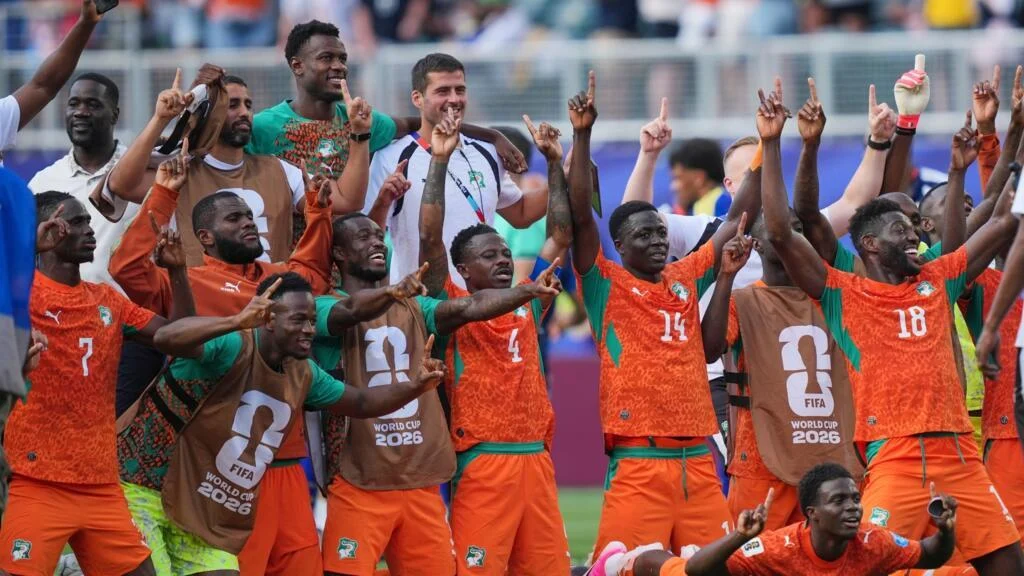
In a display of tactical discipline and clinical finishing, the Ivory Coast national team—affectionately known as The Elephants—has etched its name into the history books. On Thursday, they secured a decisive 2-0 victory over Curaçao, a result that propelled the nation into the World Cup knockout rounds for the first time in their four appearances at the tournament.
For years, the Ivorian side has been characterized by flashes of individual brilliance, yet they have often stumbled at the final hurdle of the group stages. Thursday’s match was different. The Elephants maintained a disciplined shape, stifling the Curaçao attack before capitalizing on defensive lapses to net two crucial goals. By finishing second in their group, the Ivorians have set up a daunting, yet historic, Round of 16 clash scheduled for June 30. They now await the conclusion of the Group I showdown between heavyweights France and Norway to determine their next opponent.
A Chronology of Chaos: Group Stage Drama
The matchday cycle was defined by a series of dramatic twists that have left pundits and fans reeling.
The Upsets: Ecuador’s Late Heroics
Perhaps the most shocking result of the day occurred when Ecuador, known as La Tri, pulled off a 2-1 upset against the juggernaut that is Germany. For much of the match, the Germans dictated the tempo, but Ecuador remained resilient. The turning point arrived in the dying minutes of the game, as an incisive counter-attack allowed Ecuador to snatch a late winner. With four points secured, Ecuador has officially guaranteed their progression to the Round of 16, qualifying as one of the tournament’s best third-placed teams—a testament to their tactical adaptability and grit.
The Dutch Dominance and Tunisian Heartbreak
Conversely, Group F saw the end of the road for Tunisia. The Carthage Eagles faced a formidable Netherlands side, ultimately falling 3-1. It was a third straight defeat for the North African side, who struggled to find their rhythm throughout the tournament. The Netherlands, meanwhile, proved their class, topping the group with clinical efficiency. Japan, who secured a hard-fought 1-1 draw against Sweden, claimed the second spot, showcasing their technical prowess and ability to thrive under pressure.
The High-Stakes Horizon
The tournament does not pause for breath. On Friday, the spotlight turns to Group I, where France faces a major test against Norway. The winner of this clash will claim the top spot in the group, avoiding the potential pitfalls of a difficult bracket in the next round.
Elsewhere, the pressure is mounting for Senegal. The Lions of Teranga find themselves at a crossroads; following defeats to both France and Norway, their margin for error has evaporated. To keep their hopes alive as one of the best third-placed teams, Senegal must secure a convincing victory over Iraq on Friday. The weight of expectation is heavy, and the tactical adjustments made by their coaching staff in the coming 24 hours will define their tournament legacy.
Spain’s Unfinished Business
In Group H, the powerhouse that is Spain remains in a state of purgatory. Despite an impressive rise in form and a clear tactical identity, La Roja has yet to seal their qualification. Their upcoming match against Uruguay is a must-win scenario, as the Spanish look to translate their possession-based dominance into the goals required to ensure their path to the knockout phase is not prematurely cut short.
Supporting Data and Tactical Analysis
The statistical breakdown of the current tournament reveals a trend toward parity. Smaller nations are increasingly employing low-block defensive structures that frustrate high-possession teams, as evidenced by the Curaçao resistance until the late second half.
- Ivory Coast Efficiency: The Ivorian victory was built on a 58% possession rate and a high conversion rate on set-pieces, an area where they have historically struggled.
- The Ecuador Model: Ecuador’s victory over Germany serves as a masterclass in transition football. Despite having only 38% possession, they registered more shots on target than their opponents, highlighting the efficacy of their counter-attacking strategy.
- Group F Parity: The Netherlands’ finish at the top of Group F was expected, but Japan’s ability to secure points through a high-pressing game against Sweden illustrates the closing gap between traditional European powerhouses and Asian confederation teams.
Official Responses and Managerial Sentiment
The post-match atmosphere in the mixed zones was filled with a mix of exhaustion and euphoria.
The Ivory Coast head coach, addressing the media after the win against Curaçao, stated: "This is a victory for the country. We have waited four cycles to see this happen. The players stuck to the plan, and we proved that we belong on the world stage."
In contrast, the mood in the Tunisian camp was somber. Their manager expressed disappointment but emphasized the need for structural reform within the federation, noting that the team lacked the "physical conditioning and tactical discipline" required to compete with the likes of the Netherlands over 90 minutes.
Regarding the upcoming clash between France and Norway, the French manager, Didier Deschamps, kept his cards close to his chest: "Norway is a physical, intelligent side. We are not thinking about the Round of 16 yet. Our priority is the top of the group. Friday will be a chess match."
The Transfer Market: A New Era for Alexia Putellas
Beyond the international tournament, the football world was shaken by news of a significant transfer. Alexia Putellas, the two-time Ballon d’Or winner (2021, 2022), is set to begin a new chapter in her storied career. After 14 years at FC Barcelona, where she became a living legend and collected every trophy available, Putellas will join the Women’s Super League (WSL) side London City Lionesses.
This move is widely seen as a major coup for the WSL. Putellas’s arrival in London signals a shift in the gravity of the women’s game, as the league continues to attract world-class talent, further cementing its position as the premier competition in women’s club football. The implications of this transfer go beyond the pitch; it marks the end of an era at Barcelona and the beginning of an ambitious project in London.
Racing News: The Acropolis Rally
While the football world remains locked in its tournament drama, the world of rally racing has also witnessed a shift in momentum. Sébastien Ogier has surged into the lead at the Acropolis Rally in Greece. Known for his technical mastery on rugged terrain, Ogier navigated the challenging, dust-choked stages with precision, outpacing his rivals to establish a lead that will be difficult to overcome as the rally approaches its final stages this weekend.
Implications and Looking Ahead
As we look toward the knockout rounds, the implications of these group-stage results are profound. Ivory Coast’s emergence signals a shift in the continental hierarchy, while Ecuador’s success serves as a reminder that the "best third-placed team" rule often creates the most dangerous floaters in the bracket.
The pressure is now on the established favorites to prove that their group-stage performance was not a fluke. With the knockout rounds looming, the tournament is set to transition from a test of endurance to a high-stakes series of one-off battles. For Senegal, Spain, and others, the next 48 hours represent a fight for survival. For the fans, the coming days represent the pure, unadulterated essence of the beautiful game: where history is written, and giants are humbled.