In a landmark report that challenges the foundational pillars of global drug enforcement, the International Independent Expert Mechanism to Advance Racial Justice and Equality in Law Enforcement has issued a searing indictment of current drug policies. On Thursday, the UN-affiliated body warned that punitive drug control frameworks—often modeled after the US-led “War on Drugs”—are not merely failing to curb drug use but are actively serving as engines of systemic racism, disproportionately targeting Africans and people of African descent across the globe.
The report, which is set to be presented to the UN Human Rights Council on September 29, 2026, argues that drug control systems are "fundamentally infused" with racial bias. By shifting the discourse from criminal justice to human rights and public health, the experts are calling for a global paradigm shift, demanding that governments dismantle the punitive mechanisms that have entrenched racial inequality for decades.
The Core Findings: A Legacy of Colonialism and Control
The Expert Mechanism’s report posits that the contemporary global drug enforcement apparatus is not a neutral system but one deeply rooted in the legacies of colonialism, enslavement, and institutionalized white supremacy. The experts argue that the globalization of prohibitionist drug control has created a "racialized" policing landscape.
Systemic Bias in Enforcement
The research highlights that the disparate impact of drug laws is not a byproduct of higher drug usage rates among Black communities. Instead, it is the result of entrenched patterns of racial discrimination embedded in law and practice. According to the report, Africans and people of African descent face an escalating series of hurdles at every stage of the criminal justice process:
- Racial Profiling: Disproportionate targeting during initial stops and questioning.
- Over-Policing: The concentration of law enforcement resources in Black neighborhoods, creating a self-fulfilling prophecy of higher arrest statistics.
- Judicial Disparity: Biased outcomes in prosecution and sentencing, where individuals of African descent consistently receive harsher penalties than their counterparts for identical offenses.
- Collateral Consequences: The enduring, lifelong impacts of a criminal record, which hinder access to housing, employment, and education, thereby perpetuating a cycle of poverty and marginalization.
A Chronology of the “War on Drugs” and Its Global Reach
To understand how these disparities became entrenched, one must look at the historical trajectory of drug policy, particularly the shift toward militarized prohibition.
1971: The Genesis
On June 17, 1971, then-US President Richard Nixon officially declared a “War on Drugs.” This declaration signaled a shift from viewing addiction as a public health issue to treating it as a matter of national security. The creation of the Drug Enforcement Agency (DEA) solidified this approach, institutionalizing a focus on interdiction, arrest, and incarceration.
1980s: The Crack Cocaine Disparity
Throughout the 1980s, the US government intensified its campaign against crack cocaine. Research from the Equal Justice Initiative indicates that the sentencing disparities between crack and powder cocaine created a massive racial double standard. These laws led to the mass incarceration of Black Americans, a trend that the UN report suggests has been exported globally.
2000s–2020s: Global Proliferation
The “War on Drugs” sentiment moved beyond US borders, influencing law enforcement practices in nations ranging from Canada to the Philippines.
- In Canada: Recent studies have shown that despite similar rates of drug use across racial groups, Black and Indigenous Canadians remain significantly more likely to be arrested for drug-related offenses.
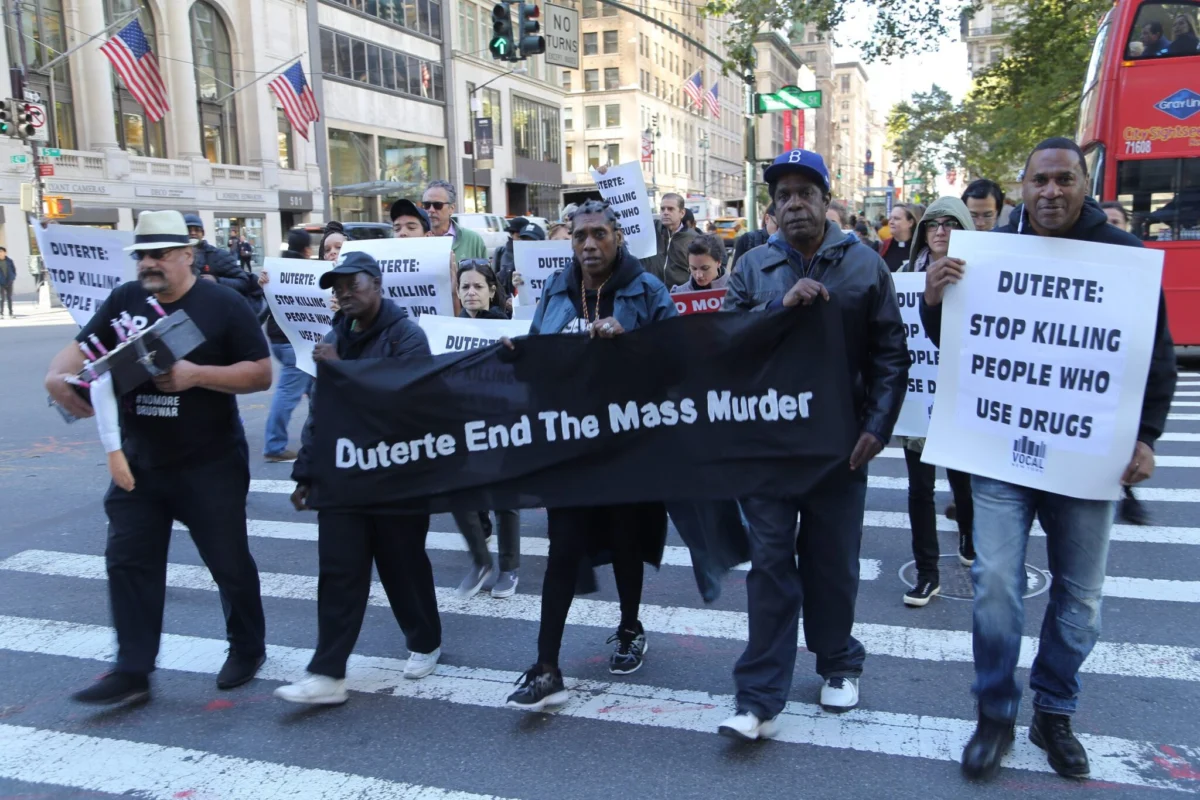
- In the Philippines: The government’s anti-drug campaigns, characterized by human rights organizations as involving extrajudicial killings, have highlighted the deadly consequences of prioritizing punitive measures over community-based care.
2021: Establishment of the Expert Mechanism
The UN Human Rights Council established the Expert Mechanism via resolutions 47/21 and 56/13. Its specific mandate is to investigate and propose transformative changes for racial justice and equality in law enforcement worldwide. The 2026 report represents a culmination of three years of investigative work.
Supporting Data and Collaborative Research
The UN report does not stand alone. It draws upon decades of documentation from human rights watchdogs and civil society organizations that have long decried the intersection of drug policy and racial injustice.
- Human Rights Watch (HRW): HRW has spent years documenting how drug policies erode the right to health, the right to a fair trial, and the right to freedom from arbitrary detention. Their reports consistently highlight that drug prohibition disproportionately impacts marginalized populations, particularly those who are economically disadvantaged and racially stigmatized.
- Amnesty International: By advocating for the decriminalization of personal drug use, Amnesty International has provided a blueprint for how nations can move away from punitive models. Their research emphasizes that treating drug use as a health issue reduces the burden on the criminal justice system and addresses the root causes of addiction.
- UN Human Rights Office (OHCHR): Prior findings by various UN bodies have corroborated the Expert Mechanism’s claims, noting that people of African descent are statistically more likely to be subjected to the entire spectrum of criminalization—from initial stop-and-search to final sentencing.
Official Responses and Calls for Reform
The Expert Mechanism is calling for a "broader rethinking" of current drug policies. They argue that incremental, isolated reforms are insufficient. Instead, they propose a structural transformation centered on three pillars:
- Prioritization of Human Rights: Drug laws must be rewritten to ensure they align with international human rights standards, ensuring the dignity and equality of all individuals regardless of race.
- Public Health Integration: Moving away from incarceration toward community-based support, harm reduction, and healthcare services. This includes removing criminal penalties for personal drug possession.
- Restorative Justice: Acknowledging the historical harm caused by the "War on Drugs" and implementing policies that address the specific needs of communities disproportionately harmed by previous enforcement strategies.
While many states have yet to formally respond to the report, activists are hopeful that the upcoming 63rd session of the Human Rights Council will serve as a catalyst for a global debate on the necessity of dismantling the prohibitionist status quo.
Implications: The Path Forward
The implications of the Expert Mechanism’s findings are profound. If the international community adopts these recommendations, it would represent the most significant shift in global drug policy since the mid-20th century.
Challenging the Status Quo
The report serves as a direct challenge to the "tough on crime" narrative that has dominated political discourse for over 50 years. By linking this narrative to racial discrimination, the Expert Mechanism forces world leaders to confront the reality that their current drug policies are actively sustaining racial inequality.
The Human Cost
Beyond statistics and policy, the report highlights the human cost of current laws. Millions of lives have been disrupted, families separated, and potential squandered due to criminal convictions that disproportionately target Black communities. The move toward a public health-centered model is not just a policy preference; it is, according to the experts, a moral imperative.
Looking Toward September 29
As the report moves to the UN Human Rights Council, the global community will be watching closely. The session on September 29, 2026, will be a litmus test for whether the international community is prepared to move past the failed experiments of the 20th century. The Expert Mechanism has laid the groundwork for a transition that prioritizes racial justice, equity, and human dignity over the outdated and discriminatory mechanisms of the past.
In conclusion, the message from the UN is clear: The "War on Drugs" has not only failed to stop the flow of illicit substances; it has successfully functioned as a tool for systemic oppression. To dismantle racism, the world must dismantle the drug policies that provide its modern-day framework.