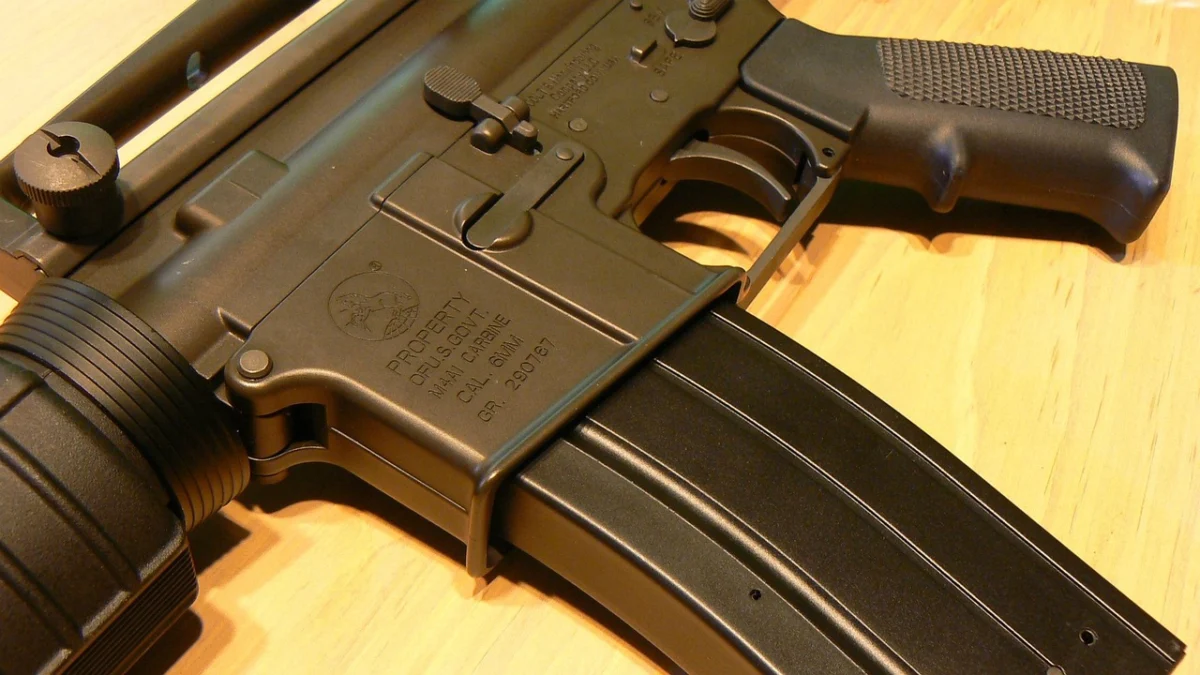
In a significant judicial development that reverberates through the American legal landscape, the United States Court of Appeals for the Third Circuit issued a sweeping ruling on Friday, declaring New Jersey’s stringent bans on assault firearms and large-capacity magazines unconstitutional. The 10-5 decision, rendered en banc, marks the first time a federal appellate court has invalidated a state-level assault weapons ban, setting the stage for a potential constitutional showdown at the Supreme Court.
The Core Ruling: Applying the Bruen Standard
The majority opinion, authored by Judge Freeman, centered on the analytical framework established by the U.S. Supreme Court in the 2022 landmark case New York State Rifle & Pistol Association v. Bruen. Under the Bruen test, firearm regulations must be deeply rooted in the nation’s historical tradition of gun regulation to withstand constitutional scrutiny.
The court reached two primary conclusions: first, that New Jersey’s specific prohibition on Colt AR-15 rifles is unconstitutional; and second, that the state’s restriction on magazines capable of holding more than 10 rounds similarly violates the Second Amendment. By expanding the lower court’s order to encompass the entire class of semi-automatic rifles, the Third Circuit has significantly narrowed the regulatory authority of states regarding modern firearm technology.
The majority’s reasoning rested on the concept of "common use." Citing lower court findings, the judges noted that approximately 24 million AR-15-style rifles are currently in circulation across the United States. Because these firearms are widely utilized for lawful activities—including self-defense, competitive target shooting, hunting, and pest control—the court determined they are protected under the Second Amendment. The ruling emphasized that New Jersey failed to provide sufficient evidence to rebut the conclusion that these firearms are "commonly owned" by law-abiding citizens.
Chronology: The Evolution of New Jersey’s Restrictions
To understand the gravity of the Third Circuit’s decision, one must examine the legislative timeline of New Jersey’s firearm regulations:
- 1990: New Jersey takes its first significant legislative step to regulate ammunition capacity, imposing initial restrictions on large-capacity magazines.
- 2018: Under then-Governor Phil Murphy’s administration, the state legislature amended the existing law, tightening the definition of "large capacity" by lowering the permissible round count from 15 to 10.
- The Legal Challenge: The Association of New Jersey Rifle and Pistol Clubs, bolstered by support from the National Rifle Association (NRA), filed suit, arguing that these restrictions infringed upon the rights of citizens to keep and bear arms as protected by the Second Amendment.
- June 2025: The Third Circuit Court of Appeals issues its en banc decision, effectively overturning the lower court’s previous validation of the state’s magazine capacity limits.
The Dissent: A Clash of Constitutional Interpretations
The 10-5 split underscores the deep ideological divide regarding the scope of the Second Amendment. Writing in dissent, Judge Patty Shwartz—joined by three other colleagues—argued that the majority fundamentally misapplied the Bruen standard by focusing on modern popularity rather than historical tradition.
"The Majority, however, holds that states cannot regulate weapons that are currently popular," Judge Shwartz wrote. "This approach adopts a contemporary lens, even though the Supreme Court tells us that we are to keep our eye on the history and tradition of banning dangerous and unusual weapons, like the semi-automatic rifles equipped with large capacity magazines that gunmen have continued to use to commit crimes and mass shootings."
The dissenters argued that the Second Amendment was never intended to be an absolute right to own any weapon regardless of its lethality. They posited that the majority’s decision effectively ties the hands of state legislatures, preventing them from addressing public safety concerns related to high-capacity weaponry in an era of frequent mass shootings.
Supporting Data and Legal Context
The Third Circuit’s decision arrives amid a fractured federal judiciary. The legal battle over assault weapons has resulted in a "circuit split," with various appeals courts reaching conflicting conclusions.
For instance, in April 2025, the First Circuit Court of Appeals upheld Massachusetts’ assault weapons ban, ruling that such restrictions were consistent with the Second Amendment. Other circuits have similarly sustained bans in their respective jurisdictions, citing public safety and the "dangerous and unusual" nature of high-capacity semi-automatic rifles.
This inconsistency across federal courts makes the Third Circuit’s ruling particularly consequential. The Supreme Court has already signaled that it is prepared to resolve this national impasse, having agreed to hear consolidated challenges to assault weapons bans in Illinois and Connecticut. Legal experts anticipate that oral arguments for these cases will be scheduled for the upcoming fall term, positioning the Supreme Court to provide the final word on the constitutionality of state-level bans.
Broader Implications: A New Era for Gun Control
The implications of the Third Circuit ruling extend far beyond the borders of New Jersey.
1. Legislative Uncertainty
States with similar assault weapons bans—including California, New York, and Maryland—are now facing increased pressure. The Third Circuit’s application of the "common use" standard suggests that as long as a firearm is widely owned, its prohibition is likely to fail judicial review. Legislative bodies may find themselves forced to pivot toward different regulatory strategies, such as permit-to-purchase systems or age restrictions, which may be more likely to survive scrutiny under Bruen.
2. The Supreme Court’s Shadow
All eyes are now turned toward the U.S. Supreme Court. With the Illinois and Connecticut cases pending, the Third Circuit’s decision provides a robust, pro-Second Amendment counter-narrative that the conservative majority on the Supreme Court may consider when drafting their eventual opinion. If the Supreme Court adopts the Third Circuit’s reasoning, it would effectively invalidate assault weapon bans nationwide.
3. Public Safety vs. Individual Rights
The ruling reignites the perpetual debate over the balance between individual liberty and public safety. Proponents of the ban argue that semi-automatic rifles with large-capacity magazines are disproportionately involved in mass casualty events and that the state has a compelling interest in limiting access to them. Opponents, meanwhile, argue that such laws punish law-abiding citizens while doing little to deter criminals, who will continue to obtain weapons through illicit channels regardless of state statutes.
Conclusion
The Third Circuit’s ruling is a landmark event that signals a paradigm shift in Second Amendment jurisprudence. By prioritizing the "common use" of firearms over the state’s interest in public safety, the court has placed the future of assault weapons regulation firmly in the hands of the U.S. Supreme Court.
As the nation waits for the high court to weigh in, the legal community remains divided. Whether this decision serves as a blueprint for the future of gun regulation or as an outlier that will eventually be corrected by the Supreme Court remains to be seen. For now, New Jersey’s firearm statutes face an uncertain future, and the debate over the definition and regulation of "modern arms" continues to dominate the American political and legal discourse. The coming months, characterized by the Supreme Court’s review of the Illinois and Connecticut bans, will be a defining period in the history of the Second Amendment.