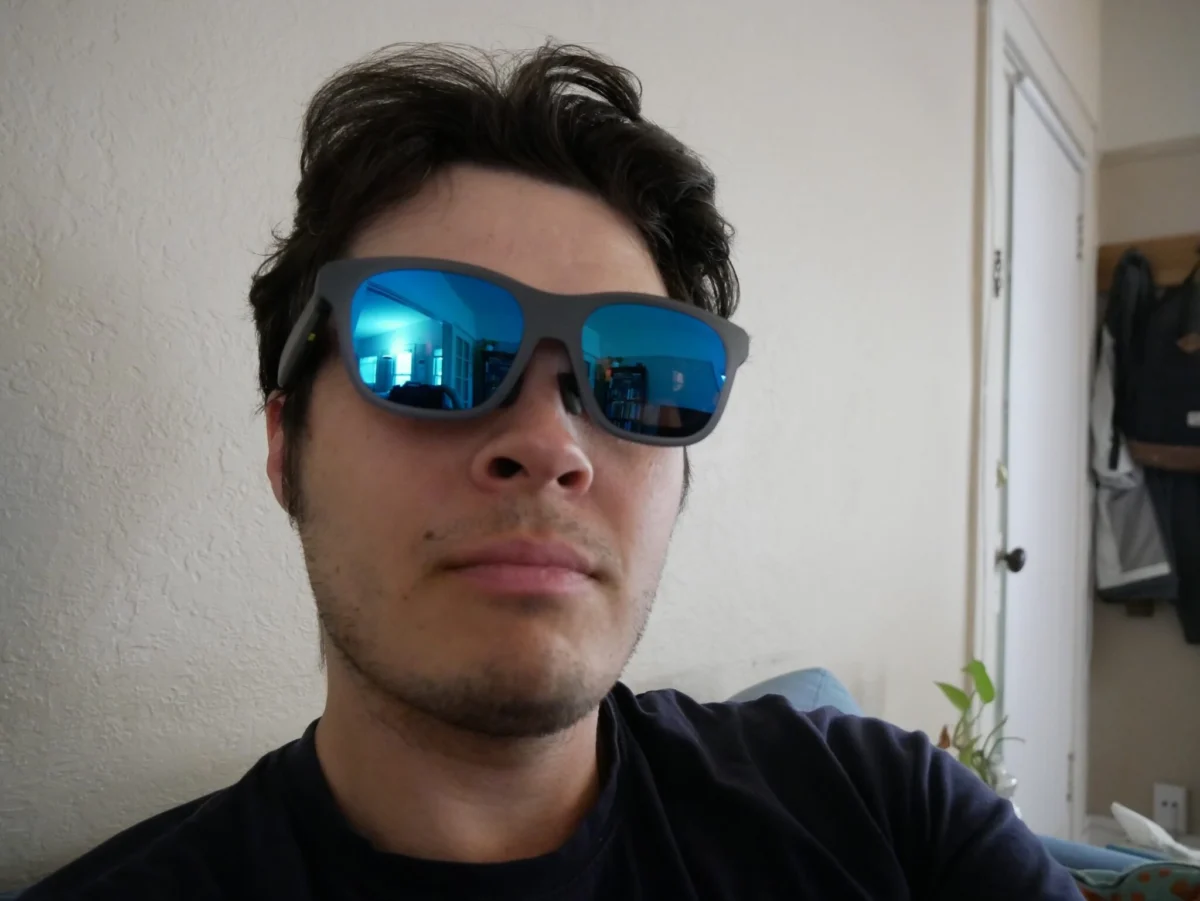
For the dedicated cinephile, the quest for the ultimate viewing experience is a lifelong pursuit. We calibrate our home theater systems, obsess over black levels on OLED panels, and debate the merits of physical media versus streaming bitrates. It is this perpetual hunt for a new, immersive vector of consumption that led me to the XREAL a01—a device released in May of this year that promises to shrink the cinematic experience down to the size of a pair of sunglasses.
While the hardware represents an accessible entry point into the burgeoning world of wearable displays, it also serves as a poignant case study in the current limitations of consumer-grade extended reality (XR) technology.
The Hardware: Simplicity as a Double-Edged Sword
The XREAL a01 is not a sophisticated AR powerhouse in the vein of Meta’s Orion or the ambitious enterprise-grade headsets currently dominating the headlines. Instead, it positions itself as an "external monitor for your face." The device is intentionally stripped back: it lacks an internal battery, a dedicated processor, and any form of complex spatial computing software.
The design philosophy is minimalist. The glasses utilize a simple USB-C tether to draw power and data from a host device—whether that be a smartphone, a Steam Deck, or a laptop. At an accessible price point of approximately $300, the a01 is clearly intended for the budget-conscious early adopter rather than the enterprise professional.
Internally, the hardware boasts dual mini-OLED panels capable of delivering 1080p resolution and a peak brightness of 1,600 nits. When I first put them on to watch David Lynch’s Wild at Heart, the initial impression was genuinely impressive. The colors are punchy, the blacks are deep, and the overall image clarity creates a sensation akin to sitting in the back row of a small, private screening room or looking at a vibrant home projector setup in a light-controlled environment.
A Chronology of the Testing Experience
To truly evaluate the a01, I subjected it to several days of varied usage, ranging from stationary desktop viewing to attempts at mobile consumption.
The Desktop Experiment
My first point of contact was plugging the glasses into my personal laptop. I fired up the Criterion Channel to test the fidelity of the image. Watching Nicolas Cage’s iconic performance in Wild at Heart through the a01 was a surreal experience. The "immersion" XREAL advertises—which they claim mimics a 147-inch screen—is technically true in terms of field-of-view, but the utility is questionable. Sitting at my desk, tethered to my laptop, while looking at an image that is simultaneously playing on my 14-inch monitor only a foot away, introduced an immediate sense of redundancy.

The Mobility Struggle
Next, I attempted to connect the glasses to my smartphone. Here, I hit a snag common to many in the legacy-device ecosystem: my older iPhone lacked the native USB-C port required for a direct connection. This highlighted a significant barrier to entry for the general consumer. Even with the correct adapter, the experience remains chained to the host device. Because the a01 acts solely as a screen-mirroring display, the host device’s screen must remain active and powered, draining the battery of your phone or tablet rapidly.
Technical Limitations and Supporting Data
While the visual quality of the dual OLEDs is a high point, several factors dampen the enthusiasm for the device as a daily driver.
The Thermal Factor
One of the most persistent issues with miniaturized electronics is heat dissipation. It does not take long for the a01 to begin generating a noticeable amount of warmth on the bridge of the nose and the orbital area around the eyes. This is a known, well-documented defect in the current generation of XR hardware; cramming high-end display drivers and circuitry into a frame the size of standard eyewear inevitably results in thermal buildup. While not dangerous, the constant, low-level tingling sensation is a consistent reminder that you are wearing a machine, which inherently breaks the "immersion" the device aims to provide.
The "Second Monitor" Fallacy
XREAL frequently markets these glasses as a "wearable display" or a "second monitor" for professionals on the go. In practice, this is difficult to justify. Because the optics are so effective at projecting a large, central image, they often obscure your peripheral vision, making it nearly impossible to multitask or reference physical documents while wearing them. As a productivity tool, the a01 lacks the spatial awareness or "passthrough" capabilities that more advanced headsets are beginning to incorporate.
Ecosystem and Future Iterations
XREAL does offer a solution to some of these pain points in the form of the "Beam Pro," a $200 companion device that functions as a dedicated streaming hub. By offloading the processing and content storage to the Beam Pro, users can disconnect from their laptops and phones. However, this raises the total cost of ownership to $500, a price point where the competition begins to offer significantly more robust features.
Looking forward, the company is clearly iterating rapidly. During a visit to Google I/O earlier this year, I received a preview of "Project Aura," an upcoming device that seems to address the existential dilemmas faced by the a01. Aura is expected to utilize the Android XR operating system, co-developed by Google and Samsung. Crucially, it will include:
- Native Hand Tracking: Moving away from the tethered-controller dependency.
- Google Play Store Integration: Allowing for native apps rather than simple screen mirroring.
- Dedicated Compute Puck: A pocketable unit that handles the heavy lifting, providing true mobility and longer battery life.
The Implications for the Future of Media
The ultimate question remains: Does the average consumer want to watch a movie through a pair of sunglasses?

From a cinephile’s perspective, the answer is a complicated "not yet." We live in an era of massive, affordable 4K OLED televisions. A 55-inch or 65-inch television offers a communal, comfortable, and technically superior viewing experience that no current pair of smart glasses can replicate. There is a distinct, physical comfort in watching a film on a large screen in one’s own living room that is currently missing from the "goggles on" experience.
However, the a01 represents an important stepping stone. It proves that the optics are finally catching up to the vision. The vivid colors and high brightness are there; the weight is becoming manageable; the accessibility is improving.
The industry is currently in a "tinkering" phase. Companies like XREAL are testing the waters, learning how users interact with hardware that bridges the gap between the digital and physical worlds. While the a01 is arguably more of a novelty than a necessity today, it serves as a necessary trial run for the technologies that will eventually define the next generation of personal entertainment.
For now, I will stick to my 55-inch TCL. But when the next, more refined iteration of this technology—like the promised Project Aura—finally lands on my desk, I will be the first in line to reevaluate my preferences. The dream of a private, high-definition, theater-quality screen that fits in your pocket is tantalizingly close; we are simply waiting for the hardware to stop getting quite so warm on our faces.
Disclaimer: When you purchase through links in our articles, we may earn a small commission. This does not affect our editorial independence.