Overview of the Ruling and Core Facts
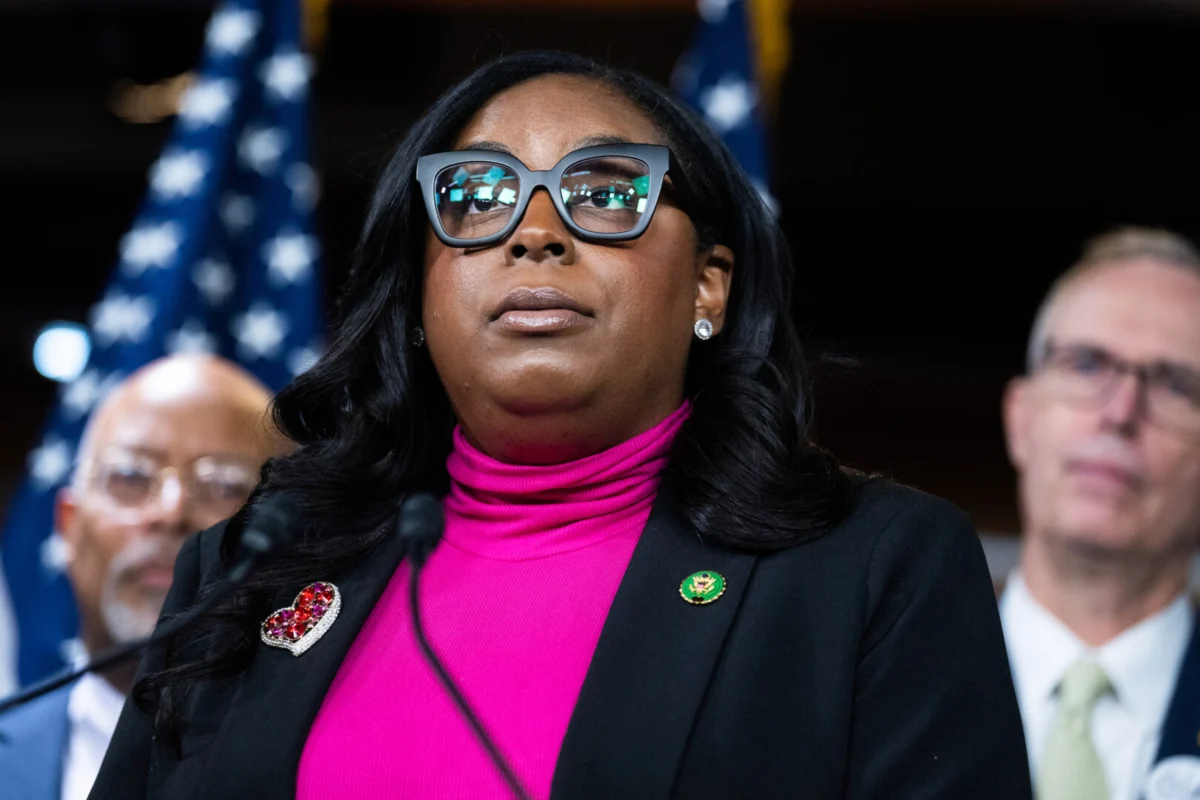
In a pivotal ruling on the intersection of congressional privilege and federal law enforcement authority, a three-judge panel of the U.S. Court of Appeals for the 3rd Circuit ruled Wednesday that U.S. Representative LaMonica McIver (D-N.J.) is not immune from federal criminal prosecution. The decision opens the door for the Justice Department to proceed with assault and obstruction charges against the Democratic lawmaker stemming from a high-tension incident outside an immigration detention facility in Newark, New Jersey.
McIver, who was elected to represent New Jersey’s 10th Congressional District in 2024, had urged the Philadelphia-based appeals court to dismiss her three-count federal indictment. Her legal team argued that her actions during a May 2025 confrontation at Delaney Hall—a private facility housing detainees for U.S. Immigration and Customs Enforcement (ICE)—were fully protected under the U.S. Constitution’s Speech or Debate Clause. McIver contended that her presence at the facility constituted legitimate legislative oversight and that federal law enforcement officers interfered with her constitutional duties.
However, the 3rd Circuit panel largely affirmed a lower district court decision denying McIver’s motion to dismiss. Writing for the 2-1 majority, Circuit Judge Cindy Chung declared that physically clashing with law enforcement personnel outside a federal detention center falls outside the scope of constitutionally protected legislative activity.
"We have considered the ‘nature’ of the charged conduct and concluded it is unambiguously non-legislative," Judge Chung wrote, joined by Circuit Judge Stephanos Bibas.
While the court upheld the primary charges, it remanded one count back to the U.S. District Court for further evidentiary consideration. The ruling represents a significant legal setback for McIver, who faces the prospect of a criminal trial while serving in Congress and navigating personal hardships, including a second pregnancy and escalating legal defense costs.
Timeline: From Delaney Hall Inspection to Appeals Court Decision
The criminal charges against Representative McIver trace back to a volatile standoff between federal law enforcement agents and local elected officials in the spring of 2025.
       [May 2025]              [Late 2025]             [June 2026]           [Present]
   Delaney Hall Incident  --> Federal Indictment  --> Appeals Oral Argument --> 3rd Circuit Ruling
(Lawmakers visit facility;   (McIver charged with    (Defense argues Speech    (2-1 decision rejects
 Mayor Baraka arrested)       assault/obstruction)     or Debate immunity)       immunity claims)
May 2025: The Incident at Delaney Hall
In May 2025, Representative McIver, accompanied by Newark Mayor Ras Baraka and a delegation of state and local public officials, conducted an unannounced oversight visit to Delaney Hall, an ICE contract detention facility located in Newark. The delegation sought to inspect living conditions and review administrative protocols following reports of civil rights grievances raised by detainees.
According to defense filings, the delegation was met with immediate resistance from facility administrators and stationed ICE officers. Lawmakers reported being kept in an entryway for an extended period while federal personnel delayed their access. Defense attorneys maintain that ICE officials deliberately engaged in stalling tactics before "luring" the delegation outside the building under the premise of resolving administrative clearance.
Once the group was outside, federal officers moved to arrest Newark Mayor Ras Baraka on charges of trespassing on federal contract property and interfering with federal operations. The arrest triggered an immediate confrontation between federal agents and members of the delegation. Prosecutors allege that during the melee, McIver physically intervened, putting her hands on federal officers and attempting to pull Mayor Baraka away from custody.
Late 2025 – Early 2026: District Court Indictment and Immunity Challenge
Following an investigation by the Department of Justice, a federal grand jury returned a three-count indictment charging McIver with assaulting, resisting, or impeding federal officers under 18 U.S.C. § 111.
McIver immediately moved to dismiss the indictment in the U.S. District Court for the District of New Jersey, asserting dual constitutional protections:
- The Speech or Debate Clause: Claiming absolute immunity on the grounds that her oversight visit was an official legislative act.
- Selective and Vindictive Prosecution: Alleging that the Trump administration’s Justice Department targeted her due to her vocal opposition to federal immigration policy.
The district court denied the motion to dismiss, ruling that physical altercations with law enforcement officers fall outside the core protections of the Constitution’s Speech or Debate Clause. McIver appealed the order immediately to the 3rd Circuit Court of Appeals.
June 2026 – Present: Oral Arguments and the Appeals Court Ruling
During oral arguments in June 2026, McIver’s legal counsel, former U.S. Attorney Paul Fishman, pressed the panel to recognize that executive branch interference during an official oversight mission cannot be divorced from the broader legislative privilege. On Wednesday, the 3rd Circuit issued its 2-1 mandate, affirming that physical altercations outside the facility are subject to federal criminal prosecution.
Deep Dive into Legal Arguments: Speech or Debate Clause and Judicial Split
The core legal struggle in United States v. LaMonica McIver centers on the boundary between protected legislative oversight and unshielded physical conduct under Article I, Section 6, Clause 1 of the U.S. Constitution.
The Standard of the Speech or Debate Clause
The Speech or Debate Clause provides that members of Congress "shall in all Cases, except Treason, Felony and Breach of the Peace, be privileged from Arrest during their Attendance at the Session of their respective Houses… and for any Speech or Debate in either House, they shall not be questioned in any other Place."
Over decades of jurisprudence—including landmark Supreme Court rulings such as Gravel v. United States (1972) and United States v. Brewster (1975)—courts have expanded this protection beyond literal floor debates to include core legislative acts, such as committee hearings, vote casting, and official investigations. However, courts have drawn a firm line between legislative acts and political or physical conduct, such as accepting bribes, committing assault, or publishing non-legislative materials.
| Issue | Majority Position (Chung, Bibas) | Partial Dissent Position (Ambro) |
|---|---|---|
| Primary Charges (Counts 1 & 3) | Affirmed. Physical contact outside facility is non-legislative conduct. | Agreed. Grabbing an officer to impede an arrest is not protected. |
| Secondary Contact (Count 2) | Affirmed non-legislative character. | Remanded for fact-finding to determine intent vs. incidental contact. |
| Selective Prosecution Claim | Dismissed for lack of interlocutory jurisdiction. | Dissenting. Discovery should be granted to protect legislative independence. |
The Majority Opinion
Judges Chung and Bibas took a categorical approach to McIver’s actions outside the physical structure of Delaney Hall. The court determined that while planning an oversight visit or gathering information inside a facility may fall under legislative inquiry, physically clashing with agents performing an arrest in a parking lot or entryway is inherently non-legislative.
"Members of Congress possess broad authority to inform themselves on matters of legislation," Judge Chung noted. "However, that authority does not grant license to engage in physical altercations with executive branch personnel executing law enforcement duties."
The majority also held that it lacked interlocutory jurisdiction to review McIver’s claims of selective and vindictive prosecution at this stage of the litigation, noting that such claims must generally wait until after a final judgment or trial.
Judge Ambro’s Nuanced Dissent
In a lengthy partial dissent, Circuit Judge Thomas Ambro agreed with the majority that "members of Congress are not above the law" and that deliberately grabbing an officer to thwart Mayor Baraka’s arrest would not constitute protected legislative behavior. However, Ambro parted ways with his colleagues on two critical points:
- Evidentiary Distinctions on Count Two: Judge Ambro argued that the charge involving McIver’s physical contact with a second ICE officer required further factual development. He emphasized that court proceedings must determine whether McIver "shoved him gratuitously, intending to inflict harm, or merely made incidental contact… in an effort to re-enter the facility that federal law authorizes her to inspect."
- Selective Prosecution Concerns: Unlike the majority, Ambro asserted that the court had a constitutional duty to address McIver’s claims of selective prosecution immediately.
In a sharp rebuke of the Justice Department’s prosecutorial consistency, Judge Ambro cited the federal government’s recent decision to dismiss charges against numerous individuals who participated in the January 6, 2021, assault on the U.S. Capitol.
"Potentially retaliatory prosecutions of sitting Members of Congress are exceedingly rare. But when they do occur, the constitutional foundation of our government is at risk," Ambro wrote. He stated he would have granted McIver immediate discovery into internal Justice Department communications to determine if political bias fueled her indictment.
Key Reactions: Statements from Defense, Lawmakers, and DOJ
The 3rd Circuit’s ruling drew immediate responses from the defense team, congressional allies, and advocacy groups monitoring the case.
Defense Counsel and Rep. McIver
Following the ruling, Representative McIver issued a defiant statement reiterating her commitment to legislative oversight and criticizing the court’s rationale:
"The court got it wrong, and we are exploring every possible legal option, including an en banc review or appealing to the Supreme Court. To protect the people, their elected representatives must be authorized to conduct oversight of the executive branch without fear of retaliation. I will not fold to this administration. The administration will not stop me from doing my job or standing for what is right. This is not over."
McIver’s defense attorney, Paul Fishman, echoed these sentiments, stressing that the context of the May 2025 incident was created by executive branch obstruction. Fishman emphasized that federal agents escalated the situation by deliberately impeding lawmakers who were exercising statutory oversight authority over detention conditions.
Personal Context and Public Statements
The legal battle has imposed a severe burden on the freshman congresswoman. In public interviews over recent months, McIver has discussed the emotional and financial strain of defending against federal charges while maintaining her legislative workload in Washington.
- Personal Strain: In May 2026, McIver publicly announced that she is pregnant with her second child, adding physical and emotional weight to the ongoing legal proceedings.
- Financial Costs: McIver has characterized the defense campaign as "lonely and expensive," pointing out that defending against federal indictments requires substantial legal retainers that divert resources from standard legislative operations.
- Congressional Support: Several high-profile Democratic colleagues have rallied to her support, framing the indictment as an unprecedented overreach by federal law enforcement against lawmakers performing oversight visits.
Department of Justice Position
The Department of Justice has consistently maintained that the prosecution is grounded strictly in the rule of law. Prosecutors argued in court filings that federal law enforcement officers must be protected from physical interference regardless of the official status of the individual involved. A DOJ spokesperson declined to comment directly on Wednesday’s opinion, citing ongoing litigation.
Wider Implications: Legislative Immunity, Selective Prosecution, and Executive Authority
The 3rd Circuit’s decision carries deep structural implications for the balance of power between the legislative and executive branches of the United States government.
       CONSTITUTIONAL BALANCE OF POWERS
 ┌──────────────────────────┐    ┌──────────────────────────┐
 │    Legislative Branch    │    │     Executive Branch     │
 │  (Article I Oversight)   │    │ (Article II Enforcement) │
 └─────────────┬────────────┘    └─────────────┬────────────┘
               │                               │
               ▼                               ▼
     Oversight Rights vs.            Law Enforcement Safety
   Speech/Debate Protection         & Non-Interference Rules
               │                               │
               └───────────────┬───────────────┘
                               │
                               ▼
                   [3rd Circuit Decision]
            Physical altercations remain subject
             to standard criminal prosecution.
Scope of Congressional Oversight
The ruling establishes a strict boundary for how members of Congress may conduct field inspections of executive facilities. While legislative privilege clearly covers formal inquiries, hearings, subpoenas, and observational report-gathering inside facilities, it does not extend to physical resistance against federal agents during law enforcement actions outside those facilities.
Legal scholars note that if the ruling stands, it could lead executive agencies to adopt stricter security protocols around lawmakers visiting sensitive federal contract sites, potentially restricting physical proximity between elected officials and agents in active operation zones.
The Threshold for Selective Prosecution Claims
Judge Ambro’s dissent highlights a growing friction within federal jurisprudence regarding how courts handle claims of selective or vindictive prosecution. Under current Supreme Court precedent established in United States v. Armstrong (1996), criminal defendants face an exceptionally high legal bar to obtain discovery on selective prosecution claims, requiring clear evidence that similarly situated individuals of a different political or demographic class were not prosecuted.
By explicitly drawing a comparison to the dismissal of January 6th cases, Ambro’s dissent brings executive prosecutorial discretion under heightened scrutiny:
- Prosecutorial Consistency: Questions remain over whether the executive branch applies consistent criteria when prosecuting physical clashes with federal law enforcement personnel.
- Institutional Vulnerability: The dissent underscores the vulnerability of sitting lawmakers who challenge executive agencies, warning that without court-ordered discovery mechanisms, political retaliation can easily masquerade as standard law enforcement.
Next Steps in the Litigation
Rep. McIver’s legal team is expected to pursue one of two immediate legal paths:
- Petition for Rehearing En Banc: Requesting all active judges of the 3rd Circuit Court of Appeals to review the panel’s 2-1 decision.
- Certiorari Petition to the Supreme Court: Asking the highest court in the nation to clarify the reach of the Speech or Debate Clause regarding active oversight visits.
If these appellate remedies fail, the case will return to the U.S. District Court in New Jersey for pre-trial proceedings, setting up an unprecedented criminal trial of a sitting congresswoman for actions taken during an official facility inspection.